
Across our nation and continent, there is a growing cry for leadership that does more than manage systems — leadership that inspires trust, restores hope, and unites people around a moral and non-partisan national vision. From boardrooms to pulpits, from the corridors of government to the classrooms that shape the minds and character of our youth, it has become clear that progress without principle is fragile.
We are no doubt busily constructing roads, schools, hospitals and digital networks, yet we struggle to build the two things that sustains them all: principled character, integrity, and ethical leadership. Let’s be frank, Ghana’s development challenge is all about the missing architecture of character. Nothing more, or less.
The crisis of leadership
After almost six decades in our national governance, it is a fact that there is a scarcity of purpose-driven leadership. We have an abundance of professionals with various skills but little conscience and commitment to ethical leadership. The result is a widening gap between our potential and our performance — a nation prosperous in ideas yet poor in moral and ethical leadership.
The signs are all around us. Public funds meant for development leak through corruption and mismanagement. Road projects are launched with fanfare but abandoned halfway. According to a 2023 CHRAJ report, Ghana loses an estimated GH₵13.8 billion annually to corruption, and GH¢2.36 billion annually due to procurement breaches, according to a Ghana Institute of Procurement and Supply (GIPS) report. Illegal mining (galamsey) continues to ravage our rivers and forests despite repeated campaigns against it. Civic responsibility has declined; we litter, bribe, and cut corners without remorse — behaviours that quietly erode the very soul of our nation. These are not just policy failures; they are moral and ethical failures — clear symptoms of leadership without values and integrity.
A February 2025 survey by the Afrobarometer revealed that over 74% of Ghanaians believe corruption has increased in the past year. Another study by Afrobarometer found that more than half of citizens do not trust African political leaders to act in the public interest. The consequence is obvious. When trust disappears, so does patriotism and civic responsibility— hence national progress slows.
This crisis is not unique to Ghana. Around the world, moral authority among leaders has eroded. But in Africa — where faith and governance have long been intertwined — this tension is excruciating. The real question before us is: how can we harmonise rational governance with moral conviction?
Secular and Christian paradigms
Secular leadership focuses on systems, accountability, and results. It promotes efficiency, data, and measurable progress — virtues that Ghana’s institutions sorely need. Yet when separated from moral guidance, secular leadership often produces what one might call success without a soul.
We have plans but they lack passion. We also have policies but no principles. When a contract is awarded not to the most competent but to the most politically connected, efficiency loses its moral compass. When we reward loyalty over merit and integrity, we end up with progress that does not last.
Christian leadership, by contrast, begins with service. It models humility, stewardship, and love for people over fame, power and position. It calls leaders to be shepherds, not bosses. It insists that leadership is not a privilege but a charge and trust from God. Yet faith that does not translate into service, excellence and integrity, weakens its witness. A sermon about honesty means little if the Christian leader falsifies contract receipts or remains silent in the face of massive corruption that robs the next generation of a decent future. Moral conviction must be matched with managerial competence.
Neither system — secular nor spiritual — can stand alone. One offers direction without devotion; the other devotion without direction. Ghana needs leaders who can think like technocrats but serve with integrity and a shepherd’s heart.
Toward integrated leadership
The call of current generation of leaders is for integrated leadership — a model that blends secular pragmatism with moral conviction. Such leadership combines competence with conscience and strategy with stewardship.
A disciplined economy without ethical leadership becomes exploitation; a passionate church or any other religious group without professional structure breeds disorder. When intelligence lacks integrity, or spirituality lacks structure, both fail the people they are meant to serve.
As a result, one wonders what will be come of Ghana by 2050 with the current lack of civic responsibility, patriotism and craze for material gain.
True national development is not only about GDP growth or roads built; it is also about the moral infrastructure that ensures fairness, merit, accountability, and compassion. Policies can create institutions, but only values, ethics and integrity can sustain them. Ghana will rise not merely through economic reforms but through ethical and civic reformation.
Imagine a Ghana where ministers and other government officials serve the nation with integrity and publicly and genuinely declare their assets before and after taking office, where contractors finish projects on time with excellence because it is the right thing to do, where civil servants attend to every file on their desk as a sacred duty to a fellow Ghanaian, not as an opportunity to demand a bribe. That is the nation we can confidently build for the next generation when competence, integrity, ethics and conscience walk hand in hand.
Institutional renewal
If leadership is the heartbeat of development, then our institutions should be considered as the backbone. But too many of them — in both state and church — are weakened by the craze for materialism, fame, short-sightedness and self-interest.
A system that rewards mediocrity over merit, or connections over competence, cannot deliver the transformational change we need as a nation. We must build systems that make it easier to do what is right than what is wrong.
Government institutions must enforce accountability without fear or favour. Churches and other religious groups must hold themselves to higher civic standards. Faith communities cannot remain sanctuaries of worship alone; they must become venues for nation-building. Sermons about spirituality and heaven must be matched with ethical and principle-based actions for a better Ghana here on earth.
Likewise, the marketplace — from the micro trader at Makola to the CEO in the Industrial Area — must rediscover the ethics of honest enterprise. Profit without purpose has emptied and denied too many souls of meaningful life and a hopeful future. Every cedi earned must serve the common good and not the interests of the privileged few.
When the State, the Church, other religious groups and the marketplace form a moral coalition, integrity becomes our most powerful national asset.
Cultivating the next generation
All across Africa, there is a restless generation of young people — ambitious, creative, and hopeful, yet disillusioned by what they see. Many have concluded that corruption and nepotism, not competence or merit determine success. When the youth lose faith in fairness, they lose faith in the country and in the future.
We have a responsibility to change this narrative. Leadership training, civic education, and mentorship must begin from our basic schools and must emphasise values as much as skills and intelligence. Our universities should not only produce graduates who can work, but also citizens who can lead with integrity.
At the Africa Future Leaders Institute of Global Affairs (AFLIGA), we are investing in such a vision — raising leaders who think globally, act ethically, and serve selflessly. We must all strive to do the same. Every home, school, and organisation must become a nursery for moral leadership.
Ghana’s next generation must be taught that honesty is not weakness, that patriotism is not a deficiency and that success built without integrity eventually collapses. The future of governance depends on the convictions we cultivate today in our youth.
A sacred trust
Leadership is not about status; it is about stewardship. It is the act of using one’s influence to serve others, not oneself. Whether you are a minister or a mason, a pastor or a politician, a petty trader or business tycoon, leadership begins the moment you decide to make things better for others.
We must restore conscience to public life and compassion to decision-making. We must refuse the culture of shortcuts and rediscover the dignity of hard work, honesty, and humility.
Our nation’s destiny will not be determined by foreign aid or policy alone, but by the moral choices of its leaders and citizens. A leader with both head and heart — with the rational discipline of the secular mind and the ethical compass of a moral spirit — is the kind of leader who can transform nations.
The future of Ghana, and indeed of Africa, lies in leaders who see their calling as sacred, their influence as stewardship, and their power as service. Only then shall we move from mere development to true transformation — a Ghana, and indeed an Africa, guided not only by what works, but by what is right and enduring.
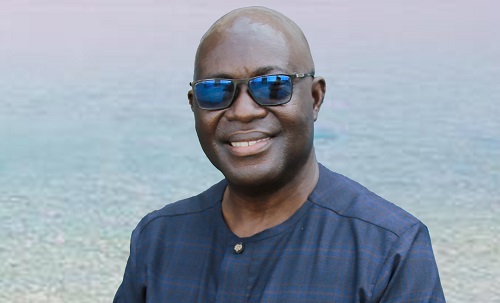
The author is Dr Emmanuel Dei-Tumi, founder & Executive Director, Africa Future Leaders Institute of Global Affairs (AFLIGA) and a fellow of Frimpong Manso Institute (FMI), Leadership and Governance thematic Area. Tel (+233) 506304358 Email:
