
The history of Africa’s exploitation cannot be fully understood without naming the central role of African women’s labor and the systematic ways it was captured, extracted, and rendered invisible.
From the onset of transatlantic enslavement through formal colonialism into the contemporary global economy, African women have functioned as the economic backbone of societies that denied their humanity and depended on their productivity at the same time.
This reality constitutes what can be described as a matriarchal debt: a vast, unpaid obligation owed to African women whose labor sustained families, plantations, colonies, and postcolonial states alike. Any serious reparational discourse that ignores such a debt remains incomplete and ethically compromised.
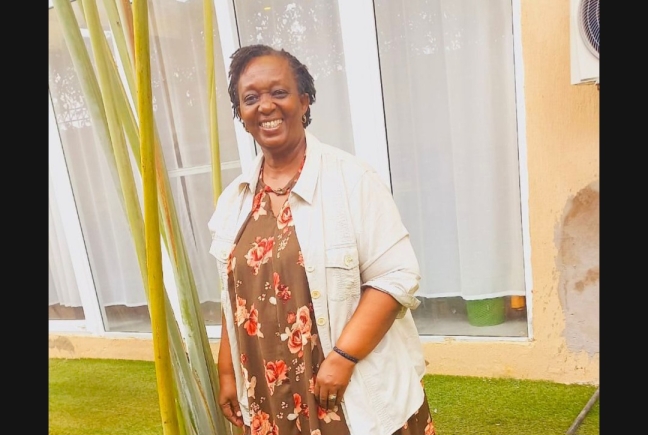
That is the reason why the article features a prominent activist, whose work over the past three decades was focused on women and their role played in the workforce from the colonial and slave trade era to the present.
For Advocate Margaret Mbira, this topic extends far beyond the women of her native Kenya; it is essential to the entire existence of women who have lived, for those alive today, and for generations yet to come
The issue of reparations is complex in general, and the aspect involving female labor is particularly significant. “A lot of our Africa women were taken into the western world without their consent, mostly during slave trade; and most of the work that was done, was done by the woman.”
She emphasized this going into context of the matriarchal debt. She believes that reparations cannot be measured fully if the efforts of women are not calculated and demanded for.
The Maafa was not a gender-neutral catastrophe. It was a gendered system of extraction designed to maximize profit through the total capture of African women’s bodies, time, and reproductive capacity. Enslaved African women were forced to labor in fields simultaneously reproducing future laborers, performing domestic work, and enduring sexual violence that functioned both as terror and economic strategy.
Later colonial regimes further refined these mechanisms by restructuring African economies in ways that institutionalized women’s unpaid and underpaid labor as a permanent feature of economic life. The devaluation of women’s work was not incidental; it was foundational to the functioning of the empires.
“African labor during slave trade sustained white people in their countries. The labor was not magical, it was fundamental. Women produced food, reproduced labor forces ad sustained households as well as preserved cultures where they found themselves all while enduring the social cost of displacement and violence.
These are things that women went through during colonial times. So YES, they owe women specially” - she ended.
Our conversation moved to into the concepts of current realities faced by the African women. Margaret Mbira, who is a human right activist that works with the Human Right Organization called ‘World March of Women’ in Kenya, links today’s inadequate recognition of African women’s labor to colonial‑era missteps in her recent works. She highlighted, “Following the formal end of colonial rule, the capture of female labor did not disappear but simply changed form.”
Across Africa and the diaspora, women continue dominating the informal economy, a sector that sustains national survival while being excluded from legal protections, credit systems, and state investment.
Market traders, domestic workers, agricultural laborers and care workers generate immense economic value while remaining structurally marginalized. This is not a failure of development but a continuation of colonial logic, that assumes African women’s labor to be endlessly available, flexible, and disposable.
“When we talk about the matriarchal debt, we look closely even in our own context ad analysis, how well are women’s labor recognized?”, she posed us all.
Reparations must be fundamentally understood as a decisive economic intervention designed to restore absolute sovereignty over labor and the lives of the oppressed. It is not a gesture of charity or a diplomatic courtesy, but a systematic reclamation of stolen values.
To consider it as anything less than a structural realignment of global wealth is to misunderstand the depth of the debt owed. The pursuit of justice remains incomplete and ineffective without this core focused on economic restoration.
The connection between reparations and women’s liberation is fundamental. The exploitation of African women’s labor, both productive and reproductive, was central to the accumulation of wealth during slavery and colonialism.
“We must begin by recognizing extraction. With reparations, not only were resources taken, African women were also extracted.” she ended.
During the conversation about the extraction of female labor, the matriarchal debt and the peculiar aspect of the fight for Reparations, Mbira emphasized that, our diasporan sisters lay as a solid case for our demand. “A great deal of harm was done to our brothers and sisters in the diaspora. Most of them, for generations have wondered their routes and still hope to one day come home. It is particularly unfair, what the effects of the extraction of women from the African continent has caused, even till today.”
Advocate Mbira urged the PPF and other Pan‑African organizations to carry on this fight for the greater good. During the interview, several of the PPF’s chosen pathways were highlighted to ensure that it remains a key player in the African liberation struggle.
This commitment is evident in the PPF’s current work, which is advanced through two dedicated departments: the Women and Youth Department and the Reparations Department. Both departments are actively pushing these issues to the forefront of political, social, and ideological conversations across Africa and the diaspora.
The Women and Youth Department of the PPF, which addresses matters of reparations and matriarchal debt, is headed by Richmond Amponsah. His work focuses on amplifying the voices of women and young people while addressing structural inequalities rooted in patriarchy, colonialism, and economic exclusion.
“I have never understood or believed in the idea of reparations more than I do now. More than ever, it has reached the peak of utmost urgency and must be tackled with every last ounce of strength left in every African woman, man, or child,” Mr. Amponsah said.
Complementing this work is the Reparations Department, led by Sumaila Mohammed, the PPF’s blogger and lead voice on reparative justice. This department focuses on historical accountability, material redress, and the moral imperative to confront crimes such as slavery, colonialism, and the exploitation of African labor.
“Reparations, for me, have never meant anything other than demanding what is owed to us by former colonial nations. And I know—collectively, with the PPF and the African people—as we fight, we will surely witness an Africa that is fully liberated and compensated within our lifetime.”
Reparations, Mbira argues, must therefore be gender-conscious and materially transformative. They cannot be symbolic gestures alone. Reparative justice must include land restitution, economic empowerment, healthcare, education, and political inclusion for African women. Addressing the matriarchal debt is not a secondary issue, it is central to rebuilding Africa’s sovereignty, dignity, and future. As Mbira makes clear, any serious reparations movement that ignores women fails to address the true backbone of the continent.
The matriarchal debt is not abstract. It is measurable in stolen labor, denied wages, unpaid care work, and generations of constrained opportunity. To repay it is not an act of benevolence, but one of justice. Until African women achieve full economic sovereignty, Africa itself remains trapped in the afterlife of colonial exploitation.
“Looking specifically at the labor force in relation to the matriarchal debt, it is sometimes misunderstood. Because in dealing with Reparations, the female unpaid labor force has not been fully organized. We must understand that, women played a very key role in the post-colonial nation building even after slave trade, where millions of lives were lost. It must be recognized” and total repair achieved
