
For decades, Africa has spoken passionately about unity. From the establishment of the African Union to the launch of the African Continental Free Trade Area (AfCFTA), the continent has consistently projected a vision of integration, cooperation and shared prosperity. African leaders have championed the idea of “One Africa”, where borders serve as bridges rather than barriers.
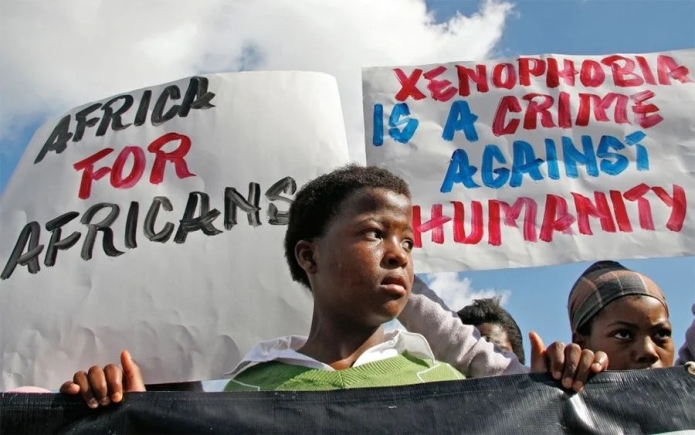
Yet recurring waves of xenophobic attacks across parts of the continent, particularly in South Africa, continue to expose a painful contradiction at the heart of Africa’s unity agenda.
Recent tensions involving foreign nationals from Ghana, Nigeria, Zimbabwe, Malawi and other African countries have reignited concerns about growing anti-immigrant sentiment in South Africa. Governments, including those of Ghana and Nigeria, have issued warnings to their citizens, while some have initiated evacuation measures following reports of harassment, intimidation and violence targeting African migrants.
At the centre of the latest unrest are frustrations over unemployment, economic inequality, pressure on public services and illegal immigration. South Africa continues to grapple with one of the highest unemployment rates in the world, leaving many citizens frustrated by worsening living conditions. Foreign nationals are often accused — fairly or unfairly — of taking jobs, straining healthcare systems and contributing to crime.
While these socio-economic concerns are genuine, the targeting of fellow Africans reveals a deeper crisis — one that threatens the moral and political foundations of Pan-Africanism itself.
The dream of a united Africa cannot coexist with fear, hostility and violence directed at Africans simply because they come from another African country.
Across social media, disturbing videos have circulated in recent weeks allegedly showing foreign nationals being confronted and told to “go back and fix your country”. Ghana’s Foreign Affairs Minister, Samuel Okudzeto Ablakwa, formally protested the incidents and summoned South Africa’s envoy over the reported attacks.
South African authorities have since condemned the violence and pledged firm action against those responsible. Officials have repeatedly stressed that criminality and xenophobia have no place in a constitutional democracy.
For many Africans watching across the continent, however, the damage extends beyond the physical attacks. It is psychological. Emotional. Symbolic.
It sends a troubling message that African solidarity may still be conditional.
This is particularly significant given South Africa’s liberation history. During the apartheid era, many African countries provided refuge, diplomatic support, financial assistance and political solidarity to South African freedom fighters. Nations such as Ghana, Nigeria, Zambia and Tanzania stood firmly behind the anti-apartheid struggle.
Today, many Africans are asking how a continent that once united against racial oppression can now witness Africans turning against one another.
The issue also raises difficult questions about the future of continental integration.
How can Africa successfully implement free movement protocols under AfCFTA if Africans fear hostility in fellow African states? How can the continent promote cross-border trade, educational exchanges, labour mobility and regional tourism if xenophobia continues to grow?
True integration is not built solely through policy documents and high-level summits. It is built through trust between ordinary people.
Without social cohesion, Africa’s economic integration risks becoming politically ambitious but socially fragile.
Experts have long argued that xenophobia in South Africa is linked to structural inequality, unemployment, weak governance and political scapegoating. Previous outbreaks in 2008, 2015 and 2019 claimed lives and displaced thousands.
The latest developments suggest that unless these underlying tensions are addressed, cycles of violence may continue to repeat themselves.
At the same time, the conversation must move beyond condemnation. African governments must confront the broader realities driving migration across the continent — poverty, conflict, unemployment, governance failures and unequal economic opportunities.
Many migrants move in search of survival, opportunity, education or security. In many cases, they contribute significantly to local economies through entrepreneurship, labour, trade and innovation.
The challenge for Africa, therefore, is not migration itself, but how African states manage migration humanely, lawfully and strategically without allowing frustration to evolve into hatred.
Ultimately, xenophobia is more than a security issue. It is a test of Africa’s identity.
It challenges whether Pan-Africanism remains a living principle or merely a political slogan repeated at conferences and diplomatic gatherings.
If Africans cannot safely coexist with fellow Africans, then the continent’s broader aspirations for unity, prosperity and collective global influence may remain difficult to achieve.
Africa’s future cannot be built through division.
The continent’s greatest strength has always been its shared history, shared struggles and shared destiny. Protecting that vision requires leadership, responsible political rhetoric, economic reform and, above all, a renewed commitment to seeing one another not as foreigners, but as fellow Africans.
The author - Natalie Fort - is a broadcast journalist.
