
Africa cannot achieve health sovereignty without reliable systems to measure patient treatment and outcomes, the President-elect of the Breast Interest Group of Southern Africa, Dr Sarah Nietz, has said.
She noted that healthcare data across sub-Saharan Africa remain scarce, warning that the lack of reliable information makes it difficult to track progress in cancer treatment and improve patient outcomes.
Dr Nietz explained that strengthening cancer care on the continent required deliberate investment in robust data systems that enable healthcare providers and policymakers to measure the effectiveness of treatment and the performance of health systems.
“We need clinical registries, digital patient records, outcome tracking and national quality indicators. Although transparency can reveal system weaknesses, it is necessary for accountability and improvement.
" Data is the foundation to better care. Basic questions remain difficult to answer. How many breast cancer patients are seen per month. When do they receive treatment? What treatments do they receive? Are outcomes improving? While this may sometimes be viewed as bureaucracy, data is actually the foundation of better care,” she said.
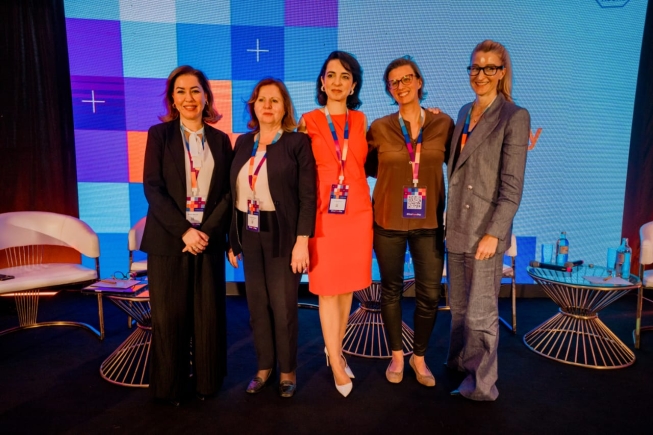
Dr Nietz made the remarks during a panel discussion at a conference organised by Roche Africa for journalists, policymakers, civil society organisations and advocacy groups in Nairobi, Kenya.
The panel discussion was held on the topic: “Health is strength – how can Africa strengthen health sovereignty through smarter systems and investment?”
Other panellists included the Programme Lead for African Genomics at Roche Kenya, Lisa Slater; the Head of the Virology Research Department at the Pasteur Institute in Algeria, Professor Salima Bouzeghoub; and the President of the African Women's Group for Health in Tunisia, Dr Hela Hammami.
The conference, the first of its kind to be organised in sub-Saharan Africa by Roche Africa, was held under the theme “Health is wealth” with a focus on breast cancer. It attracted more than 100 participants from Ghana, Tunisia, Algeria, Kenya and Ivory Coast.
Dr Nietz said investment in health data systems was one of four key areas that could significantly improve healthcare delivery across Africa.
The other areas she highlighted included strengthening organised cancer services, promoting structural innovation and deepening public-private partnerships.
“Collaboration should not be framed as dependency but as shared commitment toward better patient outcomes,” she indicated.
Professor Bouzeghoub emphasised the importance of investing in scientific research, explaining that strong research systems enhance national health security.
She said laboratories played a vital role in anticipating disease outbreaks and epidemics while also supporting disease diagnosis and monitoring the effectiveness of treatment.
“They play a critical role in therapeutic follow-up and disease diagnosis. More importantly, research is a strategic economic lever because laboratories can develop technologies and build technological sovereignty,” she added.
Dr Slater noted that although Africa had highly skilled scientists and clinicians, progress in research and treatment had long been hindered by limited access to locally generated data.
She explained that the African Genomic Programme at Roche was designed to support the generation of clinical genomic data on the continent.
“Our mission as a programme is to catalyse early research and the development of clinical genomic data on the continent so that it can be placed in the hands of the clinicians and researchers sharing this stage. We want this research to be led by African partners, for Africa and for the world,” she said.
Dr Hammami said Africa must develop fully integrated, African-led healthcare systems if it wants to achieve sovereignty in oncology.
She noted that the continent currently carries about 25 per cent of the global disease burden but has less than two per cent of the world’s radiotherapy machines.
According to her, the imbalance highlights the need for comprehensive reforms rather than focusing on a single solution.
She added that strengthening healthcare systems would require a combination of innovation, financing, infrastructure and coordinated policy support.
The General Manager of Roche Ghana, Kgothatso Motumi, said the theme of the conference was intended to remind African governments of what was possible when sustained investments were made in health systems across the continent.
He added that such initiatives had already demonstrated the potential to improve healthcare outcomes and deliver value for patients, particularly women affected by breast cancer.
