

Dear Mirror doctor, please, why do children keep getting ear infections? What can be done to prevent ear infections in children?
Worried dad.
Dear worried dad, Ear infection, known in medical parlance as otitis media, is a frequent cause of fever in children.
The ear consists of three major parts: the outer ear, the middle ear, and the inner ear.
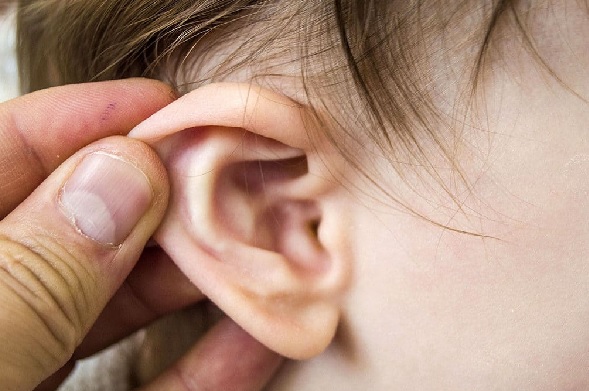
The outer ear includes the pinna —the visible part of the ear—and the ear canal. The middle ear is an air-filled space that is located behind the eardrum.
The middle ear contains three tiny bones which transmit sound from the eardrum to the inner ear.
The inner ear contains the hearing and balance organs.
The hearing organ converts sound into electrical signals, which are associated with the origin of impulses carried by nerves to the brain, where their meanings are appreciated. It is an inflammation of the middle ear that we are talking about here.
There are many reasons why children are more likely to suffer from otitis media than adults.
First, children have more trouble fighting infections because their immune systems are still developing. This makes them more susceptible to recurrent infections, including those of the middle ear.
Another reason has to do with the child’s Eustachian tube -a small passageway that connects the upper part of the throat to the middle ear.
This tube is shorter, straighter and smaller in calibre in children compared to that of adults. It can contribute to the development of otitis media in several ways.
The Eustachian tube is usually closed but opens regularly to ventilate or replenish the air in the middle ear. This tube also equalises middle ear air pressure in response to air pressure changes in the environment.
However, a blocked Eustachian tube from swelling of its lining or plugging with mucus from a common cold infection or for some other reason cannot open to ventilate the middle ear.
This allows fluid from the tissues that line the middle ear to accumulate. If the Eustachian tube remains plugged, the fluid cannot drain and begins to collect in the normally air-filled middle ear.
This fluid is a rich medium for organisms to thrive, including bacteria and hence cause middle ear infections.
One more factor that makes children more susceptible to otitis media is that the adenoids (a tissue composed of large cells that help fight infections) in children are larger than those in adults.
The adenoids are positioned at the back of the upper part of the throat near the Eustachian tubes. Enlarged adenoids can interfere with the opening and drainage of the Eustachian tube.
In addition, adenoids may themselves become infected and spread into the Eustachian tubes, leading eventually to otitis media.
Bacteria reach the middle ear through the lining or the passageway of the Eustachian tube and can then produce an infection.
This causes swelling of the lining of the middle ear, blocking off the Eustachian tube, and migration of white cells from the bloodstream to help fight the infection.
In this process, the white cells accumulate, often killing bacteria and dying themselves, leading to the formation of pus, a thick yellowish-white fluid in the middle ear.
As the fluid increases, the child may have trouble hearing because the eardrum and the bones in the middle ear are unable to move as freely as they should.
As the infection worsens, many children experience severe ear pain. Too much fluid in the ear can put pressure on the eardrum and eventually perforate it.
Besides the severe pain caused by otitis media, serious complications may result if it is not treated. An untreated infection can travel from the middle ear to surrounding structures, including the brain.
Although the hearing loss caused by otitis media is usually temporary, untreated otitis media may lead to permanent hearing impairment.
Otitis media is often difficult to detect because most children affected by this disorder do not yet have sufficient speech and language skills to tell someone what is bothering them.
Common signs to look for are:
• Unusual irritability
• Difficulty sleeping
• Tugging or pulling at one or both ears
• Fever
• Fluid draining from the ear
• Loss of balance and
• Unresponsiveness to quiet sounds or other signs of hearing difficulty such as sitting too close to the television or being inattentive.
Antibiotics, pain relief and in some cases insertion of grommets are recommended. Early treatment prevents complications.
Preventing ear infections in children is difficult but with early treatment, there should not be any nagging complications.
The writer is a member of the Paediatric Society of Ghana and the Director of Medical Affairs at Korle Bu Teaching Hospital.
