


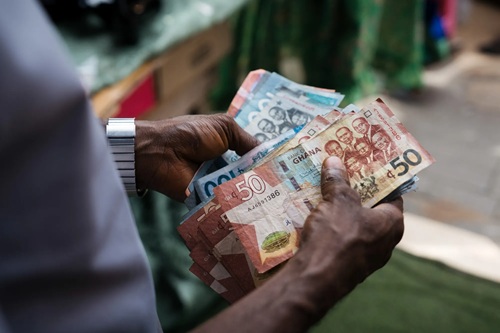
The cost of issuing new notes and coins in Ghana fell sharply last year, dropping by more than 54 per cent to GH¢471.4 million, down from GH¢1.01 billion in 2024, according to the Bank of Ghana's 2025 financial statements released last week.
The dramatic reduction in currency issue expenses was driven almost entirely by a steep decline in notes printing and coin minting costs, which tumbled from GH¢986.9 million in 2024 to GH¢277.6 million in 2025, a saving of more than GH¢709 million for the central bank.
Agency fees, however, moved in the opposite direction, rising to GH¢10.7 million from GH¢8.5 million in the previous year. The most notable surge came under other currency expenses, which exploded to GH¢183.2 million from just GH¢14.7 million in 2024, a more than twelvefold increase. The central bank did not provide a detailed breakdown of what drove this sharp rise, but such costs typically include storage, transportation, security, and the destruction of withdrawn or unfit banknotes.
The significant drop in printing and minting costs came even as the total amount of currency in circulation expanded. Notes and coins held by the public and financial institutions increased from GH¢71.6 billion at the end of 2024 to GH¢83.8 billion at the close of 2025, reflecting sustained demand for physical cash despite the continued expansion of mobile money and digital payment platforms. That represents an increase of GH¢12.2 billion, or roughly 17 per cent, in the stock of cash circulating in the economy.
The Bank of Ghana also reported a relatively modest rise in expenses on foreign currency importation, which inched up to GH¢16.5 million from GH¢14.4 million in 2024. This line item covers the costs associated with bringing foreign banknotes into the country, typically to meet demand for US dollars, pounds sterling and euros from banks and bureaux de change.
Taken together, the figures suggest that the central bank may have placed fewer large orders for new banknotes during the year, possibly drawing down on existing stocks of freshly printed cedi notes held in its vaults. Alternatively, efficiencies in the procurement or production process may have lowered the unit cost of each note printed. The Bank of Ghana contracts the printing of its currency to overseas security printers, and fluctuations in exchange rates, order volumes and shipping costs can all influence the final bill.
The reduction in currency issue costs is part of a broader stabilisation in the central bank's operating expenses. Total operating expenses for the Bank of Ghana, covering everything from personnel costs to open market operations, stood at GH¢37.9 billion for the year, though the currency printing line is a relatively small component of that overall figure.
For the average Ghanaian, the cost of printing money is an invisible expense, but it ultimately feeds into the central bank's bottom line and, by extension, its need for recapitalisation from the government.
The Bank of Ghana recorded a loss of GH¢15.6 billion for 2025, building on a loss of GH¢9.5 billion in 2024, leaving the central bank with negative equity of GH¢93.8 billion.