


I chose to fight for my babies: A sickle cell warrior’s story
The pain had become unbearable. Bethlyn Arthur could not lift her arm. It was swollen and stiff, and no medication seemed to work.
Her body was weak, her blood levels were dangerously low, and she had already been in and out of the hospital for weeks. It was 18 weeks into her second pregnancy and even basic tests such as an X-ray could not be done because of the risk to her unborn child.
Then came the words that changed everything. With the level of pain she was in, the doctors said, they might have to terminate the pregnancy to save her life. She sat there, carrying both the weight of the pain and the fear of losing her baby.
For a moment, everything felt uncertain; her health, her pregnancy and her survival.
Recalling this incident to The Mirror in Accra last Tuesday, 32-year-old Ms Arthur said she was not new to suffering.
Living with sickle cell disease had already exposed her to years of pain, hospital admissions, and physical limitations. But this moment was different. This time, it was not just about her survival.
She did not agree to the termination of pregnancy, so at 34 weeks, she was fighting for two lives. She began experiencing symptoms similar to those that had previously left her paralysed in her first pregnancy. This led to an emergency caesarean section.
Ms Arthur noted that her premature baby faced breathing difficulties and required intensive support, but she remained actively involved in his care despite her own pain.
With a first degree in Midwifery from the Wisconsin International University College, Ghana, Ms Arthur uses her personal and professional experience in the labour room to advocate caution when choosing a life partner, if the risk of sickle cell disease is imminent.
A fight after birth
Ms Arthur said the fight continued even after being delivered of her baby.
She explained that six weeks later, she was still bleeding, returning to the hospital, where tests revealed that her haemoglobin levels had dropped significantly. Doctors recommended a blood transfusion.
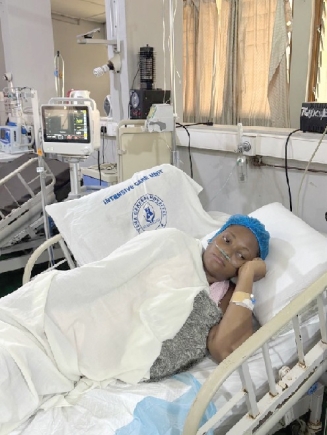
“But instead of improving my condition, complications set in. I began to turn yellow (jaundice), a sign that my red blood cells were breaking down. My condition became critical,” she added.
Doctors then referred her to a higher-level facility for an urgent blood transfusion in order to stabilise her.
Once again, her life hung in the balance, but she survived. She revealed that after her first pregnancy, she had resolved not to have any more children. However, she later became pregnant again.
Reflecting on both pregnancies, she explains that these experiences have shaped her decision not to have more children, as she prioritises staying alive to care for her existing children and continue her work.
A childhood of silence and survival
On her childhood, Ms Arthur noted that unlike many people who only discovered they had the sickle cell disease much later in life, or when trying to have children, she was diagnosed early.
“Many patients, when they feel bone pain, go to the hospital, get treated, and are sent home. So they grow up not even knowing it is sickle cell,” she said.
As a child, she noted that she fell ill frequently, but her family didn’t know it was sickle cell even though some of her family members suffered same .
She added that it was her diagnosis at the age of three that was the eye-opener for her entire family.
“When it was finally certain, my mother informed my teachers about my condition, while my father made me go to schools very close to our home, in Tema, Accra. So I attended the Tema Secondary School for high school,” she noted.
But even with that support, childhood was not easy. Stigma followed her into the classroom. She recalled how a teacher called her aside and told her something that stayed with her for years.
“You people with this disease don’t live beyond 17,” the teacher said.

That experience, as well as constant illness, she said, pushed her into isolation, avoiding friendships as some children were even afraid of her condition. Others were overly careful.
Many simply did not understand it.
“I could not eat like other children. While my other two siblings could eat anything, my meals were carefully planned, rich in iron, especially green leafy vegetables like kontomire, to help my body cope with constant blood loss caused by the rapid breakdown of red blood cells. Even small cold breeze could cause the blood cells to clump, block blood flow, and cause intense pain, especially in the joints,” she said.
She added that at an early age, she started attending a Sickle Cell clinic at Tema General Hospital, where she received regular care, medications such as folic acid and hydroxyurea, and guidance.
Turning pain into purpose
Ms Arthur’s story does not end with her survival. It grows into purpose. Through her work, she has seen how many people still lack basic knowledge about the condition.
Determined to change this, she began by first creating a support group for people living with sickle cell. But it did not go as planned.
“People were not active because of the fear of ridicule. If I didn’t post, nobody engaged,” she said.
She therefore changed her approach. Instead of group engagement, she began working with people one-on-one, offering guidance, encouragement, and practical advice.
Sickle cell and relationships
One of the biggest challenges she noted with sickle cell and relationships was that many people, especially women, struggle to disclose their condition to a potential partner during the early stage. They wait, become emotionally attached, and then fear rejection.
She strongly advised against that, saying “let the person decide early. In my case, my now husband was well aware of my genotype and had witnessed one of my crisis but chose that we build a life”.
To her, honesty was about dignity. Beyond that, she is building a broader advocacy platform centred on one key idea, that people with sickle cell can live full and meaningful lives.
Mindset is the most important
Ms Arthur said she believed that having a positive mindset was important and that many people had already failed in this fight if they chose to become a “burden”.

Beyond relationships, she highlights the importance of personal development and mindset, arguing that living with sickle cell should not define a person’s entire identity.
She recommends that individuals build their confidence, develop skills, whether in beauty, fashion, or digital work, and create meaningful lives beyond their condition.
According to her, personality, attitude, and independence mattered more than physical appearance, and these qualities could help others see beyond the illness.
“When you have something doing and know how to manage yourself, people don’t see you as a burden,” she explained.
Her work extends into awareness campaigns and policy advocacy, contributing to efforts that have improved access to treatment, including making hydroxyurea more accessible under the National Health Insurance Scheme.
