

Twenty-nine-year-old Janet Akutey has yet to develop breasts or go through menstruation. Growing up, she spent most of her adolescence wondering why she had not developed breasts or menstruated like other girls her age.
At a point, she assumed she had delayed puberty, which would resolve with time. When she turned 18, she started looking for answers at medical facilities.
“Anytime I visited a hospital, they did an ultrasound scan and the internal organs showed my ovaries and uterus were visible. So they always concluded I was okay and everything would be fine with time. I would be given medications and scheduled for another appointment,” she told The Mirror in an interview last Wednesday.
She said when she saw no changes after a long time of taking medications, she sought spiritual intervention — moving from one prayer centre to another, hoping her silent prayers would change her situation.
“I couldn’t share my situation with anyone. So most of the time, I just go to the prayer centres to pray on my own. I never discussed with any spiritual person to lay hand on me but I have stayed in prayer camps for days praying,” she said.
After years of seeking answers from hospitals, herbal and prayer centres, it was only in July last year that she found out that she was ‘intersex’; an umbrella term for people who are born with one or more traits in their chromosomes, genitals, hormones or internal reproductive organs that don’t fit the typical male or female patterns.
She arrived at this conclusion following months of research online and connecting with people outside Ghana who had similar traits.
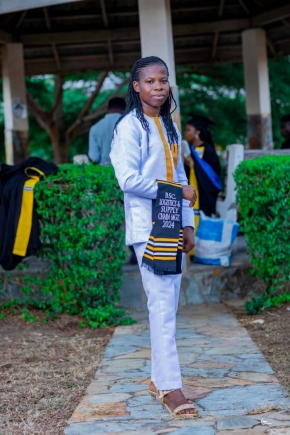
“I was born with ovaries and testicles. And because of the dominance in the male aspect, my body produces a lot of testosterone. I am not even female or male because I have both traits physically and internally,” she explained.
Miss Akutey said it was difficult to discuss her traits with people, including close family, because of the years of psychological distress she had experienced and her thoughts of committing suicide.
It was when she founded the Intersex Persons Society of Ghana, founded by Fafafli Akortsu, that she started getting the support and confidence she needed to speak about her traits.
Searching for answers
Miss Akortsu said she started the society to find answers to her condition.
Unlike Miss Akutey, who has no breasts and has never menstruated, Miss Akortsu, now in her mid-30s, has breasts, and other physical features of a female and has menstruated.
Prior to that, she also experienced delayed puberty and sought medical intervention when her menses didn’t start by the time she completed senior high school.
“Unlike now that I have all the curves, I used to be very masculine; playing football, doing all the racing and handball, and it was a worry for even my parents back at home. They tried every way possible to stop me from playing football with the guys and be the lady that I was meant to be or the girl that I was meant to be,” she told The Mirror.
When she started menstruating eventually around 18 years old, she experienced irregular periods, cramps, heavy bleeding and flows with clots.
“I continued looking for solutions, only to find out that I had hormonal imbalances. When I had the opportunity to do my surgery, then realised that I had internal reproductive structures that had a mix of male and female traits,” she explained.
Getting information in Ghana on the traits was difficult. So she decided to start the society with the hope of connecting with other people with similar traits.
“I had a lot of backlash, especially from my immediate family. They were not comfortable with me coming out to tell my story because already, the rumour in the neighbourhood was “this is a man-woman”.
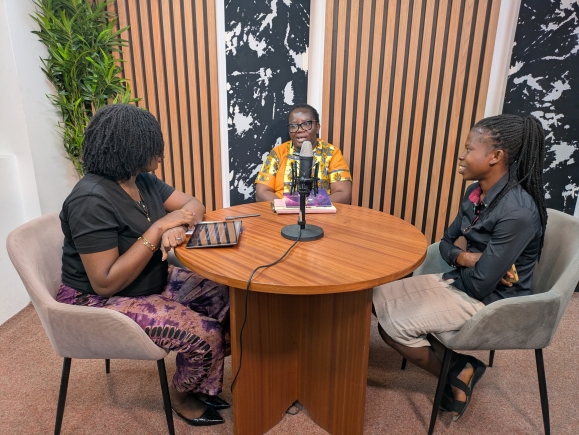
“It was somewhere in 2023 that they realised that I am no longer hiding this thing and I want the whole world to know because of the loneliness and mental torture that comes with it,” she added.
While Miss Akutey is yet to enter a relationship because of the fear of being stigmatised, Miss Akortsu, who has in the past, said getting intimate was always a challenge.
“I even got more worried and concerned because my sexual relationships have always been a problem. I have difficulties when it comes to sleeping with my partner. It looks like I have a blocked vaginal opening where penetration becomes so painful and severe, and all the time it looks like I'm bleeding during sex,” she explained.
Advocacy and support
Today, what started as a page on Facebook is a growing community of individuals around the country who have different traits and have suffered or been stigmatised for years out of no fault of their own.
The two ladies said one of their concerns was the stereotypes society placed on them. Once they started discussing their traits, the common question was whether they were lesbians or who they had sex with.
Miss Akortsu said one of the key issues they are advocating for is a ban on intersex genital mutilation.
“When a child is born and then it is not clear from the manifestation of their genitals whether they are male or female, some doctors and parents want to assign the baby sex so that they can register the birth of the child. Since the birth registration comes with a name and sex marker, hospitals usually rush and send the baby to the theatre.
“Then this child has been assigned female after surgery. Later, at puberty, they start developing masculinity. So the person doesn't develop breasts, the person doesn't have a penis, they develop body and facial hair and the surgery is irreversible,” Miss Akutey explained.
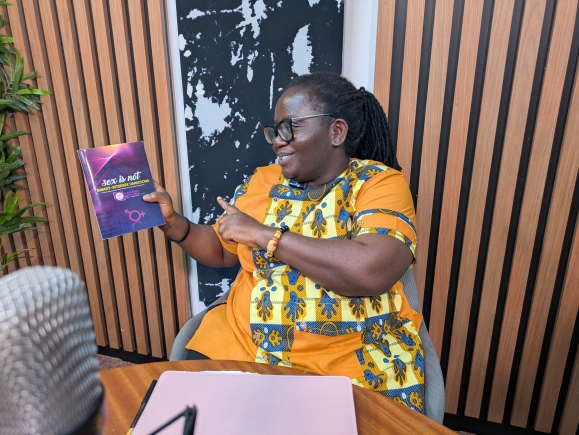
The society is also advocating comprehensive health care, access to psychological support for children with the traits and their parents, and implementation of policies that stop discrimination, violence and harmful practices against intersex persons.
Disorders of sexual development
An endocrinologist at the Korle Bu Teaching Hospital (KBTH), Prof. Josephine Akpalu, in an interview with this reporter last Friday, explained that the correct term to describe these traits is disorders of sexual development, sometimes referred to as disorders of sexual differentiation.
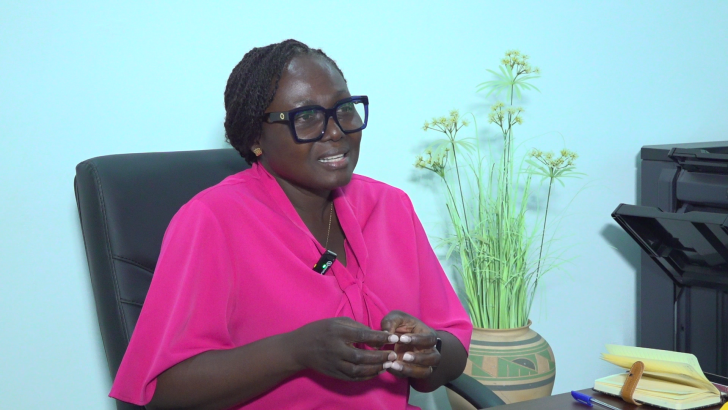
She said it was important to run several medical analyses to understand each individual’s traits, as there were many causes.
“You need to talk to the patient, examine, do some lab tests and then determine whether the patient's problem is at the chromosomal level or the hormone level. Typically, you can have somebody who comes to you with ambiguous genitalia (genitals that aren’t obviously male or female). However, by the time they come to us, they would have determined whether they are male or female because usually they are older than 13 years.
‘Throughout their lives, they would have determined their sex, their parents would have said, this is a girl and they have a female name and all that. Which is a difficulty.
She said, for instance, some girls presented with no breasts or an enlarged clitoris which may look like a penis, while some boys presented with breasts or no penile shaft.
Asked if they could be reproductive, she explained that “compared to the general population, infertility will be higher in that population. But it doesn't mean fertility is impossible. They still have a potential depending on the cause.
“There are some that once we sort out the hormonal issues, everything goes. So for the females, if the person has a normal uterus, and normal ovaries, all you do is take away the excess male hormones and they'll have their menses. But you need to be monitoring them closely. When they get pregnant, there are certain things we need to do.
Prof. Akpalu, who is an Associate Professor at the University of Ghana Medical School, said aside from the issues with reproduction, one of the challenges such people faced was the inability to have normal sexual function.
“In terms of treatment, we are not just looking at making you male or female. We are also looking at the sexual function of your organ because once you decide that you are female, you should make sure that it's functional,” she explained.
She emphasised the importance of education for the general public on the existence of such traits, and lifelong psychological support for people with the traits.
Multidisciplinary approach
At the Paediatric Endocrine Clinic of the Child Health Department at the KBTH last Tuesday, a paediatric endocrinologist, Dr Ewuraa Abena Owusuaa Manu, told The Mirror that once ambiguous genitalia are noticed after birth, the first instance is to run labs to identify the cause.
“So I can’t just look at a child and decide their sex until we have done these extensive investigations.
“It is a roller coaster for parents; you are uncertain whether your child is a boy or a girl and it also involves a lot of money.
For us as health experts, it’s a multidisciplinary approach; you need a surgeon once you decide to refashion. You need a urologist, you need a psychologist and sometimes a geneticist,” she explained.
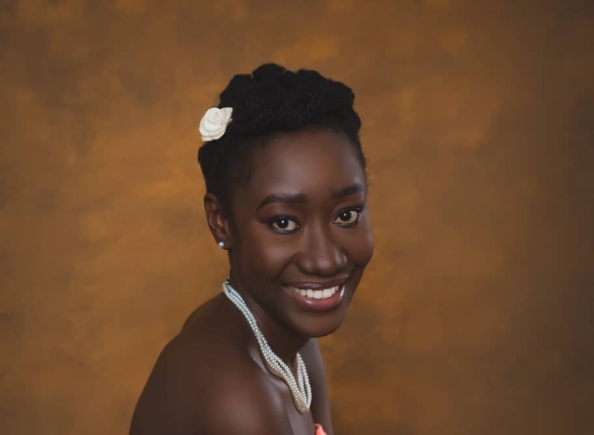
She said a common challenge was that because the labs required are expensive, some parents didn’t show up again after an initial assessment at the clinic.
On how the sex of a newborn with ambiguous genitalia is recorded on a birth certificate, she said in advanced countries, the doctors and parents agree to use ‘a gender of rearing’ based on initial findings and look out for the child’s gender identity before deciding to do a sex change or maintain what was assigned.
“In Ghana, I have seen one patient who was raised as a male but later realised the child genetically was a female. So the parents, at nine months, decided to do a new birth certificate and changed the name and sex,” she recounted.
Dr Manu, who is one of the four paediatric endocrinologists in Ghana, advised that while many parents and health experts were more concerned about surgeries to make a newborn male or female, the focus should be on in-depth analysis to determine the cause.
Writer’s email:
