

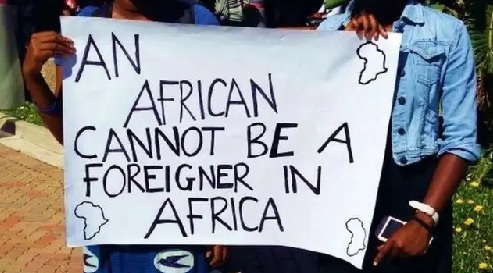
As a long-time observer of Africa's vibrant travel landscape, I have often considered South Africa's remarkable journey from apartheid to a beacon of democracy and a powerhouse of tourism.
However, the shadow of xenophobic violence has threatened to eclipse this hard-won glory, leaving a bitter taste in the mouth of many potential visitors, especially those from within our own continent.
Today, as new waves of anti-immigrant sentiment surface, it's a sobering moment to revisit those concerns and consider the renewed implications for South Africa's crucial tourism sector.
Back in 2015, the nation grappled with a wave of attacks that tragically claimed lives and targeted mostly African immigrants.
The images of armed gangs and looted foreign-owned shops were a stark contrast to the welcoming narrative South Africa had meticulously built, particularly after the successful hosting of the 2010 FIFA World Cup.
That event had, for a time, helped erase the stigma of violence, positioning South Africa as a safe and exhilarating destination.
Yet, the xenophobic incidents revived fears, casting a long shadow over the country's carefully curated brand.
Thulani Nzima, then CEO of South African Tourism, articulated the profound concern, stating that such attacks were "damaging to the brand that we are marketing, damaging to the reputation of the country."
He highlighted how these events "deplete that currency" of warmth and welcoming nature that the nation had so vigorously promoted.
Fast forward. What has changed?
This sentiment remains acutely relevant today.
•Xenophobic attacks in South Africa continue to target foreign nationals, particularly those from other African countries.
•These incidents severely damage South Africa's international image and its reputation as a welcoming destination, especially for African travellers.
•The violence disproportionately impacts the perception of safety, even in regions not directly affected, leading to a potential dip in visitor numbers.
Tourism is far from a peripheral industry in South Africa; it is a cornerstone of its economy. In 2013, it generated $39 billion, both directly and indirectly, accounting for 9.7 per cent of the country's GDP. It's an industry that supports one in every twelve jobs, making its health inextricably linked to the livelihoods of countless South Africans.
The government itself had ambitious targets, hoping to generate nearly 500 billion rand annually and create 225,000 new jobs through tourism by the end of the decade.
This growth has been partly aided by a weaker rand, making it a relatively affordable destination for international visitors.
However, the perceived safety and warmth of a destination are paramount for travellers. Graphic images of violence and reports of harassment against migrants can quickly erode this perception, regardless of economic incentives.
One of the most profound impacts of xenophobia on South African tourism lies in its relationship with the rest of the continent.
Statistics from 2015 revealed that Africans accounted for more than 60 per cent of South Africa's visitors, far outstripping arrivals from Europe, North America, or Asia.
For instance, in December of that year alone, nearly 700,000 Africans visited for the holiday, compared to about 150,000 from Europe, 32,000 from North America, and 16,000 from Asia.
This demographic reality means that attacks targeting fellow Africans are not just isolated incidents; they directly alienate the largest source market for South African tourism.
When countries such as Ghana call on the African Union to send fact-finding missions or facilitate the evacuation of their citizens, as has happened recently, the message sent across the continent is unequivocally negative.
The current resurgence of xenophobic attacks, described as "new waves" and involving vigilante actions against African risks, reignites these fears and further damages the country's brand.
The implications extend beyond just tourist numbers. South Africa's ambition to strengthen trading relations with the rest of Africa, crucial for rebuilding its economy after past recessions, is also jeopardised.
The attacks undermine trust and cooperation, making it harder for South African businesses to operate in other African countries and for the nation to attract investment from its continental partners.
The safety of South Africans living or travelling in other African nations can also become a concern, creating a cycle of mistrust.
How can the rainbow nation get out of its current isolation and quagmire?
They must prioritise safety and justice: South Africa must demonstrably ensure the safety of all residents, including foreign nationals, and swiftly bring perpetrators of xenophobic violence to justice.
They must rebuild Trust with African Neighbours: Targeted diplomatic efforts and public campaigns are needed to reassure African nations and their citizens that South Africa is a welcoming destination.
It will be useful to reinforce positive messaging: South African Tourism must work overtime to counter negative narratives by highlighting the country's true spirit of ubuntu and its diverse, inclusive offerings.
Support local tourism businesses: Assist businesses, especially those in affected areas, to mitigate losses and adapt to changing travel patterns.
They must address Root Causes: Long-term solutions require addressing underlying socio-economic issues such as unemployment, which are often cited as drivers of xenophobic sentiment.
Finally, ordinary citizens massing up as a mob must not be the ones checking the status of immigrants!
