

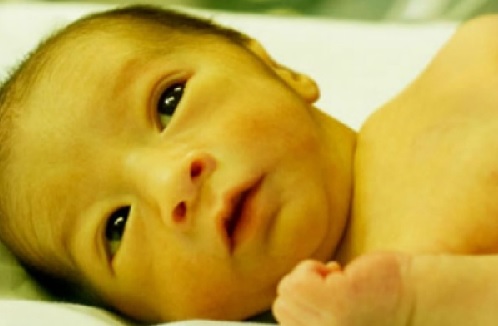
Any baby with untreated severe jaundice is at risk of brain damage from the jaundice. This does not in any way mean that every baby with jaundice will develop brain damage.
Brain damage resulting from jaundice depends on the severity of the condition, the rate at which it develops, the level of bilirubin in the bloodstream, and the integrity of the blood-brain barrier.
Most babies with jaundice get better on their own. If their skin is very yellow, they might need treatment. Danger signs of jaundice to warrant hospital admission include;
Extensive jaundice - from the head and spreads to the toes,
• A constantly moving baby,
A baby who refuses to breastfeed or refuses feeds.
• A baby who does not have at least four wet or dirty diapers in 24 hours
• A baby with a shrill cry, or gasping for breath, and
• A baby with a high temperature.
It is never acceptable for a baby to develop brain damage from jaundice because it is totally preventable. If the jaundice level gets beyond a certain level, the baby can be treated with phototherapy.
Related Article: Yellow Month is here
This is a form of treatment in which a jaundiced baby is exposed to blue light for most of the day. This must be done in a hospital setting.
The blue light does not bother the baby. They are warm and feel good. The blue light converts the jaundice into a form that can be eliminated through the urine, so the level in the blood decreases.
This prevents the jaundice from crossing into the brain.
Mothers need to cooperate with healthcare staff when a baby is placed under phototherapy lights.
In many cases, mothers remove their babies from under the lights to cuddle them or keep them beside them, often for reasons that do not justify interrupting the treatment.
If the baby gets severely jaundiced and the level of bilirubin gets dangerously high, an exchange of blood transfusion is done.
This is a specialised type of blood transfusion which dilutes the baby’s blood as much as possible.
It is done by taking out the blood with jaundice from the baby a little at a time and infusing somebody’s blood bereft of the jaundice into the baby.
The result is to ensure that the baby’s blood has a very reduced amount of bilirubin.
With reduced bilirubin levels in the baby’s blood, the risk of it crossing into the brain is very low. After this procedure, the baby is still kept under the phototherapy light as the jaundice level is monitored in the blood.
Unfortunately, in our part of the world, a lot of babies are diagnosed with this condition late, and most of them die, and those fortunate enough to survive often have complications such as developmental delays, hearing loss, intellectual disability and speech impairment.
Reasons for late presentation to healthcare practitioners and delayed diagnosis are multifactorial; however, most are rooted in cultural beliefs and practices, while a smaller number are attributable to medical factors.
The cultural reasons are mostly what we do at home when a child is born. Traditionally, the baby is supposed to be kept in the room away from the “evil” prying eyes of visitors and onlookers.
The baby is only allowed to be brought out after being outdoors.
Because the room tends to be dark and sunlight is needed to appreciate jaundice very well by the untrained eyes, it is usually the case that nobody notices jaundice when it starts to develop early, especially when the mother is a first-time mother.
There is no harm in bringing newborns out in the open space, at least to observe the colour twice a day.
If for nothing at all, the development of jaundice would be picked up early and interventions put in place for its remedy.
Besides this, there is the crazy idea of keeping camphor or naphthalene balls in the house.
Some put them in clothing, water, and some even put them in their mouth and eat them for whatever reason best known to them.
Camphor sublimes, which means it changes from solid to gas directly without going through the liquid phase, and so gets into the air unknowingly.
This substance, when inhaled, causes severe breakdown of red blood cells and jaundice in some genetically predisposed babies, such as those with G6PD deficiency.
If severe, the jaundice or more appropriately, the bilirubin, can cross the blood-brain barrier and cause damage to the brain.
There is this wrong notion that colostrum is “dirty” milk, so some mothers refuse to breastfeed, and the resultant dehydration worsens the jaundice.
Also, we need to recognise early when the child is not well and report to the hospital early. Delays in seeking health care sometimes come at a huge cost when we are dealing with jaundice in the newborn.
There are also medical reasons why some children develop jaundice, and it is important that healthcare workers, particularly those directly involved in delivering babies, anticipate those at risk of jaundice and educate the mothers to be on the lookout for it.
Every mother who is of blood group O is at risk of having a child who will develop jaundice, especially if the father is of a different blood group, such as group A, B or AB.
Thus, healthcare workers should be able to anticipate and put measures in place to treat jaundice when it develops.
Furthermore, any rhesus-negative mother is at an increased risk of having a baby who will develop jaundice, particularly when the husband is rhesus positive.
Whenever we check our blood group, it is reported as O positive or negative, B positive or negative, etc.
It is this positive or negative that the rhesus status refers to. So, any mother with a rhesus-negative blood group should have a certain injection called anti-D or Rhogam given during pregnancy or within 72 hours of delivery to protect subsequent pregnancies against jaundice.
Such a baby should be detained in anticipation of jaundice and treatment administered when it occurs.
Children of such mothers should not be discharged home after the conventional six hours if they are stable. They should be kept longer and observed.
Lastly, I want to draw attention to “sunbathing”, which seems to be regular advice given to mothers by some healthcare workers as a way of treating jaundice in the newborn. Since there is some scientific basis, it is absolutely inappropriate to tell mothers to do that unsupervised.
Even with phototherapy, there have been instances where the baby has had to undergo an exchange blood transfusion because the rate of production of the red cells was too rapid.
Therefore, telling mothers to sunbathe without checking the bilirubin levels in the blood is dangerous.
No mother should be told to sunbathe. If the baby is jaundiced, it is better to refer for assessment and treatment than to advise sunbathing.
So many babies have suffered brain damage, even though mothers religiously sunbathed those babies on the orders of some health workers.
Similarly, there is no room for giving glucose solution as a way of treating neonatal jaundice. Just send the baby to the hospital for a check-up!
The writer is a member of the Paediatric Society of Ghana and the Director of Medical Affairs of Korle Bu Teaching Hospital.
