
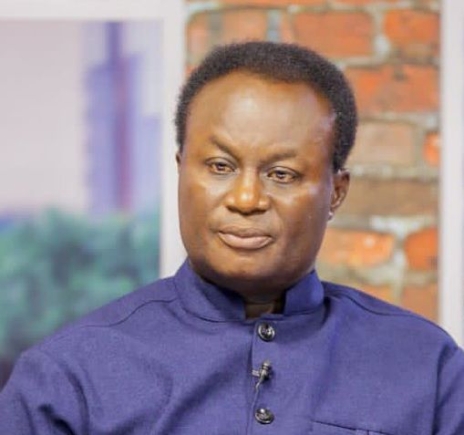
Yaw Anokye Frimpong backs Mahama on reparations, calls for united African front
Historian Yaw Anokye Frimpong has praised President John Dramani Mahama for his sustained advocacy on reparations, while calling on African leaders to intensify collective demands for the return of artefacts and valuables taken from the continent during the trans-Atlantic slave trade and colonial era.
He was peaking during a radio interview with Angel FM on Tuesday [January 20, 2026], against the backdrop of renewed international debate on reparations for slavery and colonisation, and growing scrutiny of how Africa’s historical losses continue to shape its development.
He said African leaders must speak with one voice on reparations, especially at a time when several European countries have publicly acknowledged their involvement in the slave trade. According to him, unity among African states is critical if the continent is to secure justice for centuries of exploitation.
“President Mahama deserves recognition because, among African leaders, he is the one who has consistently brought up the subject of reparations, and the African Union has even established a department specifically for that purpose,” Mr Frimpong said.
He argued that recent acknowledgements by European states strengthen Africa’s moral case, describing the trans-Atlantic slave trade as one of the gravest crimes in human history. “Today, Europe acknowledges that Africa was plundered and that the 350 years of slavery constituted the most cruel and protracted forced human transplantation in human history,” he added.
Mr Frimpong also urged Africans on the continent and in the diaspora to close ranks, noting that historical divisions among Africans had made the continent vulnerable to external exploitation. His remarks followed reactions to the documentary From Slaves to Bond, which has attracted significant attention online.
“The only reason someone would steal what belongs to you is disunity among you. Africans must speak with one voice,” he said. “We must also connect with Africans in the diaspora. We relate to figures such as Mike Tyson and Muhammad Ali, even though they are not Ghanaians. Understanding and uniting with them will help ensure that the horrors of the past are not repeated.”
He further called on African leaders to draw lessons from global institutions such as the United Nations, which was established after the Second World War to promote cooperation and prevent future conflicts, stressing that unity remains the strongest safeguard against exploitation.
On historical narratives, Mr Frimpong welcomed the production of documentaries and scholarly works on slavery and the looting of African artefacts, saying they provide opportunities for African countries to interrogate, correct and enrich how their histories are told.
The renewed calls come amid growing momentum for the restitution of African cultural property. In November 2025, the Asantehene, Otumfuo Osei Tutu II, received 130 gold and bronze artefacts from the United Kingdom and South Africa. Some of the items were looted during colonial incursions, while others were acquired on the open market.
The returned artefacts included royal regalia, drums and ceremonial gold weights dating back to the 1870s, underscoring the central role of gold in Asante culture. British troops were involved in a series of late 19th-century conflicts, known as the Anglo-Asante Wars, during which the Asantehene’s palace was plundered on two occasions.
Although calls for restitution have intensified, many artefacts have been returned only on loan. In 2024, 32 looted items went on display at the Manhyia Palace Museum under a three-year loan arrangement involving the Victoria and Albert Museum, the British Museum and the Asante king.
Beyond Ghana, similar efforts are unfolding across the continent. In 2022, Germany became the first country to return the Benin Bronzes to Nigeria, acknowledging what it described as its “dark colonial history.” The artefacts were looted by British forces in 1897 from the Kingdom of Benin, in present-day Edo State, and later dispersed across museums and private collections around the world.
Mr Frimpong said these developments should embolden African leaders to sustain pressure for reparations and restitution, insisting that justice for historical wrongs remains inseparable from Africa’s quest for unity and dignity.
