
The Tema Oil Refinery (TOR) is currently unable to process crude oil produced from Ghana’s offshore fields because it lacks the equipment required to refine the product to meet local fuel standards, the Ministry of Energy and Green Transition (Ghana) has disclosed.
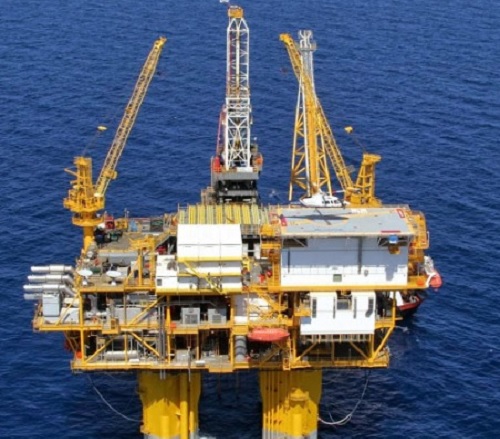
A Technical Adviser at the ministry, Dr. Yussif Sulemana, said the refinery does not have two critical processing units needed to refine crude from Ghana’s offshore oilfields, including the Jubilee Oil Field, TEN Oil Field and Sankofa Oil Field.
Dr Sulemana made the disclosure during an interview on Citi FM on Monday, March 9, 2026, as tensions in the Middle East continued to push global crude oil prices above 100 dollars per barrel.
Listen to the audio below;
“We need to add some other equipment,” he said. “Let’s say a diesel hydro unit that can reduce the sulphur content, and also an isomerisation unit, what you call the reformer unit, that can increase the octane number.”
According to him, the refinery’s current crude distillation process cannot produce fuel that meets Ghana’s required 91 Research Octane Number (RON) standard for petrol.
Without the necessary processing units, the fuel produced from Ghana’s crude does not satisfy local market specifications and therefore cannot legally be sold at the pump.
Dr Sulemana said this limitation has resulted in a situation where Ghana exports its crude oil while the refinery processes imported crude that is more suitable for its existing configuration.
“I don’t think that we are refining what is coming from Jubilee,” Dr Sulemana said. “We are not bound to refine what is coming from Jubilee. Normally, it is the economics that will dictate.”
He explained that Ghana’s crude oil is considered premium quality on the international market and therefore attracts a higher price abroad.
“Ghana crude oil is a premium quality. If you know that when you export this crude you’re going to get much more and buy maybe a cheaper product that we can put into the refinery and refine, that would be much better,” he said.
The adviser noted that the government is aware of the refinery’s technical limitations and is working to upgrade the facility so it can process Ghana’s crude in the future.
“Our effort is to make sure that TOR would be in a better position to refine Ghana crude,” he said, adding that plans are underway to expand the refinery’s capacity and develop a new processing plant within the TOR enclave.
“A new refinery within TOR is on the horizon,” he added.
Dr Sulemana also addressed concerns about fuel supply in Ghana amid rising tensions in the Middle East.
He said the country is not facing an immediate shortage of petroleum products, although global price increases remain a concern.
“We are not immediately threatened by the supply or the availability of the product,” he said. “What we are immediately threatened with is the price. Are we able to maintain the price? That is a big question that we are all looking at.”
According to him, Ghana currently has about five to six weeks of petroleum product stocks, with additional vessels already docked and ready to discharge.
“We have some ships that have been docked at the harbour, ready to discharge. So, if these ships are discharged, we can go up to 10 weeks,” he said.
He also disclosed that Ghana is exploring supply arrangements with Nigeria’s Dangote Refinery but cautioned that the refinery would still price its products based on international market conditions.
“Dangote is not pricing because they are within Africa or they are within our sub-region they will subsidise for us. That’s not going to be the case. They are also going to price on the market basis,” Dr Sulemana said.
On the issue of domestic fuel prices, he said the government is considering several policy options, including allowing market forces to determine prices, introducing subsidies to cushion consumers, or using revenue from Ghana’s crude exports to offset rising costs.
“We are working out a strategy to be able to cascade this windfall back to the downstream,” Dr Sulemana said.
He added that authorities are closely monitoring developments in global oil markets and will adjust their response depending on how the situation evolves.
“We are monitoring the market. Depending on how the market shifts, then we’re kicking in other strategies,” he said.
Dr Sulemana also referenced previous global oil shocks, including the Yom Kippur War, which triggered a sharp rise in oil prices following supply disruptions.
“People who are aware of this history will never sleep when they see things like this unfolding,” he said.
