
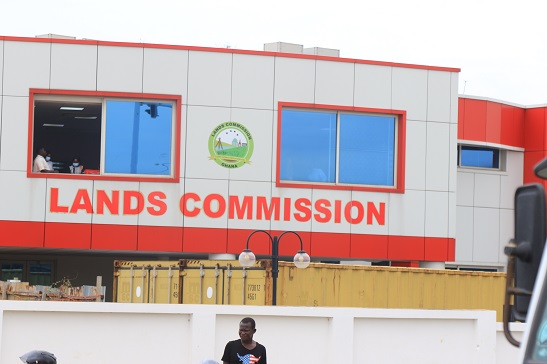
The Lands Commission will establish a specialised desk to provide faster land record checks for security and law enforcement agencies investigating suspected money laundering through property purchases.
The Acting Executive Secretary of the Lands Commission, Professor Anthony Owusu-Ansah, disclosed this on 8 March 2026 during an interview on TV3’s Hot Issues programme.
Prof. Owusu-Ansah said the initiative is intended to support investigations into individuals suspected of using real estate transactions to conceal illicit funds.
“If somebody is having funds, the best way to wash that fund is to buy property,” he said in the interview. “If we are not sure what the person’s source of revenue is, before you buy the property you have to do an indenture and do stamping. During the stamping stage, you will know who is buying, who is involved and all that. If you are not sure, you should alert them.”
According to him, the Commission recently held discussions with the Narcotics Control Commission as part of arrangements leading to the proposed system.
Under the plan, security agencies will submit a suspect’s site plan to the Lands Commission to conduct a search. Verified ownership and transaction records will then be provided to the requesting agency.
“They want us to do that promptly,” he said. “So they need some specialised service from us. And not just them, but all the security agencies also.”
Prof. Owusu-Ansah explained that the Lands Commission already assists security agencies with land record verification, but the new desk will formalise the process and improve response times.
“Almost all the security agencies, EOCO and National Security, on a daily basis they bring us documents for us to verify and provide information for them,” he said. “But they wanted the results to come promptly, so they needed a specialised desk, people they can contact at the Lands Commission to handle that.”
Currently, requests from security agencies pass through the same administrative channels used for public land searches. The process does not have designated officers or a fixed turnaround time. The proposed desk will introduce a separate channel to handle such requests.
When asked whether the arrangement would apply only to state land, Prof. Owusu-Ansah said private land transactions would also be covered.
“Even private land,” he said. “Where they have a lead that this person, the kind of money that he is having needs to be investigated, that is why he is buying this, they can let us have the site plan. We do our search and we communicate to them.”
Private and customary land transactions often involve cash payments and limited documentation. Including such transactions in the search process could expand the scope of checks available to investigators.
Prof. Owusu-Ansah did not indicate when the desk would begin operations.
However, he said discussions with the Narcotics Control Commission and other security agencies have progressed, and the service model has been agreed in principle
