
Ensign Global University and Engage Now Africa lead Albinism Awareness Day commemoration in Kpong
Ensign Global University, in collaboration with Engage Now Africa, has commemorated International Albinism Awareness Day 2026 through a stakeholder engagement programme aimed at strengthening inclusion, awareness and improved health outcomes for persons with albinism in Ghana.
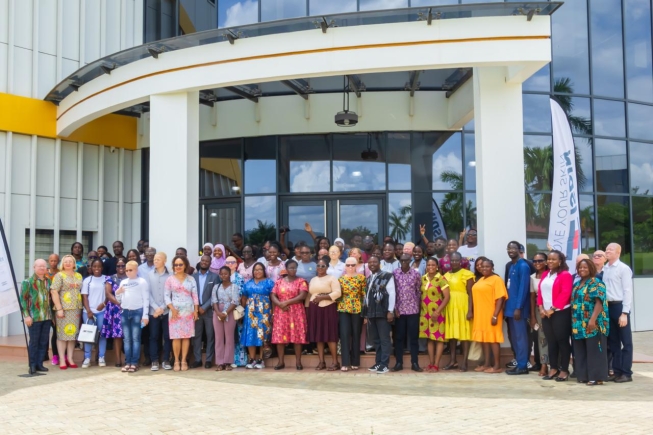
The commemoration took place on June 12, 2026, at the CLIP Foyer of Ensign Global University in Kpong and convened persons with albinism, healthcare professionals, educators, policymakers, researchers, students, civil society actors and media representatives. The programme was designed to foster multi-sectoral dialogue and coordinated action on the rights, health needs and social inclusion of persons with albinism.
International Albinism Awareness Day, observed globally on 13th June each year, serves to highlight the lived realities of persons with albinism and to advance advocacy for dignity, protection and equal opportunity. In Ghana, persons with albinism continue to face intersecting challenges including increased risk of skin cancer and visual impairment, stigma and discrimination, and barriers to accessing appropriate healthcare and education services.
The IAAD 2026 commemoration provided a platform for evidence-informed discussion and stakeholder engagement aimed at strengthening national responses to these challenges. The event also supported dissemination of findings from a 2025 joint study conducted by Ensign Global University and Engage Now Africa on albinism-related health and social outcomes.
Commitment from Ensign Global University
On this International Albinism Awareness Day, Ensign Global University affirmed its commitment to ensuring that people with albinism have opportunities for experiencing good health, can access education, and are able to pursue opportunity pathways. The university stated that it is committed to reducing barriers to accessing health system resources as fundamental to national development, as evident in its research, collaboration and advocacy endeavours.
Through strong partnerships with organisations like Engage Now Africa, the university is helping to drive progress in improving conditions that support health and prosperity among persons with albinism in Ghana.
Professor Stephen Manortey of Ensign Global University called on Ghanaians to extend respect, protection and everyday acts of kindness to persons with albinism.
"Persons with albinism deserve our respect, protection, and everyday acts of kindness, whether through accessible healthcare, inclusive education and employment opportunities, or simple gestures of friendship and support. Together we can challenge harmful myths, stand against discrimination and violence, and create communities where persons with albinism thrive without fear, just because of the tone of their skin. Your support and advocacy will help improve the well-being of these individuals and affirm that every person is equally valued," he said.
Engage Now Africa's perspective
Cecelia Amankwah, Country Director of Engage Now Africa, expressed deep appreciation to Ensign Global University and all partners for convening the important dialogue.
"On behalf of Engage Now Africa, I wish to express our deep appreciation to Ensign Global University and all partners for convening this important dialogue on International Albinism Awareness Day 2026. This platform reflects a shared commitment to advancing dignity, health, and inclusion for persons with albinism in Ghana," she said.
She noted that her organisation continues to witness both the resilience of persons with albinism and the persistent barriers they face in everyday life, particularly in accessing adequate healthcare, protection and social acceptance.
"These challenges are not inevitable; they are shaped by systems, attitudes, and gaps that we collectively have the responsibility to address. Engage Now Africa remains committed to working alongside partners to translate dialogue into measurable impact – ensuring that inclusion is not aspirational, but a lived reality for every person with albinism in Ghana," she stated.
Government commitment to inclusion
Mr Isaac Asante, Eastern Regional Director of Social Welfare, said celebrating all skin tones requires deliberate action rather than symbolic recognition.
"Celebrating all skin tones means more than symbolic recognition. It requires deliberate action. It requires inclusive education systems where children with albinism can learn safely and confidently. It requires access to essential health services, including regular eye care and skin protection. It requires social protection mechanisms that respond to vulnerability. It requires enforcing laws that protect against discrimination and violence," he said.
He added that as a ministry committed to advancing social welfare, inclusion is central to national development. "A society that values all skin tones is a society that values human rights, diversity, and shared progress. Today, we celebrate resilience, talent, and contribution. People living with albinism continue to excel in education, the arts, public service, advocacy, and many other fields. Their leadership strengthens our communities," he stated.
Association's demands
Mr Newton K. Katseku, Director of the Ghana Association of Persons with Albinism, highlighted that despite progress in awareness, challenges persist in access to healthcare, education, employment, social protection and protection from discrimination.
"We therefore call on all stakeholders to strengthen efforts to ensure equal opportunities, access to essential services such as sunscreen and low-vision support, and inclusive environments that enable persons with albinism to participate fully in society. The Ghana Association of Persons with Albinism remains committed to advancing policies and programmes that promote their well-being and full inclusion," he said.
Research findings
Dr Sandra Boatemaa Kushitor presented findings from a three-year research study conducted with persons with albinism, indicating that they continue to face discrimination due to their skin colour.
"Results from our three-year research with persons with albinism indicate that they are discriminated against due to their skin colour. We recommend that persons are provided with equitable access to healthcare, education, protection, and livelihood opportunities. Through collective engagement and awareness creation, we can help challenge misconceptions and promote dignity and inclusion," she said.
Sunscreen donations
As part of the event, representatives from IBA Beauty provided free samples of sunscreen to share with persons with albinism and participants at the event. The donation was intended to support skin protection efforts, as persons with albinism are at heightened risk of skin cancer due to the absence of melanin.
Collaborative approach
The programme featured keynote remarks and technical presentations from institutional leaders and experts, including Dr Philip Peprah, Mrs Irina Ofei, Ms Cecilia Amankwah, Dr Jeannette Aryee-Boi, Dr Boateng Wiafe, Madam Janet Adenyo and Mr Andrew Daklo.
The engagement focused on strengthening awareness, improving cross-sector collaboration, and promoting inclusive health and education systems for persons with albinism in Ghana. Key sessions included opening remarks and keynote addresses, presentations from Ensign Global University and Engage Now Africa, clinical expert presentations on dermatology and orthodontics, a stakeholder dialogue session, and advocacy messaging and media engagement.
The organisers anticipate that the commemoration will contribute to improved public understanding of albinism, stronger institutional partnerships, and enhanced advocacy for inclusive policies and service delivery. Creating inclusive systems for persons with albinism requires sustained collaboration between academia, healthcare institutions, government agencies and communities. The programme convened between 80 and 100 participants, including persons with albinism, health workers from selected facilities, Ensign Global University faculty and students, teachers from selected schools, representatives from government ministries and agencies, civil society organisations and members of the media.
