
Africa cannot afford to look away from harmful practices any longer
Across Africa, silent crisis continues to unfold in homes, villages and institutions; one that steals futures, violates rights and undermines the continent’s development.
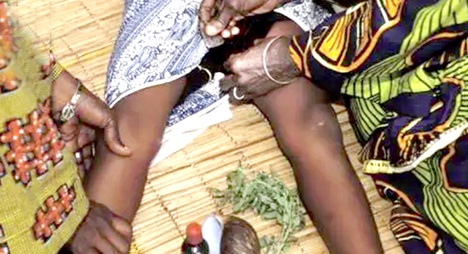
Female Genital Mutilation (FGM) and child marriage persist as some of the most entrenched harmful practices affecting millions of children.
The 2026 Thematic Report of the African Committee of Experts on the Rights and Welfare of the Child lays bare this troubling reality, reminding us that real progress remains insufficient.
These practices are not relics of a distant past.
They are daily violations occurring despite decades of advocacy, legal reform and continental commitments.
The report points bluntly to the complex forces that allow these practices to endure, including deeprooted cultural norms, poverty, weak enforcement, conflict, displacement and climaterelated hardships.
These overlapping crises erode protective systems and make girls disproportionately vulnerable to FGM and child marriage.
African regional instruments such as the African Charter on the Rights and Welfare of the Child and the Maputo Protocol explicitly prohibit harmful practices and uphold 18 as the minimum age of marriage.
Most African Union (AU) member states have incorporated these standards into national laws.
Yet, the report’s assessment across 10 countries reveals a harsh reality: enforcement is inconsistent and in many places, the law has not penetrated the social norms that drive these practices.
Customary and religious exceptions routinely undermine statutory protections. In several communities, tradition still speaks louder than the constitution.
Geography and the limits of legislation
One of the report’s most sobering insights is that children’s rights often hinge on geography. In rural or crisis affected areas, access to justice, protection services or even basic awareness of legal rights is severely limited. In some troubling cases, the legal system inadvertently criminalises survivors seeking help; an outcome that illustrates how fragile child protection mechanisms are.
The report evaluates progress using nine key indicators, from criminalisation and minimum marriage age to data collection, budgeting, and survivor centred services.
This structured assessment makes it clear that legislation alone cannot uproot practices shaped by generations of cultural conditioning. Laws matter.
Enforcement, political will, social mobilisation, and sustained investment also matter. Without these, even the strongest statutes remain aspirational.
Encouraging signs
The continent is not standing still.
There are encouraging signs of political courage and legal reform. Sudan’s landmark 2020 criminalisation of FGM marked a turning point.
Somalia, long considered one of the most challenging contexts, witnessed significant progress when the Galmudug State enacted an anti FGM law in 2024, followed by Jubaland in 2025.
Zimbabwe’s 2022 Marriage Act removed all exceptions to the minimum age of 18, reinforcing absolute protection for children.
Uganda’s Constitutional Court, in 2023, struck down conflicting customary and religious provisions that had long muddied the waters of child marriage enforcement.
Sierra Leone’s 2024 Prohibition of Child Marriage Act represents yet another bold step toward aligning national law with regional standards.
These developments show what is possible when leadership and legal reform converge.
Progress is still uneven and fragile. In response to legal pressure, harmful practices are evolving.
The rise of cross border FGM allows families to evade national laws.
Medicalised FGM, performed by health professionals, creates a dangerous illusion of safety while perpetuating the same rights violations.
Conflict and climate related displacement further push families into desperate survival strategies, with child marriage often viewed as a protective or economic necessity.
These dynamics show that harmful practices are not just cultural phenomena; they are intertwined with governance, inequality and systemic vulnerability.
What must be done
First, governments must close legal loopholes.
Cultural or religious exceptions cannot coexist with universal child protection.
A child should not lose her rights simply by crossing into a traditional jurisdiction.
Second, enforcement mechanisms must be strengthened.
Police officers, judges, health workers and childprotection agencies need adequate training, resources and oversight. Protection cannot depend on the goodwill of individual actors.
Protection must be built into institutions.
Third, community centred approaches are essential.
Change imposed from above often triggers resistance, but transformation nurtured from within can shift social norms sustainably.
Religious leaders, traditional authorities, youth advocates, and especially survivors, should become allies in child protection.
Most important, the Thematic Report of the African Committee of Experts on the Rights and Welfare of the Child emphasises listening to girls themselves.
Their voices, when amplified, become a potent force for change.
Empowered girls are not just beneficiaries of reform.
They are architects of reforms.
Africa stands at a crossroads.
The report’s message is unmistakable: harmful practices are eroding the continent’s future.
To ignore them is to accept a future where millions of children are left behind.
If Africa is to move forward on two strong legs, it must confront these practices with unwavering resolve.
The path forward is clear.
What is needed now is urgency, commitment and collective courage.
The writer is an Associate Professor of English at UNCW teaching and researching technical, scientific and professional communication.
Email:
