
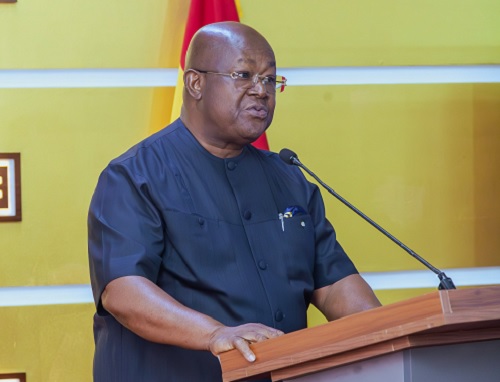
August 6 helicopter incident: Poor visibility caused crash
The tragic crash of the Ghana Air Force Z9-EH helicopter on August 6, 2025, which claimed the lives of all eight persons on board, has been officially attributed to a sudden and severe weather phenomenon known as downdraft.
This conclusion was reached by the high-powered Accident Investigation Board constituted by President John Dramani Mahama, which presented its final report to the President at the Jubilee House in Accra yesterday.
The helicopter, with registration number GHF 631, was on a scheduled flight from Accra to Obuasi when it went down in the Dampia Forest Reserve within the Adansi Akrofuom District in the Ashanti Region.
The investigation board, chaired by the National Security Coordinator, Commissioner of Police (COP) Abdul-Osman Razak, was mandated to enquire into the cause and circumstances of the accident in accordance with Ghana Airforce Flying Orders and international aviation standards.
The board, constituted on August 25, 2025, drew membership from the Ghana Air Force and the Aircraft Accident and Incident Investigation and Prevention Bureau.
Examination
After a thorough examination, the investigation determined that the direct cause of the accident was a sudden loss of altitude and lift due to downdraft.
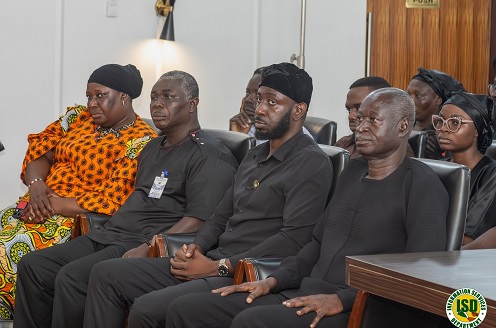
Some relatives of the victims
The report, which was presented by Captain Paul Forjoe (retired), a member of the committee, clarified that this loss of altitude occurred without a change in power or pitch attitude, a signature characteristic of the powerful downward air currents associated with changing environmental conditions over high terrain.
In an effort to rule out any human factors, the board said it meticulously examined the medical and psychological records of the flight crew.
The review found no known medical or psychological conditions in the flight captain, co-pilot, or the technician at the time of the flight.
Witnesses to their pre-flight activities described all three as calm, prepared and professional, with fatigue or medication ruled out as factors affecting their performance on that fateful day.
However, the investigation shed light on deeper organisational and systemic factors within the national aviation infrastructure that, while not direct causes, presented significant safety challenges.
These included limited national navigational capability for providing weather services in en route and remote areas, a lack of enhanced simulator training for pilots and the absence of critical flight monitoring systems such as Flight Data Monitoring and real-time tracking technologies like Secondary Surveillance Radar.
Recommendations
To prevent a recurrence of such a tragedy, the investigation board has issued a comprehensive list of safety recommendations aimed at modernising the Ghana Air Force.
Key among them is the urgent call to acquire modern aircraft equipped with Terrain Avoidance and Warning Systems and modern navigation systems.
The board also strongly recommended the installation of Cockpit Voice Recorders and Flight Data Recorders of audio-visual capable types.
Further recommendations included investing in flight simulators for recurrent pilot training, contracting a certified aviation weather provider and deploying en route navigational aids and tracking systems.
The acquisition of modern ground support equipment was also highlighted as a critical need.
In its conclusion, the board characterised the Z-9 EH accident as an unfortunate and sudden weather-related event.
It expressed confidence that the diligent implementation of its safety recommendations would be crucial in preventing the recurrence of such accidents, thereby safeguarding national assets and lives in the future.
The report now stands as a sombre but vital document, charting a course toward a safer and more resilient aviation environment for Ghana.
Committee members
COP Razak’s committee had Air Cdre D.A. Akrong, an Aircraft Accident Investigator, as Lead Investigator; with Group Capt. Nii Adjei Aryeetey, a pilot, as a Member.
Others on the committee were Wg Cdr A.R. Mustapha, a pilot; Wg Cdr A Shaibu, aviation medical specialist; Sqr Ldr B.B. Agbosege, an engineer and aircraft accident investigator; Lt Gen. T.N. Amoako, a clinical psychologist; Capt. Forjoe, an aircraft accident investigator; Eric Ewusie, an engineer and aircraft accident investigator; and Maame Afua Asor Danquah, a lawyer with the National Intelligence Bureau.
Recall
Serving state officials, including Minister of Defence, Dr Edward Omane Boamah, a physician-turned-statesman driving military modernisation; and Minister of Environment, Science and Technology, Dr Ibrahim Murtala Muhammed, a fierce advocate against illegal mining, were among the eight who set off from Accra en route to an anti-galamsey mission in Obuasi in the Ashanti Region when disaster struck.
Others on the flight were Alhaji Mohammed Muniru Limuna, acting Deputy National Security Coordinator, a quiet strategist revered for crisis management; Samuel Sarpong, a former Ashanti Regional Minister and a Vice-Chairman of the governing party; and Samuel Aboagye, a Deputy Coordinator of the National Disaster Management Organisation, praised for grassroots pragmatism.
Squadron Leader Peter Bafemi Anala, who became Wing Commander posthumously; Flying Officer Manaen Twum Ampadu, the co-pilot, who became Flight Lieutenant posthumously; and Sergeant Ernest Addo-Mensah, who became Flight Sergeant posthumously, were the Air Force crew whose vigilance had safeguarded countless missions.
