
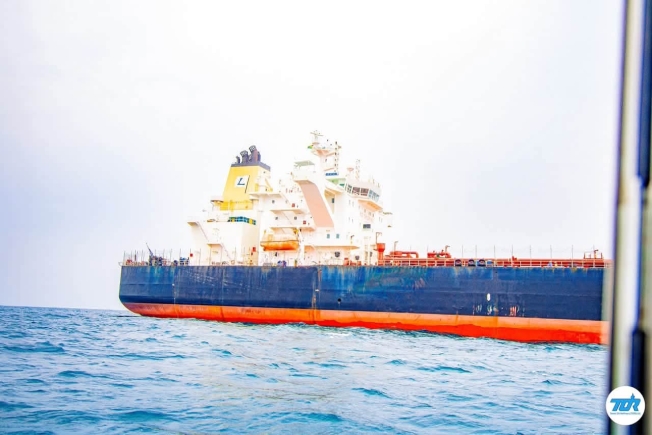
Government has allocated a one-million-barrel parcel of crude oil from the Jubilee Field for processing by local refineries, marking a major step towards strengthening Ghana’s energy security and expanding domestic refining capacity.
The initiative formed part of the government's broader strategy to build a resilient downstream petroleum sector by adding value to Ghana's crude oil resources instead of relying heavily on imported refined products.
Delivering the keynote address at the opening of the Ghana International Petroleum Conference (GhIPCon) 2026 in Accra on Thursday, the Minister of Energy and Green Transition, Dr John Abdulai Jinapor, representing President John Dramani Mahama, explained that the allocation was a deliberate policy decision to support local refineries, promote domestic industry, and retain more value within the Ghanaian economy.
Building on the success of the first allocation, he announced that the next parcel of Jubilee crude would be supplied to the Tema Oil Refinery (TOR) as part of efforts to strengthen the state-owned refinery and sustain Ghana's refining capacity.
The minister said expansion projects at both the Tema Oil Refinery and Sentuo Oil Refinery would enable the two facilities to meet about 70 per cent of Ghana's domestic demand for refined petroleum products upon completion.
This, he said, would reduce dependence on imported fuel, ease pressure on foreign exchange, improve supply reliability, strengthen the country's balance of payments, and create thousands of jobs across the petroleum value chain.
Event
The two-day conference is being organised by the National Petroleum Authority (NPA), in partnership with the Ghana Chamber of Bulk Oil Distributors (CBOD) and the Chamber of Oil Marketing Companies (COMAC), under the auspices of the Ministry of Energy and Green Transition.
It is meant to provide a timely platform for policymakers, regulators, investors, development partners and industry leaders to engage in meaningful dialogue on the future of the downstream sector amid growing global energy uncertainties.
With the theme, "Building a Resilient Downstream: Policy, Innovation and Investment for Growth", the conference has attracted participants from more than 25 countries, reinforcing its status as one of Africa's leading forums for discussions on petroleum policy, regulation, technology and investment.
The conference will conclude with the Downstream Awards and Gala Night, where industry players will be recognised for excellence in innovation, compliance, safety, operational efficiency, and outstanding contributions to the growth and resilience of Ghana's downstream petroleum industry.
Notable among the attendees were the Chief Executive Officer (CEO) of the NPA, Godwin Kudzo Tameklo, and his deputy, Dr Sheila Addo; the CEO of CBOD, Dr Patrick Ofori; the CEO of COMAC, Dr Riverson Oppong; the CEO of African Refiners and Distributors Association, Anibor O. Kragha; the CEO of CITAC Africa Limited, Gary Steel; the former CEO of Ghana Minerals Commission, Tony Aubynn, and the former CEO of NPA, Mustapha Hamid.
Transformation
Dr Jinapor stated that the government's vision was to transform Ghana from a country that exported raw crude into one that refined, processed and created greater value from its petroleum resources, describing the policy as central to the country's industrialisation agenda.
"It is within this broader vision that President Mahama took the strategic decision to allocate a one-million-barrel parcel of crude oil from the Jubilee Field for processing by local refineries.
This was a deliberate policy choice that affirmed Ghana’s commitment to refining more of our own resources, supporting domestic industry and retaining greater value within our economy," he said.
"Building on the success of that initiative, the next parcel of Jubilee crude will be allocated to the Tema Oil Refinery as part of government’s commitment to revitalising TOR and strengthening Ghana’s refining capacity," he added.
Dr Jinapor also highlighted signs of renewed growth in Ghana's upstream petroleum sector, revealing that crude oil production at the Jubilee Field recently reached about 95,000 barrels per day — the highest level recorded in several years — following renewed investments, improved field management and stronger collaboration with industry partners.
Resilience
Delivering the welcome address, Mr Tameklo emphasised that resilience went beyond ensuring fuel availability, and that it included strengthening energy security, expanding infrastructure, improving operational efficiency and building institutions that can respond effectively to changing market conditions.
He said innovation must be accelerated through digital transformation, automation, smart logistics, data-driven regulation and cleaner fuel technologies, adding that sustained public and private investment remained essential for modernising infrastructure, developing human capital and improving the industry's competitiveness.
Mr Tameklo highlighted the importance of the country's downstream petroleum sector to the national economy, adding that it contributed about 10 per cent of the country's Gross Domestic Product.
