
An International Relations expert, Professor Lord Mawuko-Yevugah, has called for urgent reforms to curb elite capture of state institutions, warning that it remains a major obstacle to Africa’s development and global influence.
He explained elite capture as a few people in key positions hijacking state institutions to keep control and also act as gatekeepers for external interests.
Prof. Mawuko-Yevugah, who is an associate professor at the Ghana Institute of Management and Public Administration (GIMPA), argued that African elites often operated within a global system that constrained Africa’s development, and in many cases, helped to reproduce those constraints domestically.
They do so by sometimes prioritising elite survival and external alignment over continental integration and broad-based development.
“The post-colonial political elite class, in many cases, has produced this gatekeeper function, using control of the state’s value in global capital as a source of accumulation and political patronage rather than a lever for development,” he said.
Event
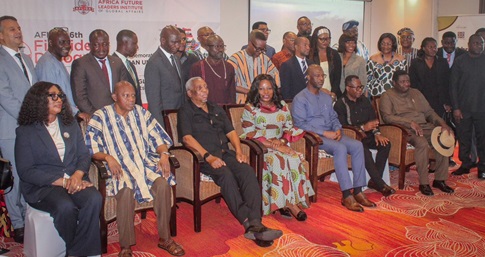
Prof. Mawuko-Yevugah was speaking at Africa Future Leaders Institute of Global Affairs’ (AFLIGA) 6th Fireside Dialogue held in Accra yesterday in commemoration of African Union (AU) Day.
It was held on the theme: “Africa’s Role and Agency in Global Affairs: Past, Present and Future – Prospects and Challenges.”
The event also featured a three-member panel discussion, which comprised an Economist and Educational Policy Analyst, Nadia Baye; Dr Tolulope Adeogun of the University of Johannesburg; and a professor at the London Metropolitan University, Emeritus Prof. Jeffrey Haynes, who deliberated on the keynote address, offering multidisciplinary perspectives on Africa’s governance, economic policy, and international relations challenges.
Institutional gains
Prof. Mawuko-Yevugah further argued that while Africa had made significant institutional gains, including the African Union (AU) and the African Continental Free Trade Area (AfCFTA), the frameworks were undermined when state institutions were influenced by narrow elite interests rather than the broader public good.
He further lamented that elite capture of institutions often led to weak enforcement of laws, distorted economic management, and reduced public trust in governance systems.
The political economy and international relations expert also urged African leaders to strengthen institutional discipline, deepen accountability, and ensure inclusive governance, particularly through youth and women participation, to secure long-term development and continental integration.
Ending unequal partnerships
In a speech read on his behalf, the Speaker of Parliament, Alban Kingsford Sumana Bagbin, called for an end to unequal global partnerships, which he described as a one-sided marriage that limited sovereignty and development in Africa.
He urged stronger continental unity, a common foreign policy and reduced dependency on external powers.
Mr Bagbin emphasised endogenous development through investment in African research, industry and youth innovation, while strengthening AU institutions.
“If we do not bring about some radical transformation, we may escape at a hair's breadth the wrath of the Gen Zs.
But if the Gen Alphas catch up with us in this Kasoa road traffic pace of development, not even the heavens can save us,” the Speaker stated.
Shaping the future
The Executive Director of AFLIGA, Emmanuel Dei-Tumi, emphasised the need for Africa to move from reflection to practical action in shaping its future amid global uncertainty and shifting power dynamics.
He stressed the importance of inclusive dialogue among policymakers, scholars, civil society, the youth and the media in addressing the continent’s challenges.
Mr Dei-Tumi also enumerated Africa’s demographic advantage, natural resources and human capital, urging greater investment in women and youth through targeted leadership, governance and skills development programmes.
He called for stronger institutions, innovation, entrepreneurship and sustainable peacebuilding as foundations for long-term transformation.
Mr Dei-Tumi further encouraged participants to translate ideas from the dialogue into real-world action, building a peaceful, united and globally respected Africa driven by its people.
