
Breast cancer fight faces challenge: Many women fear body alterations
Men’s fondness for breasts is proving a challenge to the care for breast cancer, as women patients harbour fears about the extent of impact a removed breast could have on their marriage or relationship, a specialist in the area has revealed.
Dr Merri Iddrisu of the University of Ghana said many breast cancer patients dreaded the thought of losing their sensual organ, a major attraction for their partners, when diagnosis suggests the need for the body-altering surgery.
She described the problem as a major issue preventing many women with the condition from going for surgery to treat the disease.
Dr Iddrisu, a lecturer at the Adult Health Nursing Department of the School of Nursing and Midwifery of the University of Ghana and an affiliate of the Centre for Gender Studies and Advocacy (CEGENSA), said women breast cancer patients wondered how their partners would react to their breastless bodies, especially in cases where the man appreciated breasts a lot.
Additionally, she said, the women also thought about how they would be able to feed their babies in the future when they later delivered.
“Breast serves several purposes. One, as a romance tool, because as a woman, the husband saw you as a full package.
The child uses the breast, and then the husband also uses it.
Because of this, some women fear that if they undergo breast removal surgery, their husbands may no longer admire them as before.
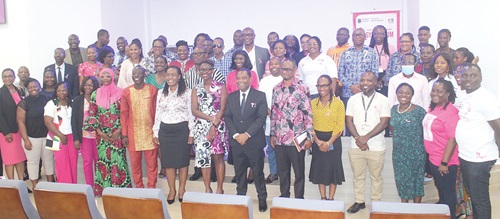
They wonder whether he will still show affection, even towards the scar. Husbands and society haven’t accepted that new body image, and I see that it’s a very big issue that we need to deal with,” Dr Iddrisu said this last Wednesday at a symposium organised by the College of Health Sciences of the University of Ghana to mark the 25th anniversary of the institution.
The symposium was on the theme: “From genes to generations: African genomics, knowledge gaps, and lessons from breast cancer”.
It was addressed by four speakers, with Dr Iddrisu speaking on the topic: “The breast and society: Gender, size, identity and empowerment in the face of cancer”.
Support
Dr Iddrisu suggested that families of patients with the condition should be given some form of psychological support during such treatment, adding that the children of the patient, for instance, needed to know that their mother’s breast had been removed, for which reason she needed their support.
She said both the wife and the husband must be assisted to get either a breast prosthesis or go for reconstructive surgery, in addition to psychological support for them to understand what the treatment meant.
Within the medical space, breasts have acquired romantic names according to their sizes. These include bell-shaped, teardrop, round and ponytail.
The medical expert said as women advanced in age and their breasts were used by adults and children at home, they would begin to change in size, adding that it was the reason some women looked for all sorts of products and body enhancement to regain their shape.
Dr Iddrisu, who is also a registered general nurse with a background in public health, said because society had defined such expectations, the moment breast cancer occurred and the surgeon recommended surgery, an identity crisis often followed.
Genomic data
Quoting the Global Cancer Observatory Report for 2024, the Provost of the College of Health Sciences, Professor Alfred Edwin Yawson, said Ghana recorded approximately 4,800 new cases of breast cancer every year, with more than 2,000 Ghanaian women dying annually from the disease.
He said one in every woman with a cancer in Ghana was most likely suffering from breast cancer, with the average age for these cancers being between 42 and 49 years.
More worrying, he added, was the fact that over 60 per cent of cases were diagnosed at very advanced ages, where treatment outcomes were limited and survival rates were low.
Prof. Yawson expressed concern that despite the explosion of genomic data globally, African populations remained grossly underrepresented, constituting less than three per cent of the global genomic dataset.
He said the underrepresentation was critical because Africa harboured the world’s greatest human genetic diversity.
“If we study the African human gene, it offers enormous potential for caring for all other races, yet the unique variants that influence disease susceptibility, progression and treatment response in our population remain poorly studied,” he said.
Dr Rosemond Akpene Hiadzi, who spoke on the topic: “The sociology of the breast: gender, size, identity and empowerment in the face of cancer”, said in Ghana, communities where spiritual explanations for illnesses remained prevalent interpreted breast cancer as divine punishment, for instance, for not having children.
She said in order to build a truly inclusive and compassionate health system, society must engage all stakeholders, including health personnel, faith leaders and communities.
