
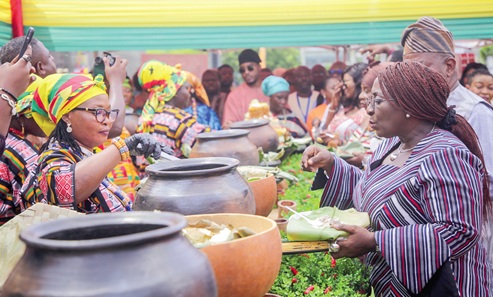
Ghana Culture Week celebration opens
The Vice-Chancellor of the Cape Coast Technical University, Professor Kwaku Boakye, has called for renewed efforts to reposition Ghanaian culture as a central pillar of the country’s development.
He explained that although there had been growing interest in aspects of Ghanaian culture such as festivals, food, fashion and traditional ceremonies, the core values that once held society together were gradually declining.
Speaking at the opening of the Ghana Culture Week in Accra last Friday, Prof. Boakye said history had shown that the decline of many societies often began with the neglect of their cultural values and the adoption of foreign practices.
He, however, stated that culture must not be regarded as static, but as capable of adapting to external influences while maintaining its unique identity.
Ghana Culture Week
The event, which was on the theme: “Resetting Ghana’s Tourism, Culture and Creative Ecosystem", was attended by government officials, traditional leaders and players in the tourism industry.
It was organised by the Ministry of Tourism, Culture and Creative Arts, in partnership with the Ghana Tourism Authority (GTA) and the Ghana Culture Forum.
Activities for the celebration included culinary and visual arts exhibitions, film screening and presentation, literary and verbal arts, and a local architecture exhibition on Ghanaian heritage.
Cultural revival, education
Prof. Boakye said that despite the positive developments, the country was facing a worrying conflict.
“While we are doing well in the visible aspects of culture such as dress, food and festivals, we are losing the intangible elements such as our norms, values, respect for the elderly and moral discipline,” he said.
He attributed the erosion of cultural values partly to poor parental guidance, excessive exposure to foreign media content and the failure of society to deliberately transmit cultural knowledge to younger generations.
To address the challenges, the Vice-Chancellor called for reforms in the education system to integrate creative arts and cultural studies more into the curricula.
Touching on tourism, he said, cultural heritage remained the only tourism asset that could not be authentically replicated elsewhere, making it a powerful tool for attracting visitors and generating employment.
He called for a collective effort to reset the country’s cultural and creative ecosystem.
Ghana Cultural Policy
The Minister of Tourism, Culture and Creative Arts, Abla Dzifa Gomashie, said the ministry was working on implementing policies to protect and promote the cultural sector.
She said a Ghana Cultural Policy would soon be launched to stimulate innovation, entrepreneurship, and create meaningful jobs for the youth.
Ms Gomashie said it was important to value what made Ghanaians unique, and called on stakeholders to support the ministry in its efforts to revitalise the cultural space.
The Chief Executive Officer (CEO) of the Ghana Tourism Authority (GTA), Maame Efua Sekyi Aidoo Houadjeto, said the celebration was a call to action for restaurant operators, chefs and patrons to promote Ghanaian food.
She said the event was linked to the GTA showcasing 69 indigenous meals, as well as the significance of cultural expressions and their potential to drive economic growth.
Indigenous languages
The UNESCO Representative in Ghana, Edmond Moukala, said it was important to integrate indigenous languages into education and public life, while calling for the economic empowerment of the cultural sector, saying it was underfunded in most African governments.
He, however, called for the private sector to invest more in the cultural sector to strengthen its economic impact.
The Chairperson of the event, Nanahema Adwoa Awindor, urged Ghanaians to commit to preserving cultural heritage, not just through memory but through active celebration and practice.
