
Govt to set up 3 new garment factories
The Government is working with the private sector to establish new garment manufacturing facilities in the Bono East, Central and Eastern regions to create more than 27,000 direct jobs.
This is part of measures being put in place to boost domestic manufacturing, create jobs and cut down on imports by prioritising the use of locally produced uniforms across public institutions.
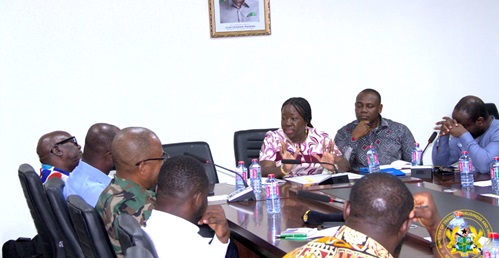
The Minister of Trade, Agribusiness and Industry, Elizabeth Ofosu-Adjare, made this known during a stakeholder engagement in Accra last Tuesday.
She explained that uniforms used by schools, health facilities and security services were procured in large volumes annually, indicating the need for them to be leveraged to drive industrial growth.
“The government is working on promoting raw material production, particularly cotton, to strengthen upstream supply and reduce import dependence.
“We are also supporting the diversification of fabric production, including school uniform fabrics, medical scrubs and protective wear, to ensure local companies can meet domestic demand reliably and at scale,” she said.
The meeting was attended by industry players, public institutions and development partners on a new framework to strengthen local production and procurement of uniforms.
Industry
Mrs Ofosu-Adjare said the country’s textile and garment industry was ready to meet such demand, referencing companies such as DTRT, UNIJAY, KAD Manufacturing, Sleek Garments, Montibells, and North Shore Apparel, which were already producing uniforms for both the local and export markets.
To harmonise quality and certification standards, she said the government would develop a centralised list of approved local manufacturers, and improve procurement processes to enable public institutions to source directly from certified Ghanaian producers.
She also announced intensified efforts being made to clamp down on the illegal importation of fake and pirated textile products, which continued to undermine local manufacturers.
The minister, however, called on public institutions to incorporate local content requirements into their procurement plans, and urged industry players to scale up production and maintain quality and timely delivery.
The trade minister further assured stakeholders that the government remained committed to building a strong and competitive textile and garment industry, starting with the uniforms worn daily by Ghanaians in schools, hospitals, and security services.
“The ministry would liaise with development partners to support the industry with technical assistance, technology upgrades and market linkages,” she said.
Stakeholders at the meeting commended the ministry for the initiative, describing it as timely and significant for the country’s growing garment and textile industry.
