
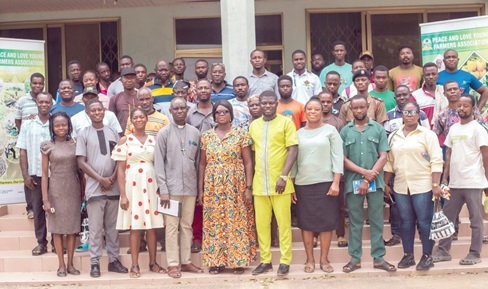
The Kwahu Afram Plains North District of the Eastern Region is noted as one of the major food baskets in the country.
Although the area is a significant contributor to the country’s food needs, the district remains one of the most deprived in the country.
In recent times, the area has experienced a nosedive in food and livestock production.
The district comprises a large stretch of arable land for the cultivation of various food crops and livestock, and has several islands that are accessible only by water transport.
Food crops
Such food crops are maize, plantain, cocoyam, yam, cassava, groundnuts and vegetables such as tomatoes, pepper, garden eggs, among others.
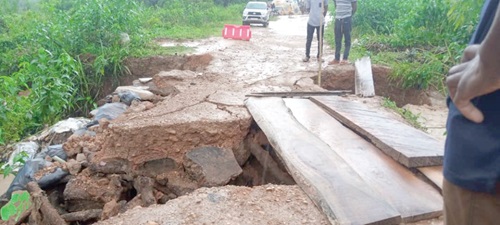
Some of the roads in the district are in very deplorable state
The area with Donkorkrom, its capital and numerous communities, is populated mainly by farmers.
Despite the district’s agricultural potential, many farmers engage in peasant farming due to a lack of funds for large-scale operations.
Apart from that, many of the youth in the district, as well as the elderly, are gradually losing interest in farming and livestock rearing.
Poverty
The incidence of unemployment among the youth is worrying as economic conditions worsen and poverty levels increase.
Infrastructural is also not the best in the area. The road network is a major developmental challenge confronting the area, impacting farmers' access to markets.
For instance, the road network, particularly the routes from the farming communities to major market centres such as Donkorkrom, Maame Krobo and Tease, is in terrible condition.
In fact, there are no roads leading to many farming areas, just footpaths, making it difficult for even tractors to access the farms.
To rectify the situation, an indigene of the area, Benjamin Obeng, founded the Peace and Love Young Farmers Association (PLYFA) to mobilise peasant farmers and semi-employed and unemployed residents to engage in large-scale, full-time farming.
He, therefore, formed a body known in that respect.
Training programmes
As the Chief Executive Officer (CEO) of the association, he organised a training programme for several farmers in the district.
Addressing the farmers at Donkorkrom last Friday, the CEO of the association said his outfit had decided to bring the farmers under one umbrella to facilitate the solicitation of funding, training, and marketing for their farm produce.
That, Mr Obeng indicated, would enable the farmers to produce more and earn an appreciable income for their livelihoods and dependents, thus reducing the poverty level in the area.
He, therefore, encouraged farmers, especially the youth, to be actively involved in the scheme being put in place by the association.
That, Mr Obeng stated, would make it possible for the association to achieve its goals to make life worth living for the people in the area.
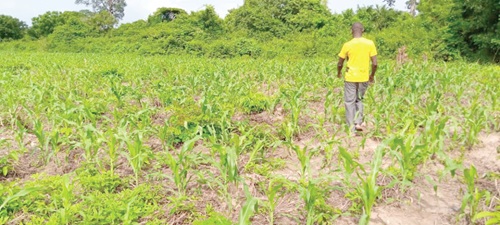
The district has fertile lands
The association, the CEO pointed out, would also carry out similar activities in other parts of the country.
A representative of the District Chief Executive (DCE) for Afram Plains North, Taidu Mohammed, said that since agriculture remains one of the most promising sectors for the district's economic development, farmers in the area should be fully involved in the scheme.
Modern technology
He, however, urged the association's leadership to educate its members on the use of modern farming technologies, including mechanisation and digital tools, to significantly increase productivity and reduce the amount of manual labour required.
Collaboration
Mr Mohammed further encouraged the association to collaborate with other non-governmental organisations (NGOs) to create ready markets for its members' produce, as the lack of reliable markets has become one of the biggest challenges farmers face.
He also advised the farmers to focus on vegetable cultivation and animal rearing, which had become highly profitable agricultural ventures.
The District Director of Agriculture, Alex Kofi Fordjour, highlighted the role of agriculture in achieving the Sustainable Development Goals (SDGs), including no poverty, zero hunger, quality education, gender equality, climate action and partnerships for development.
Mr Fordjour stressed the importance of value addition in agriculture and explained that most often, farmers had to sell their produce in raw form, thus significantly reducing their earnings.
He advised farmers in the district to form groups or associations to enable them to benefit from government intervention programmes.
Rural communities
An official of Women in Agriculture (YIA), Grace Mayeden, explained the critical role of women in agriculture within rural communities.
She further explained that such women were involved in several stages of agricultural production, including planting, harvesting and marketing of farm produce.
Mrs Mayeden, therefore, encouraged female farmers to take absolute advantage of programmes designed to empower them to improve their economic activities.
The farmers were taken through various methods of modern agricultural production, which included crop cultivation and animal husbandry.
Writer's email
