
International partnerships are often judged by the agreements they produce. But we believe they should be judged more simply: by whether they make life better for ordinary people.
But we believe they should be judged more simply: by whether they make life better for ordinary people.
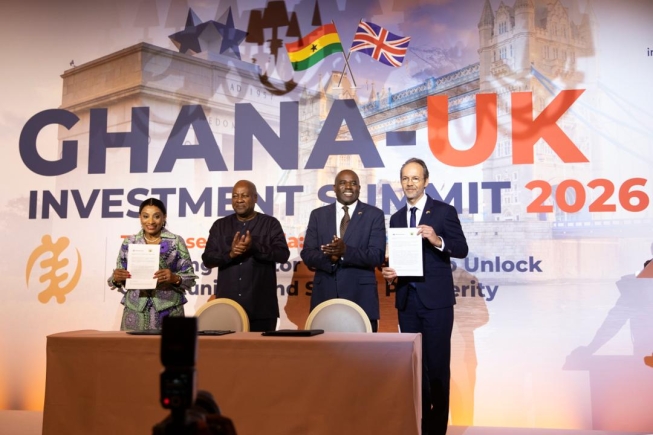
That is the test we have in mind following President John Dramani Mahama’s recent visit to the United Kingdom and the launch of the UK–Ghana Growth Partnership. Signing the partnership in London was an important step.
The real measure of success will be what is delivered in Ghana and in the UK in the months and years ahead.
What stood out during the visit was the shared focus on practical progress. From diaspora engagement to the Ghana–UK Investment Summit, the Africa Debate, and engagements with businesses and the London Stock Exchange, there was a clear emphasis on turning ambition into jobs, investment and growth. Success will be judged by whether businesses expand, skills lead to employment, and communities see real opportunities.
The economic case for deepening our partnership is strong. Trade between the UK and Ghana has reached around £1.6 billion. That reflects thousands of connections between companies, farmers, exporters, professionals, innovators and investors. It builds on the UK–Ghana Trade Partnership Agreement, now in its fifth year, which provides a stable and predictable framework for business.
Long-term investment is a critical part of this story. British International Investment has invested around £140 million in Ghana, supporting businesses across manufacturing, finance and services, including export-oriented firms that create jobs and strengthen resilience. This kind of patient capital supports sustainable growth, not just moments of high-level engagement.
But trade and investment do not happen automatically. They depend on infrastructure, access to finance and skilled people. That is why the initiatives under the Growth Partnership matter. They are designed to move from interest to implementation.
First, infrastructure. A £5 million Green Project Preparation Facility, hosted by Financial Sector Deepening Africa in partnership with the Ghana Infrastructure Investment Fund, will help turn viable ideas into investable, climate-focused projects. If successful, it could unlock up to £180 million in infrastructure deals over three years, bringing projects closer to reality.
Second, industrial capability and jobs. The £101 million Takoradi Floating Dock project would establish Ghana’s first commercial-scale ship repair and dry-docking facility in the Gulf of Guinea. It is expected to create up to 430 direct jobs, around 30% of them for women, while strengthening Ghana’s position as a regional maritime hub. Glasgow-based Interocean Marine Services is set to support operations and maintenance.
Third, climate and nature. Ghana is well placed to lead in high-integrity, nature-based investment. The proposed £85 million reforestation fund by Mere Plantations, listed in the UK and backed by the Ghana Forestry Commission, will help mobilise global capital into the green economy, restore degraded land and support rural livelihoods.
Fourth, skills. Sustainable growth depends on people having the right training and qualifications. New Transnational Education guidelines will deepen UK–Ghana education partnerships, with the potential to generate £55 million in education exports over five years. Alongside this, a £4 million, five-year partnership between a UK training provider and Ghana-based Mangel Klicks will deliver specialist clinical engineering training. This will build the expertise needed to maintain equipment, improve services and strengthen health systems, while positioning Ghana as a regional skills hub.
Growth must also be resilient. A further £9 million investment in forest restoration in the Oti Region shows how protecting nature and creating livelihoods can go hand in hand.
None of this will matter if it remains at the level of announcements. That is why our governments and our Missions have established mechanisms to drive delivery. We will be watching for what we know many Ghanaians expect: projects that move from concept to reality, greater participation by Ghanaian SMEs, skills that translate into jobs, and progress visible in ports, classrooms, clinics and communities.
Beyond economics, the ties between our countries are deeply human. We share a passion for sport, particularly football. As England’s Three Lions face Ghana’s Black Stars, we will celebrate a friendly rivalry rooted in mutual respect. Whatever the result, it reflects a broader truth: our partnership is strong, enduring and built on shared history.
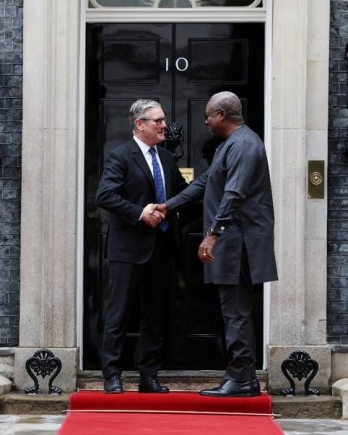
Our partnership has been renewed at the highest level, with leaders engaging from Buckingham Palace to Downing Street and Parliament during President Mahama’s visit to the UK. The foundations are in place. The task now is for public and private sectors to scale up and deliver shared prosperity.
We are optimistic. Not because optimism is a policy, but because experience shows what UK–Ghana partnerships can achieve when they are grounded in trust and followed through. The UK–Ghana Growth Partnership can turn today’s commitments into lasting results. The challenge now is clear: to deliver by harnessing the full potential of our partnership.
