

The Ghana Real Estate Developers Association (GREDA) has renewed calls for the government to scrap the 20 per cent Value Added Tax (VAT) imposed on construction of houses, saying the tax is worsening the already high cost of housing in the country.
The GREDA President, Dr James Condua Orleans-Lindsay, said the tax had further increased the financial burden on prospective homeowners at a time when the cost of housing remained a major concern for Ghanaians.
The new VAT Act (Act 1151) took effect on January 1, 2026, and introduced a unified VAT structure for all VAT-able supplies in Ghana, including housing construction.
“Prospective homeowners are already frustrated with high cost of housing and GREDA has been championing a collaboration and partnership with the government for making housing affordable for Ghanaians,” he said.
He made the call at GREDA’s 2026 Annual General Meeting in Accra last Thursday when he presented the association’s report on its activities and engagements for 2025.
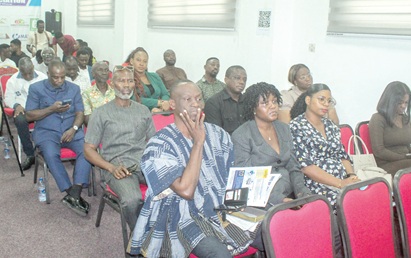
The AGM brought together GREDA members, developers, industry stakeholders, the association’s leadership and some representatives from the Ministry of Works, Housing and Water Resources.
The meeting was on the theme, “Reflect, Reconnect, Resolve. Building a stronger, greener tomorrow together.”
It also provided a platform for members to review its performance for 2025, deliberate on key challenges confronting the real estate sector and the association’s plans for the coming year.
Concern
Speaking at the event, Dr Orleans-Lindsay warned that failure to address the VAT concern could undermine the viability of developers and further push up the cost of housing.
According to him, the association’s engagements with the government had focused on finding ways to make housing more affordable, but the 20 per cent VAT had instead aggravated the situation.
The GREDA President said that the association’s concerns extended beyond taxation to the broader challenges of land acquisition, access to finance and the cost of building materials, which he identified as persistent constraints on the industry.
“The association is concerned that treating every payment entering a company’s account as income subject to VAT could place an unsustainable burden on developers.
“GREDA has continued to engage the government and relevant institutions over the tax and the association is awaiting a resolution from the Ministry of Works, Housing and Water Resources and the Ghana Revenue Authority,” he stated.
Comprehensive approach to flooding
Dr Orleans-Lindsay further called for a more comprehensive approach to flooding and demolition exercises, arguing that the destruction of structures alone would not resolve the country’s flooding problems without addressing the underlying drainage and urban planning challenges.
He said GREDA would continue engaging the government and other stakeholders to address the challenges confronting developers and create conditions that would support the delivery of affordable and sustainable housing in Ghana.
“GREDA’s research and development activities is, therefore, focusing on flood prevention, green buildings and smart cities, with the aim of contributing to more sustainable urban development,” he said.
Affordability
For his part, the Acting Director of Housing at the Ministry of Works, Housing and Water Resources, Chris Pobee Abbey, reaffirmed the government’s commitment to working with GREDA to address Ghana’s housing deficit.
He said housing delivery must focus not only on increasing supply but also on affordability, the use of local building materials and modern construction technologies, and expanding development beyond Accra and other major urban centres.
“Housing remains one of Ghana’s most pressing development challenges, with a housing deficit of over 1.8 million units.
We must provide the right homes in the right locations at the right prices that an ordinary Ghanaian can afford,” he said.
Mr Abbey also acknowledged GREDA’s concerns over the 20 per cent VAT. and said he would engage the relevant authorities on the matter.
