
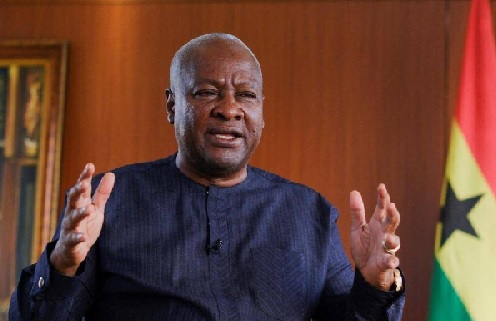
President John Dramani Mahama has called for Africa to move beyond its traditional role as a recipient of aid and external decisions and become a stronger, more influential force in global affairs.
Speaking in an interview TRT World’s Bigger Than Five programme, President Mahama argued that Africa’s economic independence must be matched by greater political and diplomatic influence.
He said African countries need to work together to ensure the continent has a stronger voice in institutions that shape global policy.
A key part of his argument is the need for greater African representation in global decision-making, particularly at the United Nations Security Council.
President Mahama supports permanent African representation on the Council, saying the continent should no longer be excluded from decisions that have major consequences for its people.
He also urged African states to develop common positions on major international issues so that they can negotiate collectively rather than as individual, weaker actors.
The President linked Africa’s diplomatic influence directly to economic self-reliance. In his view, countries that remain dependent on external assistance and export raw materials without adding sufficient value will struggle to exercise meaningful influence internationally.
His proposed “Accra Reset” therefore seeks a new relationship between Africa and the rest of the world—one based on partnership, but also equality and African interests.
“We don’t reject partnerships, but those partnerships must be on our terms,” Mahama said.
He stressed that Africa’s goal should not be isolation or confrontation with the rest of the world. Rather, the continent should build stronger economies, take greater control of its resources and use that strength to secure a more influential position in global affairs.
For President Mahama, Africa’s prosperity and Africa’s voice are inseparable: economic independence should ultimately give the continent greater power to shape the international system instead of simply responding to decisions made elsewhere.
