
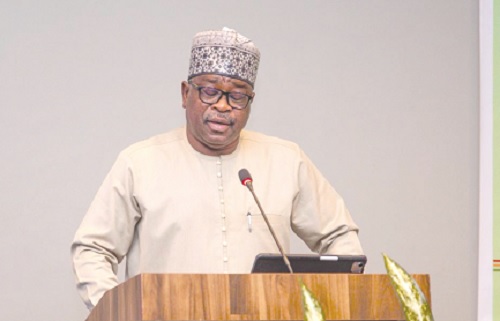
Move Africa away from climate burdens without support - Minister to climate negotiators
The Minister of State in charge of Climate Change and Sustainability, Seidu Issifu, has charged African climate negotiators to ensure that the continent is not saddled with additional climate obligations without adequate support from developed countries.
That, he said, was because even though Africa faced intensifying climate impacts, global response continued to struggle with gaps in ambition, equity and resources.
“The mitigation work programme must not become a space for imposing additional burdens on African countries without corresponding support. Instead, it should facilitate cooperation, enable just transitions, and support development pathways that are both low-emission and resilient,” he stressed.
Mr Issifu made the appeal during the opening of the first in-person strategic meeting of the African Group of Negotiators (AGN) held in Accra from March 30 to April 1.
Workshop
The workshop, under the United Nations Framework Convention on Climate Change (UNFCCC) in collaboration with the Environmental Protection Authority (EPA), brought African Lead Coordinators and partners to consolidate Africa’s common position ahead of COP31 in Turkey and COP32 in Ethiopia.
The workshop, which is the first strategic meeting of the AGN since Ghana assumed the chairmanship, aimed to sharpen negotiating priorities and plan partner engagement for 2026–2027.
Adapting to realities
The minister enumerated the importance of predictable and accessible climate finance, robust technology transfer, and capacity support to ensure meaningful adaptation and resilience.
“Africa’s strength remains clear. When we are coordinated, technically prepared, and strategically aligned, we shape outcomes. As we look toward COP31 and COP32, Africa must position itself not only as a participant but as a driver of key outcomes across negotiation tracks,” he added.
He further emphasised that adaptation efforts must reflect national circumstances while capturing tangible outcomes for vulnerable communities, warning that frameworks without scaled-up support risk becoming mere reporting exercises.
Mr Issifu also called for simplified finance access procedures and direct access modalities to ensure funds reach those who need them most.
He reminded delegates that Africa’s engagement must be strategic, coordinated, and coherent across all negotiation tracks, including the G20, to protect the continent and translate priorities into actionable positions that advance the continent’s interests.
United front
The Chief Executive Officer (CEO) of the EPA, Professor Nana Ama Browne Klutse, emphasised Africa’s strength in negotiating with a unified voice and stressed that climate action must be matched with predictable finance, technology access, and capacity support.
“Africa continues to bear a disproportionate burden of climate impacts, despite contributing the least to global emissions.
This is not only a development challenge. It is a matter of equity and climate justice.
Our position, therefore, must remain clear and consistent: ambition must be matched with means of implementation, and commitments must be backed by delivery,” she stated.
She called for coherent, coordinated strategies across thematic areas, highlighting adaptation, mitigation, and the capitalisation of UNFCCC funds.
Prof. Klutse underscored the need for equity, climate justice, and development-sensitive approaches, while encouraging delegates to engage strategically, reinforce unity, and experience Ghana’s culture and hospitality during the meeting.
Ghana’s leadership
The Chair of the AGN, Dr Antwi-Boasiako Amoah, underscored the county’s commitment to inclusive, transparent, and results-driven leadership for 2026–2027, adding that strengthening internal coordination, trust, and partner engagement were central pillars of his leadership vision.
He emphasised strategic coordination across African negotiators, partners, and intergovernmental organisations to advance Africa’s climate priorities, including youth engagement, just transition, energy access, and loss and damage.
Dr Amoah outlined a forward-looking approach, moving from reactive agenda-by-agenda work to thematic, strategic planning.
He stressed the importance of finance, technology, adaptation, mitigation, equity, and accountability, while ensuring Africa’s developmental realities guide climate action.
