
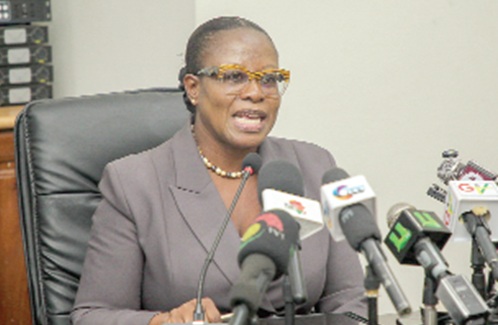
NDPC initiates process for binding national devt plan
The National Development Planning Commission (NDPC) has initiated a process to develop a consolidated, legally binding national development plan aimed at addressing long-standing gaps in policy coordination and implementation across the country.
The plan, which is set to be launched in September this year, aims to ensure policy continuity across political cycles, focusing on infrastructure, spatial development and institutional reforms to foster sustainable, equitable growth by aligning local, regional and national goals.
The commission has already embarked on nationwide consultations with regional and district stakeholders to gather input for the preparation of the development plan.
At a media briefing in Accra yesterday, the Director-General of the NDPC, Dr Audrey Smock Amoah, said the nationwide consultation revealed critical weaknesses that had slowed development over the years.
Key among them, she said, was the persistent failure to implement well-designed plans.
“We prepare plans, but implementation is always the challenge,” she said, and stressed that the new framework would prioritise execution and accountability.
Disconnect
She said findings from the engagements showed a wide gap between national policy frameworks and district-level needs.
In the Ashanti Region, for instance, she said stakeholders pointed to a mismatch between district priorities and spending guidelines under the District Assemblies Common Fund, alongside weak agricultural value chains and overlapping national policies.
In Greater Accra, she said rapid population growth, congestion, poor transport systems and waste management challenges featured prominently, while encroachment on sensitive lands and pressure on infrastructure were also raised.
Dr Amoah noted that all 29 assemblies in the region had prepared development plans and submitted progress reports, describing that as a step toward improved planning discipline.
Dr Amoah said the Bono Region also reported high youth unemployment and weak local economies, driven by low skills and limited opportunities for the working-age population.
Jobs crisis, skills mismatch
In the Central Region, she said participants highlighted the urgent need for job creation and stronger coordination between Regional Coordinating Councils and district assemblies.
Additionally, she said they raised concerns about a growing mismatch between education outcomes and labour market demands, a challenge she said must be addressed to improve productivity and reduce unemployment.
Agriculture, infrastructure
In Bono East, Dr Amoah said delays in launching regional investment plans, fragmented development agendas and weak links between agriculture and education were key concerns.
She said the region also called for investment in irrigation and prioritisation of cashew and tomato value chains.
In the Eastern Region, issues were raised on social exclusion, lack of reliable data for decision-making, post-harvest losses and gaps in healthcare planning.
In the Northern Region, she said large areas of arable land remained underutilised, while several agricultural projects had been abandoned.
Dr Amoah said the North East Region highlighted persistent poverty, climate vulnerability and weak social services, along with challenges in land administration and coordination.
Untapped resources
In the Oti Region, the commission identified untapped tourism and mineral resources, poor infrastructure, unstable electricity supply and water insecurity as key challenges.
“The region also reported high cases of water-related diseases linked to limited access to clean water,” she said.
“In some districts, even basic administrative infrastructure remains incomplete, affecting effective governance,” she added.
Engagement with political actors
The Chairman of the NDPC, Dr Nii Moi Thompson, disclosed that the commission was changing how it engaged political actors to ensure continuity and avoid past mistakes.
“When we worked on earlier long-term plans, we engaged political parties at lower levels.
This time, we are engaging the leadership of both the NPP and the NDC from the onset,” he said.
Dr Thompson explained that the NDPC would introduce political parties to a centralised system of policies and laws to guide manifesto development.
“Some parties make promises that already exist in past policies because there is no accessible database. We are fixing that so manifestos are based on full knowledge of existing frameworks,” he said.
