
Only 136 out of 461 Metro Mass buses are operational — MD
The management of Metro Mass Transit (MMT) has revealed that it inherited 136 operational buses, over 70 per cent fewer than the 461 buses contained in official records as bequeathed by the previous management.
It said since the current management assumed office, official records indicated that Metro Mass had a total fleet of 461 buses.
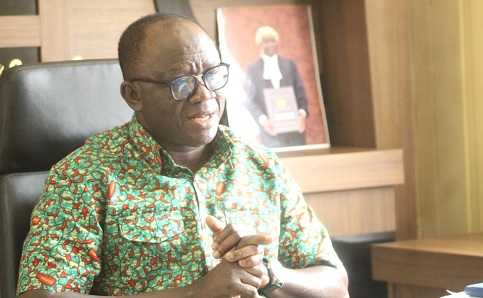
In an interview with the Daily Graphic, the Managing Director of MMT, Cezar Kale, said the figure, however, remained in dispute due to inconsistencies in records and the inclusion of buses that had already been scrapped.
He said 227 buses were completely unserviceable, and had since been marked for scrap and auction to generate revenue to support operations and to reinvest into the business.
Mr Kale said management was initially informed that 136 buses were operational, but operational realities on the ground showed that only between 105 and 120 buses could be routed daily.
“As we speak today, out of the 461 buses, we have about 136 buses that are operational, around 98 that are serviceable and can be repaired, and approximately 227 buses that are completely unserviceable,” he explained.
He said the operational figures were not static, as buses returning from daily routes often require minor or major maintenance, adding that the availability of spare parts and the capacity of the workshops largely determined how many buses could be returned into service.
As a result, the number of buses deployed daily often fluctuated between 115 and 130.
Mr Kale said the state-owned transport company was currently operating with a severely reduced fleet, a situation that he said undermined the company’s ability to meet growing public transport demand across the country, particularly within major urban centres.
He said despite these challenges, the current management had made significant progress since taking over the company that was “gasping for breath”.
“At the time we took over, Metro Mass was seriously anaemic. But today, through pragmatic measures implemented by management and the board, the company has some oxygen to breathe,” he said.
Investor
Mr Kale called on investors to partner the company to redevelop its terminals across the country either through public-private partnerships (PPP) or build-operate-transfer (BOT) arrangements.
He said beyond the many fleet challenges, most of the company’s terminals were in deplorable condition, with poor drainage systems and inadequate passenger facilities.
“At the national headquarters, for instance, the terminal is not even paved.
When it rains heavily, parts of the place get flooded. When you go to terminals in the regions, the situation is even worse,” he said.
The Metro Mass MD revealed that architectural designs were already in place to consolidate scattered offices into high-rise buildings, free up land for commercial development, and introduce facilities such as parking lots, supermarkets, hotels, restaurants and clinics within terminal enclaves.
He disclosed that redevelopment work was already ongoing at the Tamale terminal through budgetary support from the Ministry of Transport and the Ministry of Finance.
Mr Kale added that private investors had shown interest in developing terminals at Obuasi, Kinbu and other key locations, indicating further that plans were also underway to resolve legal issues surrounding the Opera terminal to pave the way for its redevelopment.
