
Poor WASSCE-SC results: Chief Examiner’s report should guide solutions — Experts
Two education experts have called for a strict interrogation of the Chief Examiner’s Report to determine the cause of the mass failure of students in this year’s Ghana Only Version of the West African Senior School Certificate Examination (WASSCE) for School Candidates (SC).
They said once the weaknesses of students were identified in the report, the necessary interventions could be put in place to reverse the failure rate in the WASSCE-SC.
They maintained that the report could also be used by teachers to prepare final-year students for future examinations.
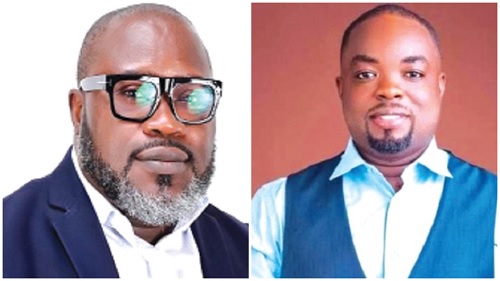
The educationists, who said this in separate interviews with the Daily Graphic, are a Lecturer at the University of Cape Coast (UCC) and Executive Director of the Institute for Education Studies (IFEST), Ghana, Dr Peter Anti Partey , and the Executive Director of the Africa Education Watch, Kofi Asare.
Performance
In the English Language paper for this year’s WASSCE-SC, 289,673 (60 per cent) of the candidates scored between A1-C6; 37,712 (8.18 per cent) others had D7; 39,091 (9.23 per cent) had E8, and 54,294 (12.86 per cent) had F9.
For Mathematics, 209,068 (48.73 per cent) had A1-C6; 52,991 (11.62 per cent) had D7; 52,145 (12.15 per cent) obtained E8, while 114,872 (26.77 per cent) had F9.
In Integrated Science, 220,806 (57.74 per cent) candidates scored A1-C6; 54,580 (11.85 per cent) had D7; 45,783 (11.79 per cent) recorded E8, while 61,243 (16.05 per cent) obtained F9.
Another core subject, Social Studies, had 248,538 (55.82 per cent) candidates scoring A1-C6, with 33,670 (7.38 per cent) candidates recording D7, while 40,608 (9.12 per cent) had E8, and 122,449 (27.50 per cent) settled for F9.
Individual schools
Commenting on the 2025 WASSCE-SC results, Dr Partey said, beyond the chief examiner’s report, there was also the need to pay attention to individual school performances in trying to find a solution to the problem.
He said from now onwards, there was the need for “us to change the course of our discussion”.
Irrespective of the fact that the national average looks bad, some of the schools scored well in terms of individual school performances, he stated.
“So if we really want to know what went wrong, we need to go to individual schools and see those that did not perform well.
Those whose pass rate was let’s say 20 per cent, 15 per cent, 10 per cent and below — let’s go to these schools and find out what really their challenges are,” he said.
Dr Partey said looking at Core Mathematics, for instance, delivery and instructional quality, among others, are critical.
He said once that was done, the Ministry of Education could design specific interventions for individual schools where teachers needed assistance in order to improve their pedagogy.
Interventions
“These targeted interventions would enable these schools that are not performing well to get the needed attention, and by that we are likely to see an improvement in their performance in the coming year”.
“What I think should happen is that these discussions should lead to reforms,” he emphasised.
Dr Partey said there was a need to tie the Minister of Education’s specific outputs, and in so doing, it should be able to tell Ghanaians what happened in individual schools and the reasons why certain schools had zero, five and two per cent in the examination.
“What are the challenges of these individual schools?
When we go by that approach, we are helping the children and not a politician who wants to score political points, so that the ministry would now channel their energies and resources towards improving the low-performing school,” he said.
For his part, Mr Asare said Mathematics and Social Studies did not look good, but the two other core subjects — Integrated Science and English Language — did not depart from the normal trend.
Such a situation, he said, meant there was a need to go down to the subject report of the chief examiner to find out the difficulties candidates faced in answering the questions.
Diagnosis
“So the first thing we need to do is to wait for the chief examiner’s report.
Once it is ready, we can do a diagnosis of what the gaps are and based on that, the Ghana Education Service (GES) could use that to do its interventions,” he said.
He said there was a need to do a lot of public education to ensure behavioural change targeted at students to be independent-minded so as to prevent examination malpractice, one of which
