
Prevention of cervical cancer: Vaccination of 379,609 girls in Kumasi takes off
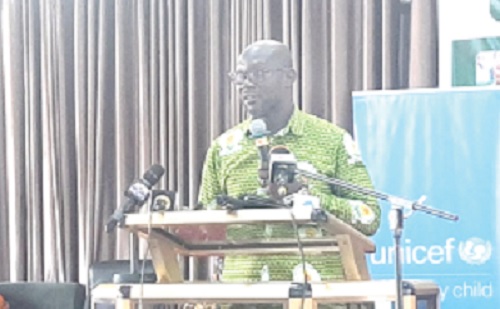
The Ashanti Regional Director of Health Services, Dr Fred Adomako-Boateng, has urged educators, religious leaders and traditional authorities to serve as champions to dispel myths and fears around the nationwide roll-out of the Human Papillomavirus (HPV) vaccine.
“You are the bridge between the health sector and the communities. We are calling on you to support the nationwide education and mobilisation campaign to galvanise support for the vaccine introduction,” he said.
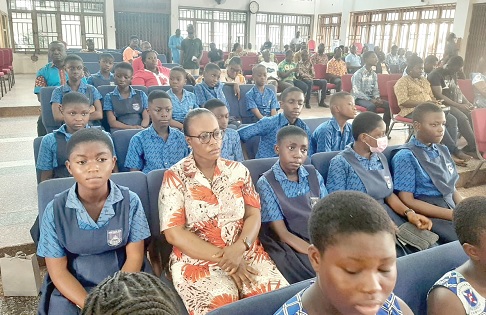
Dr Adomako-Boateng, who said this during a stakeholder’s engagement in Kumasi in the Ashanti Region last Friday, ahead of the nationwide vaccination exercise, urged, “We need your support to help facilitate the vaccination process within schools, marketplaces and communities, among others.”
From today, October 7 to 11, 2025, a nationwide HPV vaccination exercise will be undertaken to vaccinate girls between nine and 14 years, as part of Ghana’s national strategy to prevent cervical cancer.
In the Ashanti Region, a total of 379,609 girls between the ages of nine and 14 years are expected to be vaccinated during the five-day vaccination exercise.
Ghana joined over 140 countries globally, including 28 in the World Health Organisation (WHO) African Region, where the HPV vaccination has been mainstreamed into their routine immunisation programmes to safeguard adolescent girls.
Cervical cancer is the fourth most common cancer globally, with over 600,000 women diagnosed each year.In Ghana, about 3,000 women are annually diagnosed with cervical cancer, and 2,000 of them succumb to the disease.
Indispensable
Dr Adomako-Boateng stated that the role of teachers, religious leaders, chiefs and queen mothers as partners to the success of the vaccination exercise was indispensable, adding, “We need your support to provide accurate information to students, mothers and guardians.”
He said “The vaccination of the young girls against HPV is not just a health appeal, but it is a national duty to protect the next generation of women.”
Pilot
The Social Behaviour Change Specialist of the United Nations Children’s Fund (UNICEF), Ghana, Charity Nikoi, said her outfit supported the pilot of the vaccination exercise in 2013 and 2015, which was successful.
She said UNICEF built confidence in the vaccine and subsequently supported its introduction into Ghana and entreated all stakeholders and partners to spread the information to reach the target children.
The Ashanti Regional Coordinator, School Health Education Programme (SHEP), Reverend Emmanuel Addo, expressed concern that misconceptions about vaccines for schoolchildren often prevented them from availing themselves to receive them.
As a result, he called for teamwork among key players to ensure safe and efficient delivery of the vaccine, stressing “there is the need for an all hands-on-deck approach to ensure a successful vaccination exercise.”
The Chief of Nkwantakese, Nana Boakye Yam Ababio, who chaired the event, said cervical cancer was gradually taking the lives of too many women and therefore called on the public to embrace the vaccination exercise.
Writer’s email:
