
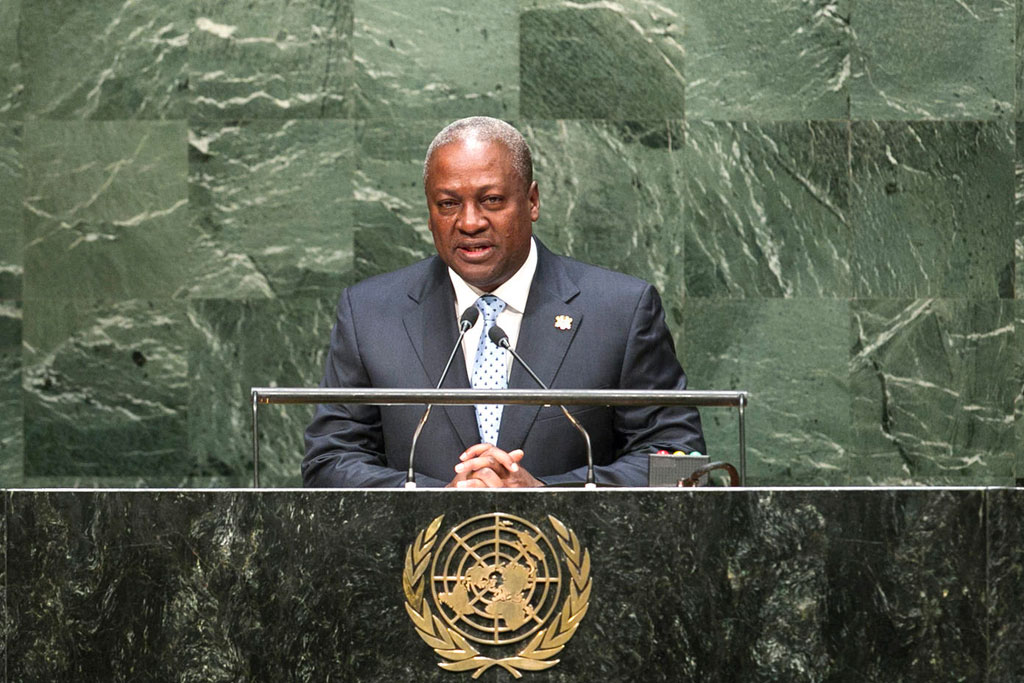
This month my country, Ghana, celebrated its 69th independence day. In my address to the nation, I invoked the courage and conviction of our founding leaders, who stood firm in the face of immense adversity to secure our freedom.
Kwame Nkrumah reminded us that political independence without transforming the global systems that shape our economies and opportunities remains incomplete.
It is in that spirit that, this month, Ghana will table a resolution at the United Nations general assembly calling for the formal recognition of one of the greatest moral tragedies in human history: the transatlantic trafficking and enslavement of Africans as a crime against humanity, and the need for a process of repair.
This initiative is not Ghana’s alone. It carries the support of the African Union, the Caribbean Community (Caricom), and a growing coalition of countries across the global south. Together we seek not to reopen old wounds but to acknowledge them honestly, and to work collectively toward healing and justice in ways that strengthen our shared future.
The call for reparatory justice is not new. It is rooted in a long, continuous tradition of resistance, advocacy and moral reasoning spanning centuries. From early African leaders who protested against the capture and sale of their people, to the struggles of the Haitian revolution, and the post-independence movements that reshaped the modern world, the demand for justice has endured.
In recent decades this tradition has taken institutional form. The 1993 Abuja Proclamation recognised the enslavement and trafficking of Africans as an unprecedented crime. The Caricom Reparations Commission has articulated a comprehensive framework for reparatory justice. The Accra Proclamation of 2023 reaffirmed Africa’s collective commitment to this cause. The African Union has now declared 2026 to 2035 as the Decade of Action on Reparations and African Heritage, underscoring the urgency and legitimacy of this global conversation.
Our proposal at the UN builds on these foundations. It seeks to move the international community from acknowledgment to action: from recognition of historical injustice to a structured dialogue on repair.
This is not about assigning collective guilt to present generations. Nor is it about revisiting history in a spirit of division. Rather, it is about understanding how historical injustices have shaped contemporary inequalities, and how a more honest reckoning can contribute to a fairer, more inclusive global order.
The transatlantic slave trade and the system it sustained disrupted societies, extracted human and economic value on an unprecedented scale, and left enduring legacies that continue to influence patterns of development, opportunity and vulnerability across the world. Recognising this history fully is essential, not only for Africa and its diaspora, but for humanity as a whole.
The international community has, in the past, taken important steps. The Durban Declaration and Programme of Action in 2001 acknowledged the transatlantic slave trade as a crime against humanity. Yet, more remains to be done to translate that recognition into meaningful dialogue and practical pathways for repair.
Africa brings to this conversation a perspective shaped by its own intellectual and moral traditions – one that holds that injustice does not simply fade with time, but requires deliberate effort to address and redress. This perspective aligns with the broader principles of international law and human rights, which affirm that certain wrongs demand enduring accountability.
