
RTI Commission calls for support to expand operations
The Right to Information Commission (RTIC) has raised concerns over inadequate funding, which it says is hampering its ability to fully deliver on its mandate of promoting transparency and accountability in governance.
The commission said the financial constraints were slowing efforts at establishing offices nationwide. It only has offices in the Ashanti, Bono, Upper East and Central regions.
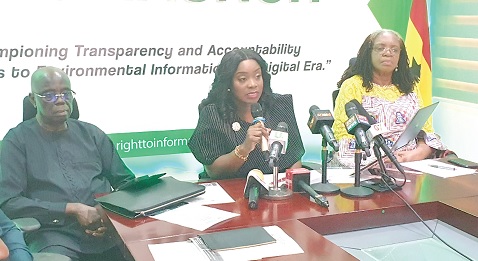
At the launch of the commission’s 5th Anniversary celebrations in Accra yesterday, the Deputy Board Chairperson of the commission, Elizabeth Asare, added that financial constraints were slowing down the pace of expansion despite the significant strides made since the establishment of the commission in 2020.
“When we started, we had no office and no resources.
Today, we have managed to establish some offices, but financial challenges mean we cannot yet cover the whole country,” she said.
The anniversary will be held on October 19, this year, on the theme: “RTI @ 5: Championing transparency and accountability through access to environmental information in a digital era.”
Activities planned for the celebration include media and civic engagements, a stakeholders’ conference, team-building exercises, and a thanksgiving service.
Impact
Mrs Asare, however, said that in spite of the challenges, the commission had already broken the long-standing barriers to secrecy within public institutions.
With the establishment of the commission, there has been greater transparency and accountability, particularly among public institutions that are now compelled to release information, even when initially reluctant.
“Today, we know that when we ask, we can access the information we need.
We, therefore, encourage the media and the public to continue to support the commission in strengthening this culture of openness,” she added.
Significance
The Executive Secretary of RTIC, Genevieve Shirley Lartey, also said that the celebrations would focus on promoting access to environmental information within the context of digital transformation.
She explained that the theme was not only a reflection of the commission’s five-year journey but also aligned with the global push for environmental accountability and the use of digital tools for inclusion and sustainable development.
“Over the past five years, the commission has worked to advance one of the most important rights in our democracy, which is the right of access to information.
“We have promoted transparency, accountability, and open governance, while empowering citizens to participate fully in national development,” she said.
