
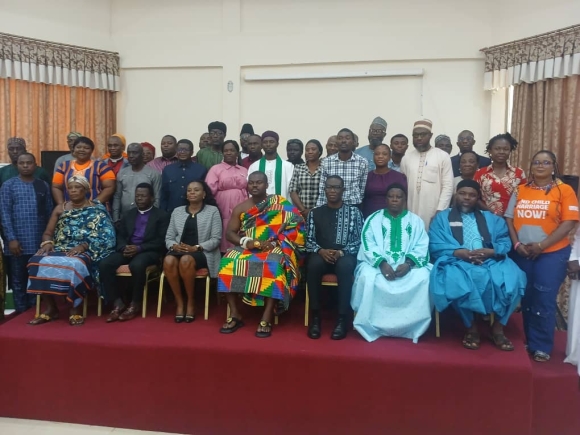
Speak against gender-based violence, child marriage - Religious, traditional leaders urged
Religious leaders and traditional rulers have been asked to speak out against gender-based violence (GBV) and child marriage on their platforms, communities and palaces.
The call was made by the Head of Religious Unit of the Ministry of Local Government, Chieftaincy and Religious Affairs, Richard Obeng Boafo.
He was speaking at a day's seminar on gender-based violence (GBV) and child marriage, as well as the harmful practices of gender and social norms, organised by the Ministry, with support from the United Nations Population Fund (UNPFA) at Koforidua, in the Eastern Region, in December last year.
In attendance were traditional rulers, church leaders and Islamic clerics.
Negative impacts
Mr Boafo said that, as religious and traditional leaders, they were agents of transformation and could, therefore, voice out negative impacts on gender-based violence and child marriages to help address such issues.
He stated that gender-based violence and child marriage were not theoretical issues but realities that continue to confront the country.
Although such challenges, he explained, might be relatively low in Ghana compared to other countries in the West African sub-region, they persisted and must be addressed.
Mr Boafo indicated that, as leaders, in their daily interactions with the people, they could use sermons and teachings to mobilise their communities against such dangerous issues that had negatively affected communities, especially female children.
Speak against
"Speak against gender-based violence and child marriages on your pulpits, mosques, shrines and community gatherings.
"Partner with the government and civil society to implement practical solutions at the grassroots level to ensure accountability and sustain impact on GBV and child marriage", Mr Boafo stated.
He said Ghanaians could build a country where no child is forced into marriage and where faith would be a source of liberation but not oppression.
The Programmes Officer of the United Nations Population Fund (UNFPA), Faisal Bawa, gave an overview of GBV and child marriage and said that about 30 per cent of women might have experienced some form of violence during their lifetime.
He stated that although men also suffered from abuse, their rates were not as high as those of women because they did not show any form of emotion and, therefore, did not normally report such issues.
Shape values
The Chief Director of the Regional Coordinating Council, Yaw Adu Asamoah, whose speech was read by an Assistant Director, Stella Someah-Kawa, said GBV and child marriage were not only a government priority but a moral and spiritual imperative and that it behoved faith and traditional leaders to shape values and guide communities to inspire change.
