
Trade Minister calls for removal of non-tariff barriers ... As ECOWAS Ministers of Trade visit Kasapreko
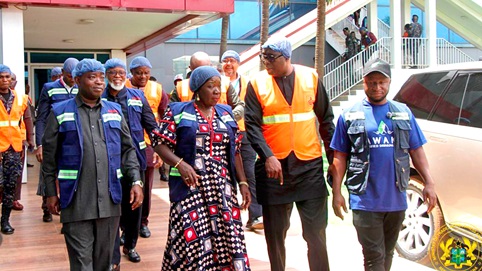
The Minister of Trade, Agribusiness and Industry, Elizabeth Ofosu-Adjare, led her fellow ECOWAS Ministers of Trade and Industry on a tour of the Kasapreko Company Limited factory as part of activities marking the 5th ECOWAS Ministers of Trade and Industry Meeting (ECOMOTI-5) in Accra.
The tour was organised to demonstrate Ghana's industrial capabilities and highlight the role of successful local manufacturers in driving regional economic integration.
The visit provided an opportunity for the ministers to witness firsthand the company's manufacturing operations, production standards, and modern technology.
While acknowledging that the country has many successful companies, Mrs Ofosu-Adjare said Kasapreko was chosen as a practical example of the kind of industrial growth and innovation that ECOWAS sought to promote across the region.
She described the company as an asset not only to Ghana but also to ECOWAS and Africa, noting that it exemplified the qualities of a responsible corporate citizen and a competitive African manufacturer.
Kasapreko, she said, was selected as a showcase because of its strong performance, commitment to quality, and growing regional presence.
Eliminating non-tariff barriers
A key objective of the visit is to encourage stronger support for the elimination of non-tariff barriers that continue to hinder intra-regional trade.
She mentioned that by observing the investment, effort, and quality involved in production, ECOWAS ministers could better appreciate the need to facilitate smoother movement of goods across borders and create a more integrated regional market.
The minister highlighted that Kasapreko already supplied products across West Africa, demonstrating the potential for regional value chains and cross-border trade when businesses were given access to larger markets.
However, she pointed out that many companies still faced challenges in exporting due to administrative delays and trade restrictions that slowed the movement of goods.
Mrs Ofosu-Adjare emphasised that practices such as consignments being held at borders for extended periods, sometimes for weeks, should become a thing of the past.
Removing such obstacles, she said, was central to the discussions and objectives of the 5th ECOWAS Ministers of Trade meeting, which focused on improving trade facilitation, reducing barriers, and strengthening regional integration.
Supporting regional industries
The Chairperson of the ECOWAS Ministers of Trade and Industry, Alpha Ibrahim Sesay, emphasised the need to strengthen regional industries and remove trade barriers to boost economic growth, employment, and regional integration across West Africa.
He said the visit demonstrated the type of industrial development ECOWAS needed at a time when growing global economic nationalism was prompting regions to strengthen domestic production and regional value chains.
He stated that industries such as Kasapreko played a critical role in creating jobs, generating wealth, and expanding economic opportunities, particularly for West Africa's youthful population, which was largely made up of women and young people.
The chairperson highlighted concerns raised during ministerial discussions regarding persistent non-tariff barriers that continued to impede the free flow of goods within the region.
He noted that similar challenges were raised by the company's management during the visit, underscoring the need for urgent action to improve the regional trading environment.
While commending Kasapreko for successfully exporting a significant share of its products across West Africa, Mr Sesay stressed that there was considerable room for growth.
He said ECOWAS ministers were committed to implementing recommendations developed by technical experts to address trade bottlenecks and create a more seamless regional market.
He added that removing trade barriers would enable successful regional businesses to expand further, transform their products into truly West African brands, create more jobs and opportunities and contribute greater tax revenues to national economies.
