
Adopt alternative feed ingredients - Research scientist to poultry sector
Senior Research Scientist at the Animal Research Institute of the Centre for Scientific and Industrial Research (CSIR-ARI), Vida Lamptey, has urged stakeholders in the poultry sector to adopt non-conventional feed ingredients and agro-industrial by-products.
That, she said, would reduce feed costs and improve sustainability in poultry farming across the country.
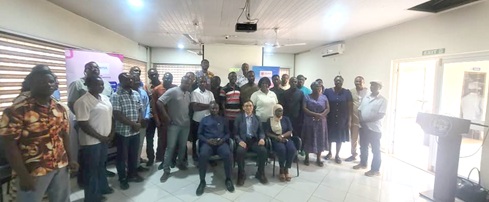
Mrs Lamptey gave this advice at a workshop organised by CSIR-ARI in collaboration with the Korea Partnership for Innovation of Agriculture (KOPIA) and the Kpone-Katamanso Municipal Assembly in Accra last Tuesday.
Workshop
The workshop aimed to promote sustainable poultry production by using low-cost alternative feed resources.
About 60 participants from Kpone-Katamanso and its surrounding communities took part in the training, where they were taken through feed formulation, quality control and the production of affordable poultry feed to enhance productivity.
Facilitators also demonstrated ways to reduce feed costs from about 75 per cent to 65 per cent of total production costs by adopting improved feed formulations.
The workshop further focused on developing and promoting new feed products for farmers, encouraging acceptance and adoption, and scaling up production of affordable, high-quality feed to improve sustainability in the poultry sector.
Alternative feed
During the workshop, Mrs Lamptey introduced some alternative feed ingredients to the participants.
This included the use of Black Soldier Fly (BSF), which she said was highly efficient at converting organic waste, such as food residues, fruits, and vegetable waste, into protein and energy for use in the poultry industry.
For instance, the BSF larvae had a short life cycle of about 45 days and could produce feed in a shorter time, leading to cost reduction.
She said the larvae could be produced locally by farmers, even on small farms or in simple setups, using organic waste materials.
Mrs Lamptey said that made BSF a more reliable protein source compared to commercial fishmeal and soybean meal, which sometimes vary in quality.
The senior research scientist added that laboratory tests conducted under the project showed that some fishmeal on the market had crude protein levels as low as 14 per cent, making alternatives like BSF more dependable.
Mrs Lamptey further stressed that the innovation was beneficial to small-scale poultry farmers who could use kitchen waste and other organic materials to produce BSF larvae as a protein source.
“This is a very cost-effective system, especially for smallholder farmers.
What they normally throw away as waste can now be converted into valuable feed,” she added.
The Director of KOPIA, Young Jin Kim, said the country’s poultry industry continued to face significant challenges, including high feed costs and heavy reliance on imports.
“Ghana imports about 200,000 tonnes of frozen poultry products annually, valued at approximately $600 million, with feed alone accounting for up to 70 per cent of production costs,” he said.
He expressed optimism that insect-based feed technology would play a key role in transforming Ghana’s poultry industry, describing it as a sustainable solution for the future.
