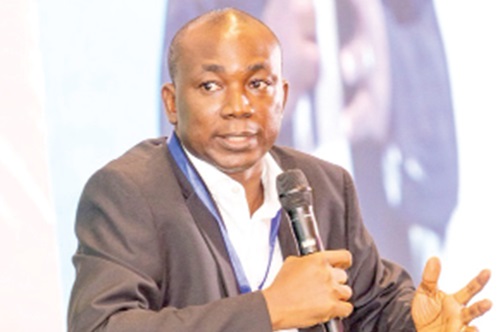
Transparency, accountability key to nation’s debt management — Prof. Bokpin
A professor of Finance at the University of Ghana Business School (UGBS), Godfred Alufar Bokpin, has called for improved transparency and accountability in the country's debt management practices.
He observed that the country's debt management had been plagued by under-declaration, lack of disclosure and creative accounting practices.
"We find it very convenient to treat certain debts as incapable debts in the books of state-owned enterprises.
"But when the IMF came to town and signed their life on the data, we were told at the end of the debt sustainability analysis that our debt-to-GDP ratio in present value chains was 109 per cent, whilst the policy dependency threshold in terms of the measure of solvency was supposed to be 55 per cent," the finance professor said.
He was speaking at the launch of a report released by the Economic Governance Platform (EGP) titled "Sustainable Debt Management in Ghana” under the auspices of the Ghana Anti-Corruption Coalition (GACC) in Accra.
The report is a flagship output of the Citizen Action for Sustainable Debt Management Project, implemented by the EGP with support from the Open Society Foundations (OSF).
It comprehensively analyses Ghana’s current debt landscape and offers practical policy recommendations to enhance parliamentary oversight, civic engagement and public sector accountability in debt management.
Debt management
Prof. Bokpin further said that the country's debt management practices were weak, especially when Ghana was not under an IMF-supported programme.
"Any time we are on our own, we preside over weak debt management practices without much transparency," he said.
Prof. Bokpin, therefore, called for improved institutional strengthening to manage public debt, disclosures, transparency and mitigation measures.
"We need to improve going forward. And this will be very important if Ghana goes ahead with their plan not to be under the IMF's supported programme after December 2025," he added.
Prof. Bokpin also mentioned that state-owned enterprises (SOEs) such as the ECG accumulate debt and arrears, which ultimately require government intervention.
In the 2025 budget, $33.7 billion was allocated to cater for inefficiencies and other commitments of SOEs.
He said that administrative costs in government institutions, including the National Health Insurance Authority, were increasing, with some institutions spending over 40 per cent of their allocation on administration.
Prof. Bokpin also stated that the country’s procurement practices had significantly diverged from best practices, with nearly 80 per cent of large government purchases over the years being carried out through sole or single sourcing.
Recommendations
Prof. Bokpin recommended institutionalising a fiscal council, making it independent and ensuring its operational independence to enhance debt accountability and transparency.
He emphasised the importance of improving efficiency in domestic revenue mobilisation by making the tax system more progressive, including lowering the burden on low-income earners.
An effective way to manage your debts is by strengthening domestic revenue mobilisation.
We need to explore efficiency in how we mobilise revenue and make our tax system more progressive, rather than it placing disproportionate burden on the poor, especially those with low income levels,” Prof. Bokpin said.
He also recommended empowering anti-corruption agencies such as the Office of the Special Prosecutor.
Focus
The Coordinator of the EGP, Abdul Karim Mohammed, stated that the report concentrated on political economy in debt accumulation, legal and institutional frameworks, and issues of accountability and transparency.
For her part, the Executive Secretary of the GACC, Beauty Emefa Narteh, stated that the report was a valuable resource that could help media practitioners produce stories to influence public discourse around Ghana’s debt management.