
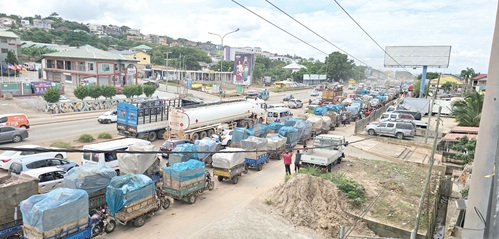
Tricycles congest Mallam-Kasoa corridor
Residents and motorists along the Mallam–McCarthy Hill corridor have been left frustrated and stranded as hundreds of refuse-laden tricycles and trucks block sections of the road, confronting them with severe access, health and traffic challenges.
They complained that the congestion had severely disrupted daily life, making it difficult to access homes, businesses and public transport, while also exposing them to persistent stench, poor air quality and fears of potential health risks.
Motorists using the corridor lamented that the presence of parked and slow-moving refuse vehicles has worsened traffic congestion along the already busy highway.
The residents also fear that the situation could lead to indiscriminate dumping, blocked drains, health issues and worsening sanitation conditions if it persists.
“Our customers can’t reach us.
They have to park at a long distance and walk to this place, and this is making our businesses suffer, and the stench makes it worse,” Charles Opare, a business owner, complained.
Congestion
The congestion along the corridor began roughly three weeks ago, progressively worsening each day.
The increased pressure on the McCarthy Hill disposal site, which now harbours waste from several parts of the capital, including Madina, Pokuase and Kasoa, follows the closure of some major dumping facilities along Mortuary Road, Tetegu and the Weija-Oblogo landfill site.
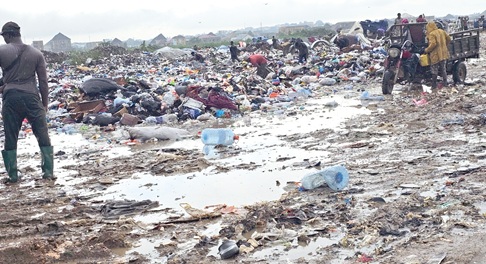
The dumping site at McCarthy Hill which receives refuse collected from homes, markets and businesses throughout the capital. Pictures: DOUGLAS ANANE-FRIMPONG
Those areas have become difficult to access due to spillage from the Weija Dam, forcing a concentration of waste transport activity at McCarthy Hill.
As a result, more than 500 tricycles and trucks are said to converge on the site daily, creating long queues that spill onto the highway.
Worsening situation
When the Daily Graphic visited the area, hundreds of aboboyaa tricycles and waste trucks had been lining up along the stretch from Sakaman Junction through Mallam Junction to Tetegu, effectively occupying the outer lane of the highway, restricting movement for both motorists and residents.
The situation, some residents revealed, had worsened in recent weeks following intensified rains.
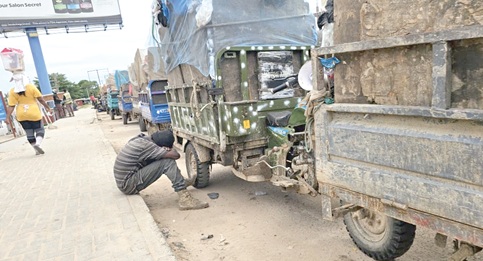
A tricycle rider taking a nap as hundreds of refuse carriers queue to access the dumping site
Some motorists said the situation, which initially affected only one side of the road, has now expanded across both lanes, effectively choking movement along the busy corridor.
“When this began, they occupied only one half of the lane, but now they have taken over both sides of the road. Some of us use the outer lane to ease pressure on the road, but we cannot do that anymore,” Daniel Klottey, a motorist, lamented.
A conductor overseeing tricycle movements to the site, who did not want to be named, described the situation as increasingly difficult.
He stressed that the facility was operating beyond its capacity due to the sudden surge in waste deliveries, with operators now spending between seven and eight hours in queues before gaining access to the disposal facility.
“The authorities should come and help us find a solution to this situation.
They can provide alternatives for us so that things will be easier and work will move faster for us,” he said.
One of the tricycle operators, who identified himself as Sulley, said these delays significantly increased operational costs for waste transporters by reducing the number of trips they could make per day.
He said it disrupted refuse collection schedules in several communities and could increase their service charges.
