
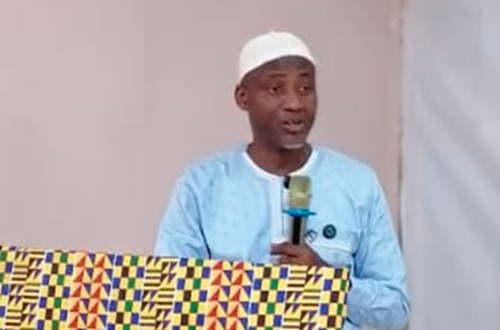
Unite to close education gap - Dr Zagoon-Sayeed urges Muslims
A Senior Lecturer at the Department of the Study of Religions, University of Ghana, Legon, Dr Haruna Zagoon-Sayeed, said the future progress of the Muslim community in the country would depend largely on the commitment of Muslims to strengthen education from the basic level.
He said the community must stop waiting for others to lead its development and instead take deliberate steps to improve the quality of education available to Muslim children.
Dr Zagoon-Sayeed made the call when he delivered a lecture as part of the Ramadan Lecture Series at the National Mosque in Accra last Sunday.
The lecture was organised by the Hijra Club, an organisation established by wealthy and enlightened Muslims to promote education among Muslims, engage in philanthropy and champion Muslim causes.
Dr Zagoon-Sayeed said although Muslims in the country had made some progress in education over the years, significant challenges remained, particularly at the foundational level.
He noted that weaknesses at the basic school level often affected performance at the senior high school and tertiary levels, making it difficult for many Muslim students to compete effectively in higher education and in professional fields.
According to him, the Muslim community must therefore prioritise strengthening basic education to build a stronger academic foundation for future generations.
The senior lecturer also stressed the need for unity among Muslims in addressing educational challenges.
He explained that divisions among different groups within the Muslim community had weakened collective efforts to adequately fund and develop educational institutions.
Dr Zagoon-Sayeed said if Muslims continued to operate in isolation, it would be difficult to mobilise the resources required to improve schools and support students.
He observed that the development gap facing Muslims in Ghana had existed for decades and required a collective effort by the entire Muslim community to address.
The lecturer recalled that organised Muslim educational activities in the country dated back more than a century, yet the community still had considerable work to do in building strong institutions capable of producing leaders in various fields.
He said no single Muslim group could address the challenge alone and called for stronger collaboration among scholars, educators and community leaders.
Dr Zagoon-Sayeed said improving education within the Muslim community would help produce professionals in fields such as science, medicine, engineering and public administration.
He therefore encouraged Muslims to support initiatives aimed at strengthening schools, training teachers and expanding opportunities for young people.
