
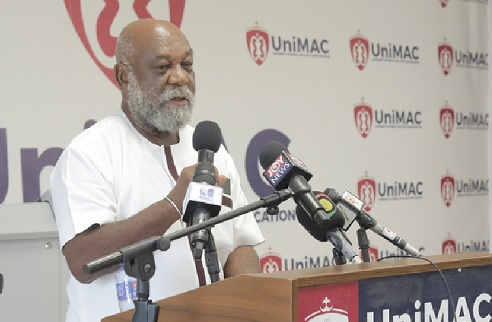
World Press Freedom Day: Strengthen regulation, promote ethical journalism — Prof. Karikari
The former Executive Director of the Media Foundation for West Africa (MFWA), Professor Kwame Karikari, has called for stronger regulatory enforcement within the media landscape to reverse the growing decline in ethical standards and professionalism.
He also called on media houses to institute robust internal mechanisms for self-regulation with clear editorial policies and also ensure the continuous professional training of journalists to reinforce professional standards.
He further called for the urgent passage of a comprehensive broadcasting law, which he said the draft bill had been pending before Parliament since the late 1990s, despite significant changes in technology and the media landscape.
Prof. Karikari made the call when he delivered a lecture titled, “Press Freedom and Responsibility: Problems of Professionalism in Ghanaian Journalism,” at the commemoration of World Press Freedom Day last Monday in Accra.
The event was organised by the School of Journalism and Media Studies, UNiMAC, in partnership with UNESCO, MFWA and the Ghana Journalists Association (GJA).
It was on the theme: “Shaping a Future at Peace: Safeguarding Journalism in a Democratic Era”.
Prof. Karikari called on media educational institutions to intensify public awareness campaigns to build demand for higher standards, while stakeholders, including political actors and traditional authorities must respect press freedom.
He expressed concern about sections of the media allegedly prioritising financial gain over public interest, citing instances where media outlets appeared to defend corporate interests after investigative reports exposed questionable dealings.
He described the development as troubling, warning that such practices undermine the credibility of the media and erode public trust.
He also called for the need to strengthen the enforcement and sanctioning powers of the National Media Commission (NMC) as it was critical to address and promote ethical standards and professionalism within the media.
Local languages
The communications consultant and academician added that many broadcasters lacked formal training in Ghanaian languages, leading to poor translations and frequent mixing of English with local languages during broadcast.
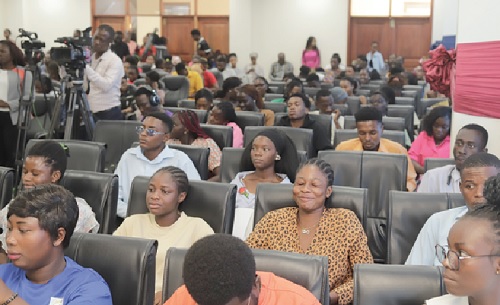
Participants in the lecture
That, he said, undermined clarity, professionalism and the development of local languages in media.
He attributed the problem partly to the absence of a national language development policy and inadequate emphasis on Ghanaian languages in education.
On digital media, Prof. Karikari cautioned the traditional media against relying on unverified online content and urged them to fact-check information sourced from the Internet.
Media and democracy
The Vice — Chancellor of UNiMAC, Prof. Eric Opoku Mensah, stated challenges the profession was facing such as misinformation and financial pressures, but said the university was committed to academic freedom and freedom of expression.
He encouraged students to uphold professionalism and ethical values, stressing that the future of journalism depended on them.
The Rector of UNiMAC, Prof. Christiana Hammond, said journalism extended beyond reporting to include peace building, national development and governance.
While commending the country’s strong record on press freedom, she acknowledged ongoing challenges such as intimidation, harassment and emerging digital threats.
The Secretary-General of the Ghana Commission for UNESCO, Prof. Osman Tahidu Damba, called for collective action among stakeholders to strengthen journalist protection, uphold ethical standards, promote media literacy and create an enabling environment for quality journalism.
He reaffirmed the commission’s commitment to safeguarding freedom of expression, ensuring access to information and supporting democratic governance and peace.
