
Government urges practical action to back Ghana’s WTO obligation on trade facilitation
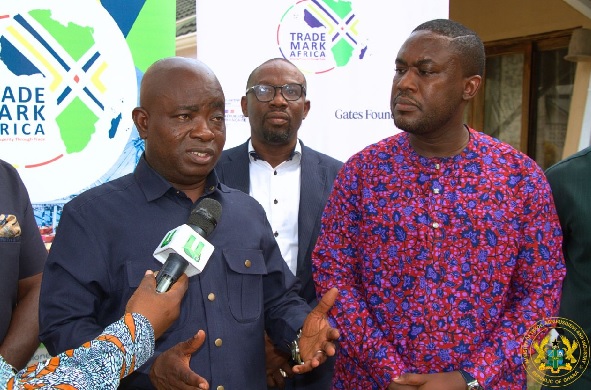
Deputy Minister for Trade, Agribusiness and Industry, Sampson Ahi has stressed that Ghana’s obligation to maintain a National Trade Facilitation Committee must translate into concrete results that improve the country’s trading environment.
He mentioned that Ghana is required under Article 23.2 of the World Trade Organization (WTO) Trade Facilitation Agreement to establish and maintain such a committee.
However, he emphasized that fulfilling the requirement should go beyond simply maintaining the structure on paper.
According to him, the committee must function as an active platform where government institutions and private sector actors openly discuss barriers affecting trade and agree on practical solutions to address them.
Mr Ahi explained that the work of the NTFC is critical because inefficiencies within the trade system—such as delays at ports, borders and within clearance processes—create extra costs for importers, lost time for exporters and uncertainty for manufacturers awaiting inputs.
He added that these challenges eventually affect ordinary citizens as the cost of doing business increases.
He further said that government performance is often judged by how efficiently its systems operate, including the speed of goods clearance, predictability of procedures and the level of coordination among institutions involved in trade processes.
Event
Mr Ahi made the remarks at the opening session of the 2026 first-quarter meeting of the National Trade Facilitation Committee (NTFC) at Sogakope in the Volta Region yesterday (March 9).
The three-day event is put together by the Ministry of Trade, Agribusiness and Industry (MoTAI) with support from TradeMark Africa (TMA).
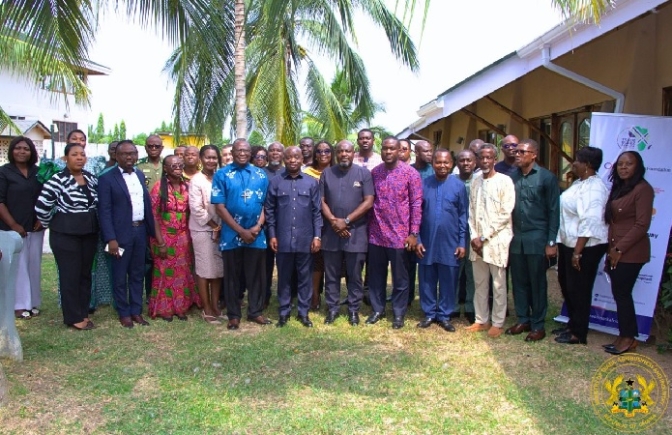
The event has brought together representatives from government agencies and trade stakeholders to develop a clear roadmap and timelines for the development and implementation of Standard Operating Procedures for import and export processes, particularly for perishable goods.
The session will propose and implement mutually agreed and beneficial measures to address import-clearance and export related challenges for perishable goods. It will also validate a concept note for establishing and operationalising the NTFC Secretariat.
In attendance were Programmes Manager for West Africa and AfCFTA, TradeMark Africa, Mr Kwamina Ekremet and Vice Chair of NTFC, Brian Amaglo.
Progress
The Deputy Minister acknowledged that some progress has been made in improving procedures and coordination but admitted that persistent issues such as delays, duplication of processes and uncertainty still hinder smooth trade operations.
"We have come together for a serious national task. The work before this Committee is not routine administrative work. It goes to the heart of how smoothly trade moves in this country, how businesses survive unnecessary delay, and how confidently investors and traders deal with our systems.," he said.
"So I want to begin by acknowledging the effort that each institution represented here continues to make. Your role in this Committee is not ceremonial. It carries real weight. The decisions taken here can ease pressure on businesses, reduce avoidable cost, and improve the way public institutions respond to the needs of trade," he stressed.
Bottlenecks
While acknowledging that improvements have been made in certain procedures and institutional coordination, Mr Ahi admitted that many bottlenecks still persist.
He mentioned that the burden of these inefficiencies often falls hardest on smaller operators such as cross-border traders, agro-processors and exporters dealing with time-sensitive goods.
A key focus of the committee’s work this year, he said, will be addressing delays affecting perishable goods.
Traders dealing in fresh produce, fish and meat face severe risks when goods are held up in the clearance process, as delays can quickly destroy product value, damage buyer relationships and lead to financial losses.
Mr Ahi therefore, urged members of the committee — including representatives of ministries, departments, agencies, the private sector and development partners—to focus discussions on concrete outcomes.
He called for honest identification of bottlenecks, clear institutional responsibilities and practical timelines for reforms.
"We should admit that some progress has been made. Certain procedures have improved. Coordination in some areas is better than it was before. There has been movement."
"But we should also admit, without hesitation, that there are still too many points where delay, duplication and uncertainty remain part of the experience of doing business and usually, those who suffer most are not the biggest operators. It is often the small trader, the cross-border businesswoman, the agro-processor, and the exporter working with time-sensitive goods who carries the heaviest burden when the system does not respond well," he said.
Concluding his remarks, the Deputy Minister encouraged members to ensure the meeting produces tangible actions that will help remove unnecessary barriers and improve the efficiency of the country’s trading environment, ultimately making trade more reliable and accessible for businesses and citizens alike.
"Let us leave here with clear actions, clear responsibilities and a shared determination to make trade in Ghana faster, fairer and more predictable for the people and businesses who rely on it every day," he added.
Boosting border efficiency
The Programmes Programmes Manager for West Africa and AfCFTA, TradeMark Africa, Kwamina Ekremet reaffirmed his organization’s commitment to supporting Ghana in improving trade efficiency, reducing the cost of doing business, and expanding regional and international market access.
He expressed appreciation to government institutions, border agencies and private sector partners for their continued commitment to advancing Ghana’s trade facilitation agenda.
He stated that TradeMark Africa has, over the years, collaborated closely with these stakeholders to implement reforms that strengthen border management systems and enhance the effective implementation of the World Trade Organization Trade Facilitation Agreement.
Mr Ekremet explained that the organization’s interest in the discussions stems from its long-standing partnership with Ghana to ensure that trade processes become faster, more transparent and more predictable, especially for sectors critical to economic growth such as agriculture and agro-processing.
According to him, efficiency at the border has become increasingly important in today’s global trading environment. Delays at ports and border points not only raise the cost of doing business but can also lead to major losses for products with limited shelf life, including fresh agricultural produce, seafood and pharmaceuticals.
"Our interest in today's discussion, therefore, stems from our continued partnership with Ghana to ensure that trade processes become faster, more transparent, and more predictable, particularly for sectors that are critical to economic growth, such as agriculture and agro-processing," he said.
"In today's global trading environment, efficiency at the border is critical. Delays not only increase the cost of doing business, but lead to significant losses for products with limited shelf life, such as fresh agricultural produce, seafood, and pharmaceuticals. Thus, the effective implementation of Article 7.9 is essential to help reduce waste times, improve logistics efficiency, and strengthen coordination among border agencies and officials."
Mr Ekremet therefore emphasized the importance of implementing Article 7.9 of the WTO Trade Facilitation Agreement, which focuses on the expedited handling of perishable goods. He noted that its effective implementation would help reduce waiting times, improve logistics efficiency, and strengthen coordination among border agencies.
