
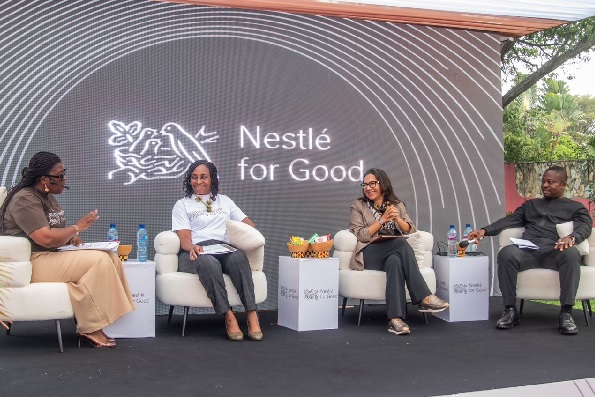
Nestlé For Good Campaign launched: Leaders highlight sustainability and community impact
Nestlé Ghana Ltd has launched its flagship Corporate Social Responsibility campaign, Nestlé for Good, building on years of impactful work in nutrition, sustainability, and community development.
While Nestlé has implemented numerous initiatives over decades in areas such as nutrition, sustainability, and community development, the new campaign brings these efforts together under one unified platform to better communicate their impact.
The goal is to empower consumers to make informed choices by understanding not just the products they purchase, but also the values and processes behind them.
The launch event held in Accra on Wednesday, April 22, featured the sharing of real-life stories from beneficiaries to demonstrate the campaign’s tangible impact.
The focus was on authentic experiences that highlighted how Nestlé’s initiatives are improving lives, with the aim of inspiring positive change across communities.
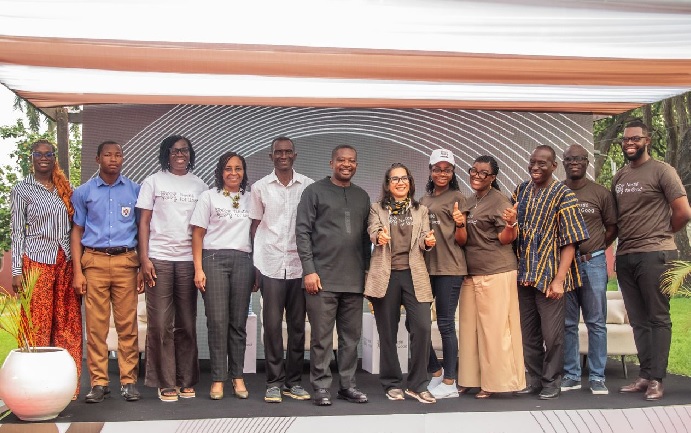
The event also included panel discussions and an interactive question-and-answer session, during which participants responded to questions about the Nestlé for Good campaign for a chance to win various prizes.
Commitment
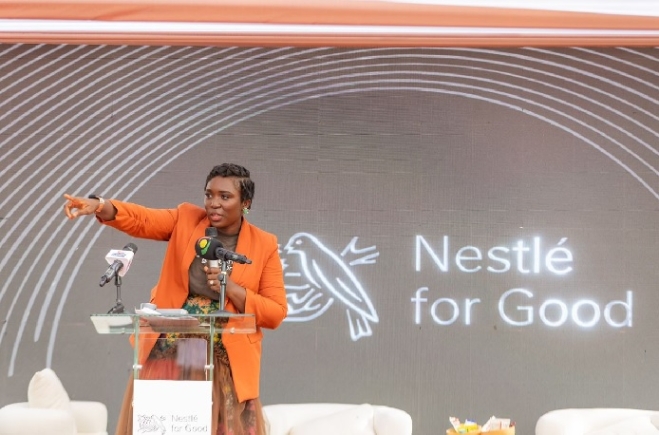
Addressing participants, Managing Director of Nestlé Ghana Ltd, Salome Azevedo emphasized the company’s commitment to greater transparency and consumer engagement.
She stressed that this approach reflects respect for Ghanaian consumers and a desire to maintain their trust by openly sharing how the company contributes to society.
Using products like Milo as an example, she highlighted Nestlé’s focus on nutrition, explaining that ingredients such as cereals provide slow-release energy, while added vitamins and minerals like iron support long-term health benefits.
This, she noted, demonstrates that Nestlé products are designed with both immediate and sustained nutritional value in mind.
Panel discussion
During the high-level panel featuring Salome Azevedo, Patricia Ekaba, and Seth Twum Akwaboah outlined the company’s long-standing commitment to social impact under the theme of measurable change through nutrition, sustainability, and community partnerships.
Patricia Ekaba set the tone by explaining that Nestlé for Good is not a new initiative but a formalized commitment to ongoing efforts spanning over two decades.
She emphasized that the campaign seeks to amplify real, authentic stories of beneficiaries across Central and West Africa, marking the first regional corporate campaign of its kind.
She further clarified the campaign’s three core pillars—nutrition, communities, and planet—stressing that they reflect Nestlé’s role in providing affordable nutrition, supporting livelihoods, and protecting environmental resources.
Building on this, Salome Azevedo highlighted the need to make these efforts more visible to consumers. She noted that modern consumers increasingly want to understand the impact behind the products they purchase.
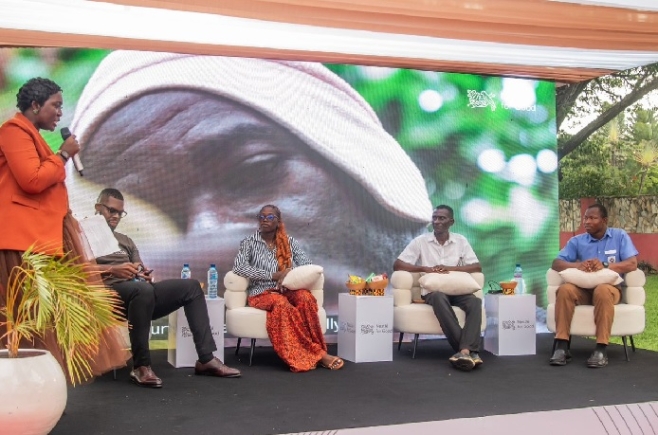
She detailed Nestlé’s contributions, including the provision of approximately 2.6 billion fortified servings annually in Ghana to address nutritional deficiencies such as iron and iodine. On community impact, she cited support for over 18,000 farmers through training, sustainable practices, and financial incentives, alongside youth development, internships, and educational programs.
She stressed that success lies in improving even a single life or inspiring individual action.
Societal impact
From an industry perspective, Seth Twum Akwaboah underscored the importance of businesses going beyond profit to deliver measurable societal impact.
He commended Nestlé’s efforts in areas such as food fortification, youth support, waste management, and sustainable sourcing.
He also highlighted the company’s leadership in value chain development—particularly sourcing raw materials locally and supporting farmers—and pointed to its consistent recognition, including awards for sustainable manufacturing, as evidence of meaningful impact.
He urged other companies to emulate such practices and collaborate to advance national development.
Sustainability
On sustainability, Patricia Ekaba further illustrated the “planet” pillar through practical examples, including plastic waste collection, water access initiatives, hygiene education, and climate action.
She emphasized the importance of recognizing everyday contributors, such as waste collectors, as key agents of change within communities.
The panel concluded with a call for stronger stakeholder engagement, particularly from the media, to experience and accurately report on these initiatives.
Overall, the discussion reinforced Nestlé’s strategy of combining business with purpose, while encouraging broader industry participation to drive inclusive and sustainable development in Ghana and beyond.
Trade Ministry backs campaign
In a goodwill message, Director of Industry, Mr Kofi Addo, speaking on behalf of the Ministry of Trade, Agribusiness and Industry, commended Nestlé Ghana Ltd for its strong presence and influence in Ghanaian households, describing the brand as one that “owns” shelf space and goes beyond products to inspire ambition, particularly through initiatives like Milo campaigns that promote youth development.
He praised the launch of the Nestlé for Good campaign as a bold and timely initiative that demonstrates how businesses can grow while contributing positively to society and protecting the environment.

"It is my honour, on behalf of the Ministry of Trade, Agribusiness and Industry, to convey our goodwill to Nestlé and all partners at the launch of the Nestle for Good campaign."
"We commend this bold initiative and the clear message it sends that we can grow our a business to benefit the entire economy while protecting our people and the environment," he said.
He highlighted the campaign’s three key pillars—nutrition, communities, and the planet—as aligned with national development priorities.
Mr Addo reaffirmed the Ministry’s commitment to creating an enabling environment for businesses through improved market access, support for local value addition, and fair trade policies.
He noted that Nestlé’s efforts, including local sourcing and support for small and medium enterprises, strongly align with government goals of strengthening local industries and expanding SME participation in supply chains.
"The Ministry of Trade, Agribusiness and Industry remains committed to strengthening an enabling environment where businesses of all sizes can thrive, by improving market access, supporting local value addition, and promoting fair and predictable trade."
"On behalf of the ministry, I wish Nestle every success in implementing this campaign," he added.
