
NPA pilots 24-Hour Economy programme across 268 fuel stations in four regions
The National Petroleum Authority (NPA) has initiated a phased rollout of a 24-Hour Economy Programme within the petroleum downstream sector.
The pilot phase, beginning in Greater Accra, Ashanti, Western, and Northern regions, covers 268 fuel stations, eight petroleum depots, and two refineries.
The participating depots include BOST Depot in Kumasi, APD Global, Tema Tank Farm (TTF), Tema Fuel Company LTD (TFC), Vana Energy, and Quantum Terminals in Tema, as well as Ghanstock Depot and Zen Terminals in Takoradi.
The programme will also involve the Tema Oil Refinery and Sentuo Oil Refinery.
Launch
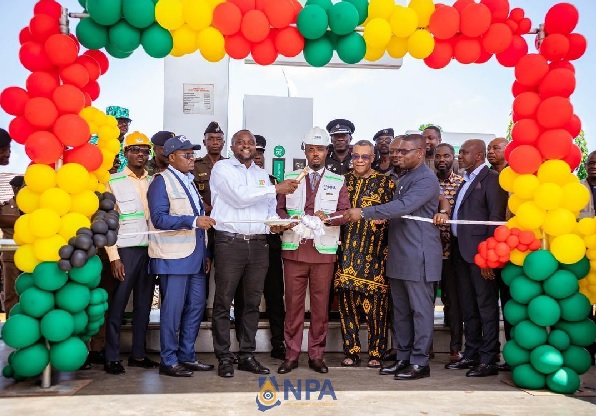
The pilot launch held in Accra on Tuesday, featured speeches and a trip to the JP Filling Station on the Spintex Road for a symbolic launch of the project led by officials of the NPA and the 24-Hour Economy Secretariat.
The event held on the theme “Powering Ghana’s 24-Hour Economy Through an Efficient Petroleum Downstream Sector” brought together key stakeholders from the petroleum industry and the 24-Hour Economy Secretariat as well the the security services.
Notable among the attendees were the Deputy Minister of Energy and Green Transition, Richard Djan Mensah, Presidential Advisor on 24-Hour Economy and Accelerated Export Development, Augustus Goosie Tanoh, CEO of NPA, Mr Godwin Edudzi Tamakloe and CEO of COMAC, Dr Riverson Oppong.
Vision
Speaking at the pilot launch, Chief Executive of the National Petroleum Authority, Godwin Kudzo Tameklo said the initiative aligns with President John Dramani Mahama’s vision for transformative economic growth through continuous operations and improved productivity.
He said the programme aims to ensure uninterrupted fuel availability, improve supply chain efficiency, create jobs, reduce congestion, and boost economic activity through round-the-clock operations.
Mr Tameklo added that the phased implementation will allow for system testing, operational refinement, and enhanced safety measures, supported by modern monitoring technology and collaboration with security agencies and private sector stakeholders.

"This programme envisions continuous operations across key installations, including bulk storage depots, refineries gantries, LPG stations, and retail outlets, ensuring that petroleum products are always available and accessible to Ghanaians," he said.
"The expected outcomes are clear: a more efficient and resilient petroleum supply chain, improved service delivery, expanded economic activity, and meaningful job creation."
"On behalf of the NPA, I reaffirm our unwavering commitment to the successful implementation of this pilot programme. Together, let us fuel Ghana’s progress, day and night," Mr Tameklo added.
Driving Productivity
Presidential Advisor on the 24-Hour Economy and Accelerated Export Development, Augustus Goosie Tanoh said Ghana’s 24-Hour Economy initiative is designed to transform productivity, expand employment, and increase national output by extending economic activity beyond traditional working hours.
Mr Tanoh said the initiative has officially become operational six weeks after the signing of a Memorandum of Understanding between the 24-Hour Economy Secretariat and the National Petroleum Authority.
He said the six-month pilot, running until November 2026, covers 268 retail fuel outlets, eight depots, and two refineries across the Greater Accra, Ashanti, Western, and Northern regions.
According to Mr Tanoh, the petroleum downstream sector was selected as an early pilot because it supports every productive sector of the economy, including manufacturing, agro-processing, logistics, and transportation.
"It is the President's instrument for raising what this country produces, what we earn from what we produce, and the number of Ghanaians who hold productive work."
"By November, fuel stock-outs and queues on the Accra-Kumasi and Accra-Tamale corridors at night and early morning will be lower than they are today. Depot to forecourt transit times will be shorter. Every part spacing site will be running clean, safe, properly staffed night operations and there will be jobs," he said.
He argued that keeping fuel depots and supply chains active around the clock would allow industries to expand operations, reduce delays, and improve efficiency.
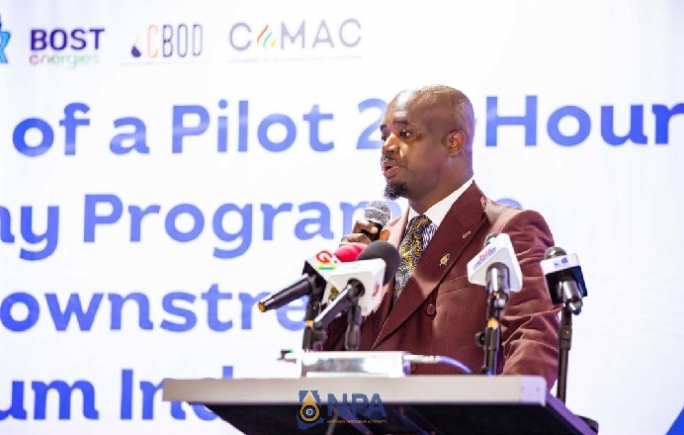
Mr Tanoh said the programme will be monitored through a four-part framework measuring economic performance, operational efficiency, labour outcomes, and safety standards to determine readiness for a nationwide rollout.
He assured industry operators that government would work closely with them to address security, operational, and policy concerns as Ghana moves toward full implementation of the 24-Hour Economy programme.
"To the NPA, to the security services, to GRA, to the OMCs, the depot operators, the refineries, the tanker drivers and organised labour, thank you for choosing to be early on this road to the 24-hour full-blown economic transformation programme," he said.
"To the President, thank you for the mandate and for the trust. Our work starts now. God bless us all and God bless Africa," he added.
Vision into action
Deputy Minister for Energy and Green Transition, Richard Djan-Mensah praised the National Petroleum Authority for leading the implementation of the government’s 24-Hour Economy agenda through a pilot programme in the downstream petroleum sector.
Speaking on behalf of Energy Minister, John Abdulai Jinapor at the launch event, Mr Djan-Mensah described the transition from policy to practical implementation as a major milestone.
He mentioned that just a month after the signing of a Memorandum of Understanding between the NPA and the 24-Hour Economy Secretariat, the initiative has moved from vision to reality.
The Deputy Minister commended industry players, oil marketing companies, and security agencies for supporting the pilot programme, stressing that stakeholder readiness and collaboration were key to its launch.
"I am particularly pleased that the downstream petroleum sector is among the first to commence the implementation through this pilot program. This is significant because energy is the heart of every productive economy," he said.
Highlighting the importance of security, he acknowledged the role of the Ghana Police Service and other security agencies in ensuring safe operations for businesses and consumers participating in the 24-hour system.
"I want to say that the downstream petroleum sector plays a very critical role in keeping Ghana moving. The pilot program represents a major step towards ensuring the full availability, logistics, safety system, and service delivery are aligned with the demands of modern economy that works beyond traditional hours."
"Our commitment is clear. We will continue implementing the President's vision with determination, coordination, and purpose. Ghana is not waiting for the future," he added.
