


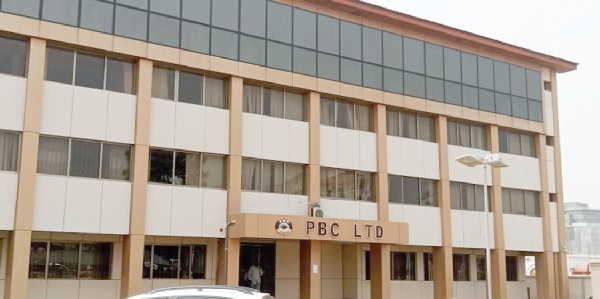
Five banks seize PBC trucks over GH¢257 million debt following stalled rescue effort
A consortium of five banks owed GH¢257 million by the state-owned Produce Buying Company (PBC) has begun seizing the company’s trucks and operational vehicles after securing a court order, exposing the deepening financial distress at one of the country’s oldest cocoa institutions.
The asset seizures mark a dramatic escalation in a crisis now rippling through Ghana’s cocoa supply chain, leaving farmers unpaid, staff salaries in arrears and raising broader concerns about the financial architecture underpinning one of the country’s most critical export sectors.
Sources within PBC told the Graphic Business that the banks moved to enforce the court order after efforts by the company to convene an emergency general meeting to address the debt crisis collapsed. The meeting failed to proceed after the Ministry of Finance — both a shareholder and the supervising ministry for some of the creditor banks — declined to sign the proxy documentation required for the gathering.
The development casts fresh doubt over the government’s stated commitment to revive PBC, despite public assurances in February that steps would be taken to restore the company’s operations.
Three months later, little visible intervention has materialised even as the company’s financial condition deteriorates rapidly.
Court-backed seizures
At the centre of the crisis is a liquidity crunch that has effectively paralysed PBC’s core mandate as the country’s buyer of last resort in the cocoa sector.
Company sources say PBC is currently unable to purchase cocoa from farmers because it lacks working capital. Reuters reported that the company owes farmers GH¢24 million for more than 9,000 bags of cocoa already delivered and does not have the liquidity required to resume purchases.
The same report said a consortium of Ghanaian banks secured a court order in March, permitting the sale of the company’s assets to recover outstanding debts.
Two of the five banks involved are state-owned institutions, while all fall under the oversight of the Finance Ministry.
The seizure of operational vehicles underscores how rapidly PBC’s financial difficulties have moved from balance-sheet stress into operational paralysis.
Once responsible for roughly 30 per cent of Ghana’s domestic cocoa purchases, PBC now accounts for less than five per cent of national output, according to Reuters. The sharp erosion in market share has weakened its revenue base and reduced its strategic relevance within the country’s cocoa marketing system.
Under that system, licensed buying companies purchase cocoa from farmers before selling the beans to the Ghana Cocoa Board (COCOBOD), which then markets the cocoa internationally.
Liquidity strain disrupts cocoa buying
But sources say PBC’s financial breakdown has exposed wider strains within the sector itself. Reuters reported that COCOBOD has yet to reimburse the company for about 800 metric tonnes of cocoa delivered more than two months ago.
According to the report, neither COCOBOD nor the Finance Ministry responded to requests for comment regarding PBC’s appeals for financial support.
The company’s liabilities now stretch far beyond its bank exposure.
Sources familiar with the company’s finances say PBC also faces more than 24 months of unpaid salaries, outstanding vendor obligations and unpaid statutory deductions, adding to mounting operational pressures across its nationwide network.
The distress is particularly significant because of PBC’s historic role in the country’s cocoa economy.
With operations spanning all 127 cocoa-growing districts, the company has traditionally maintained the broadest reach among licensed buying firms, serving as a stabilising presence in remote farming communities where private buyers often have weaker commercial incentives to operate.
That footprint once made PBC an important public-interest institution within Ghana’s agricultural economy. But without access to liquidity, its role as buyer of last resort risks becoming largely symbolic.
For cocoa farmers, delayed payments carry immediate economic consequences. Farmers who have already delivered cocoa but remain unpaid face increasing difficulty financing household consumption, paying school fees and maintaining farms ahead of the next production cycle.
Broader questions for cocoa sector
The strain also threatens confidence in Ghana’s formal cocoa marketing system at a time when policymakers are attempting to stabilise production, strengthen farmer protection and rebuild credibility in state-led commodity management.
The crisis is unfolding against a difficult backdrop for the global cocoa market.
After a prolonged rally driven by supply shortages, cocoa prices have recently come under pressure amid improved harvest expectations in some producing countries and softer demand from chocolate manufacturers facing weaker consumer spending conditions.
That shift has compounded pressure on already fragile players within Ghana’s cocoa financing chain.
The episode also raises uncomfortable governance questions around the state’s stewardship of strategic commercial assets.
Reuters reported that the Social Security and National Insurance Trust (SSNIT), a major shareholder in PBC, has been reluctant to inject additional capital after failing to receive expected returns on its investment.
Some within the company argue that a structured intervention by COCOBOD could still stabilise operations if part of international buyer demand were channelled through PBC alongside dedicated liquidity support for cocoa purchases.
Yet any rescue effort would require confronting years of accumulated financial weakness, shrinking market relevance and deteriorating credibility with farmers, creditors and employees.
For the government, the challenge is becoming increasingly delicate.
Allowing PBC to collapse risks undermining a strategic state presence within the cocoa trade and worsening hardship among cocoa farmers already grappling with delayed payments. But reviving the company would likely require significant financial support at a time when public finances remain under pressure.
The immediate concern is whether PBC can restore liquidity quickly enough to prevent further asset seizures and resume payments to farmers.
The broader concern is what the company’s distress reveals about the fragility of Ghana’s cocoa financing ecosystem — an industry that remains central to export earnings, rural livelihoods and the country’s wider economic stability.
For PBC, the question is no longer simply whether it can be rescued. It is whether any intervention can come fast enough to restore operational credibility in a cocoa market that has steadily moved on without it.