
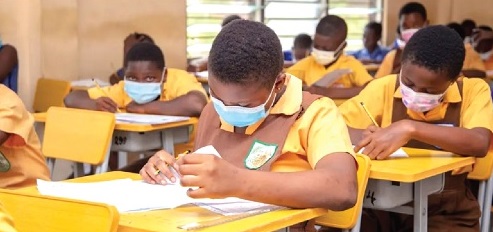
For generations, Ghanaians learned through informal education (family apprenticeship, communal work, storytelling, and observation). In modern times, formal schooling has become the primary and most socially recognised pathway to learning, advancement, and professional qualifications.
Degrees and certificates signal readiness for responsibility.
Yet a certificate that does not reflect knowledge, skill, and character is a fragile credential, especially in critical professions like teaching and health care.
Education develops knowledge, critical thinking, analytic ability, problem-solving capacity, and character. It is not preparation for life; it is life itself, as stated by John Dewey, an American Education Reformer.
Like any powerful tool, education can be used wisely or misused. In recent years, concerns have been raised that Ghana’s formal academic system is drifting towards superficial success - where passing examinations is prioritised over genuine understanding and critical thinking.
This trend risks producing graduates who hold certificates but lack the practical competence and creativity needed to solve real-world problems. If left unaddressed, it could undermine national development, weaken professional standards, and erode public trust in our institutions.
Unless we act decisively to refocus education on depth, integrity, and skills, we risk nurturing a time bomb with far-reaching consequences for the country’s future.
Key definitions
Education: A structured or unstructured process of learning, that is receiving or giving systematic instruction in schools, colleges, training centres, communities, workplaces, or through lived experience.
Quality (in education): The degree to which learning experiences produce meaningful, lasting understanding; transferable skills; sound judgement; and ethical practice. Quality differentiates true competence from mere credentialing.
Passco (also spelt Pasco): A locally used term for past question collections of previously administered examination items (often with suggested answers) used by students and teachers to
prepare for future exams. Originally intended as a revision resource, Passco has, in many settings, become the central curriculum driver.
In Ghana today, passco has shifted from being a helpful revision aid to becoming the dominant route many learners take in preparing for highstakes exams.
Passco is not the villain. Depending on it instead of learning is the problem. It familiarises learners with exam format, wording, and expected depth of answers. It builds confidence when students see repeated question types and know they can respond. It can be a useful trigger for further reading and discussion.
Passco harms when it replaces textbooks, primary sources, and practical work with narrow question spotting. It encourages memorisation of specific answers, not understanding concepts. It invites teachers and examiners to recycle items, which weakens the credibility of the exam. The central argument of this feature is: Passco is not the problem. Overreliance on it is.
Certificates without competence
The pursuit of academic achievement is noble. Families sacrifice; students strive; communities celebrate graduates.
Yet too much of today’s effort is directed at acquiring certificates rather than gaining knowledge. A painful pattern is emerging:
Students in universities, training colleges, and professional programmes invest heavily in buying, sharing, and memorising Passco compilations, sometimes at the expense of reading texts, attending fully to instruction, or engaging in practical work.
Some educators, pressured by large class sizes, limited time, or habit, recycle the same or similar questions year after year.
Students, aware of this trend, narrow their preparation accordingly.
High‑stakes national exams (for example, BECE, WASSCE, and professional licensure) create intense pressure to “teach to the test,” reinforcing a surface‑learning culture.
The consequence is individuals holding strong‑looking certificates but lacking the depth those credentials imply.
In sensitive sectors such as teaching, nursing, and public health, the risks are real - miscommunication, errors in care, weak instructional delivery, and reduced public confidence.
How the Passco culture took root
Several reinforcing forces have elevated Passco from a revision tool to a de facto main curriculum. High-stakes transition and selection exams.
Placement into senior high school, tertiary training, and jobs often hinges on exam scores.
Stakeholders naturally chase what counts. When one exam decides so much, predicting questions becomes a survival strategy, not just a study habit.
When exam formats and question styles change little, past papers become strong predictors.
This tempts teachers and students to rely on them, especially where resources such as textbooks and internet‑based materials are scarce.
Large enrolments stretch teachers and lecturers.
Setting fresh items, marking frequent quizzes, and giving feedback takes time.
Reusing past questions becomes a coping mechanism, not a choice made with care.
A thriving market prints, bundles, and sells Passco books and answer digests.
Street vendors, bookstores, and digital chat groups make access easy and socially normal.
Some students treat Passco as a shortcut; others feel they have no real alternative.
“When everyone is doing Passco, you dare not ignore it.”
Students fear being disadvantaged if they focus on understanding while their peers memorise likely questions.
In some communities, not buying Passco is seen as irresponsible.
Overreliance on Passco
Memorising specific answers narrows cognitive engagement.
Learners may pass tests yet fail to transfer knowledge to new contexts.
Education becomes “chew, pour, pass, and forget,” not understanding built for life.
If assessment items repeat, students need not analyse, synthesise, or evaluate core skills for innovation, citizenship, and professional practice.
They learn to recognise patterns, not to reason.
Students who “study the Passco” often neglect textbooks, primary sources, lab manuals, and field practice.
Read also: Past Questions: A major threat to quality education in Ghana (Part 2)
