

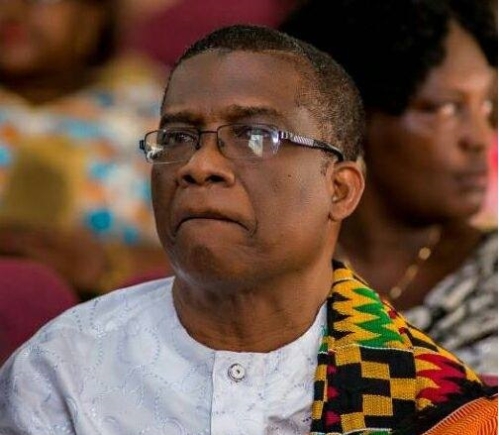
For 12 years, Nanabanyin Dadson steered the editorial direction of Graphic Showbiz, establishing it as Ghana’s most authoritative newspaper on arts and entertainment as the second editor after the first, Lee Accorley.
But beyond being the longest-serving editor of the newspaper until his retirement in May 2015, the respected media personality has now revealed another fascinating detail — he was also the brain behind the name “Graphic Showbiz.”
Speaking in a radio interview on Joy FM’s personality profile programme with Kofi Hayford last week, the current Head of the Department of Media and Journalism at the African University of Communications and Business reflected on his remarkable journey in journalism and his contribution to entertainment reporting in Ghana.
According to him, the name Graphic Showbiz emerged during brainstorming sessions when the newspaper was being conceptualised as a standalone entertainment publication from The Mirror.
“In fact, the title Graphic Showbiz came from me,” he said. “We were looking for a title for the paper. Everybody was trying to bring ideas. I brought in mine, and it worked.”
Nanabanyin Dadson explained that his rise in the media industry was gradual but steady, eventually leading him to become editor of the newspaper, which would later grow into Ghana’s leading entertainment brand.
“And I wasn’t stagnant as such, I was being moved up the scale until I became the editor of Graphic Showbiz, which was a complete paper out of The Mirror,” he said.
Looking back on more than three decades in journalism, Nanabanyin Dadson said he takes pride not only in his own achievements but also in mentoring younger journalists and writers who later became key players in the media industry.
“I think I will applaud myself,” he said. “Not only did I write, but I also mentored others who didn’t know what to do, but I helped them with how to write, how to review works of art, music, dance, theatre, tourism, food and, of course, fashion.”
Mr Dadson also recounted entering the entertainment journalism space at a time when there were very few writers dedicated to arts and showbiz reporting in Ghana.
He noted that his academic background in English and Performing Arts gave him an advantage in analysing and reporting on the creative industry.
Touching on some memorable moments in his career, Mr Dadson revealed that one of his stories nearly earned him the prestigious Ghana Journalists Association Journalist of the Year award but he lost to the late broadcaster Komla Dumor.
That notwithstanding, Mr Dadson’s journalism career is decorated with a number of awards and recognitions for his immense contribution to arts and entertainment journalism as well as his dedication to mentoring young media practitioners.
He is a recipient of Ghana Journalists Award — Arts and Culture writer of the year (1996), Arts writer prize of Ghana (1986) and GJA Recognition Award for Journalism in 2004. (Read Travel & Tourism: A salute to Nanabanyin Dadson - The pen that shaped Ghana’s Arts and Tourism)
In June 2025, the Board of the Telecel Ghana Music Awards (TGMA) honoured Nanabanyin Dadson, popularly known as Uncle Nab for his sustained and invaluable contribution to the creative sector.
His impact extends beyond newspapers. His works have appeared in the West Africa Magazine, African Concord, Africa Asia and even the Torino Film Festival Magazine.
His name is cited in Manthia Diawara’s academic work, African Cinema, Politics and Culture - a testament to the weight his commentary carried.
