Ramaphosa opens Africa’s 2026 Travel Indaba as tourism shifts to growth phase
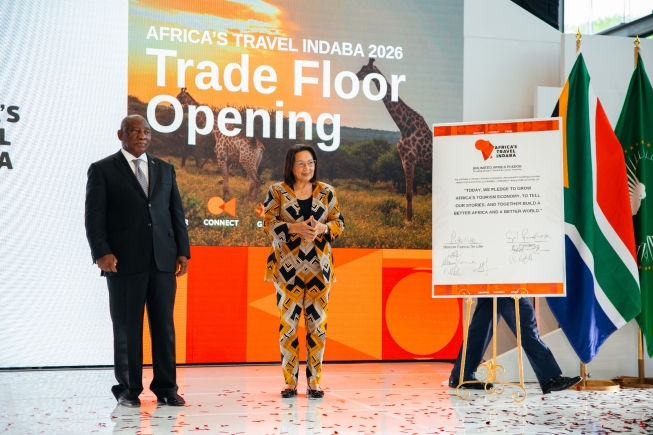
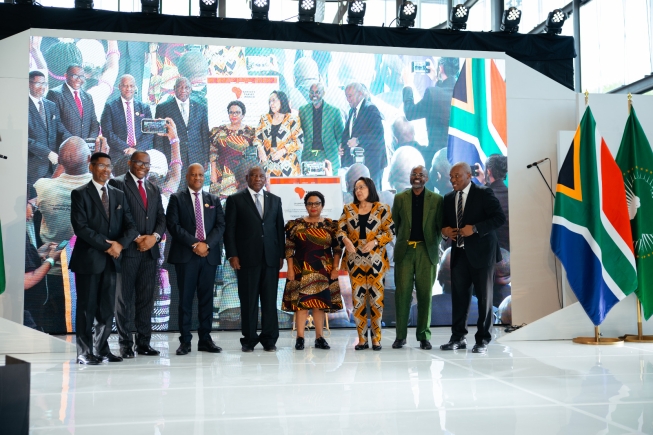
South African President Cyril Ramaphosa on Tuesday opened the 2026 edition of Africa’s Travel Indaba in Durban, declaring that tourism on the continent has moved beyond recovery and is now firmly positioned as a driver of growth, jobs and regional integration.
Speaking at the opening ceremony, President Ramaphosa said Africa’s tourism future lay in stronger partnerships, improved connectivity and policies that make travel across the continent easier.
The opening came a day after the South African leader publicly condemned acts of violence against foreign nationals, stressing that xenophobia had no place in South Africa and ran counter to economic development, tourism and continental cooperation.
Africa choosing Africa
President Ramaphosa disclosed that South Africa received 10.5 million international visitors last year, a figure he said reflected renewed global confidence in the destination.
Significantly, he noted that about 75 per cent of international arrivals came from within the Southern African Development Community (SADC).
“This tells us something important — Africans are choosing Africa,” he said.
He explained that South Africa was working with neighbouring countries to advance the SADC Tourism UNIVISA, which would allow seamless travel across the region, while also expanding one-stop border posts and developing cross-border tourism itineraries.
“When Africans travel within Africa, we strengthen our economies, deepen our cultural ties and build a more integrated continent,” President Ramaphosa said.
Tourism’s economic impact
Describing tourism as “a living expression of who we are as a people,” the President said growth in the sector translated directly into livelihoods and community upliftment.
According to Statistics South Africa, the tourism sector supports nearly one million direct jobs, meaning one in every 18 workers in the country is employed in tourism.
“These increases are not merely of statistical interest,” he said. “They represent families supported, small businesses revived and communities uplifted.”
From recovery to growth
Tourism Minister Patricia de Lille said South Africa was no longer talking about post-pandemic recovery but sustained growth.
She said the tourism sector contributed 4.9 per cent to South Africa’s GDP and accounted for 954,000 direct jobs by 2024.
“With a record-breaking 10.5 million international arrivals, we are no longer speaking recovery; we are speaking growth,” Ms De Lille said.
She highlighted major tourism investments including the R24 billion expansion of the V&A Waterfront, R10.5 billion investment in
Winelands Airport and the R2.1 billion Club Med Beach and Safari Resort in KwaZulu-Natal, expected to open later this year.
MICE tourism gains momentum
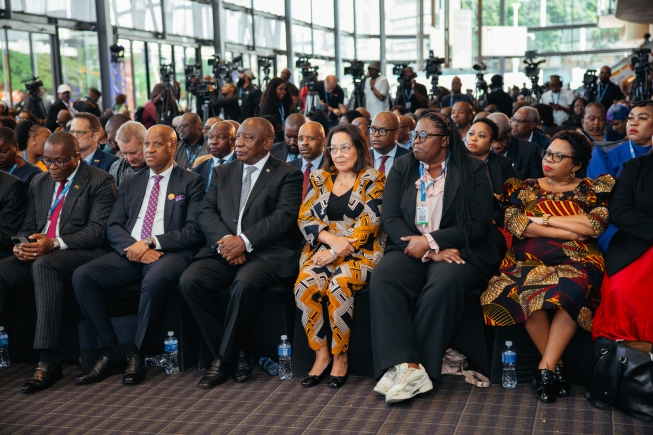
Meetings, Incentives, Conferences and Exhibitions (MICE) emerged as a major focus of the Indaba.
Ms De Lille said the South African National Convention Bureau submitted 100 international MICE bids in the 2025/26 financial year and secured 52, a strong vote of confidence in the country’s convention and events infrastructure.
Following the successful hosting of the G20 Leaders’ Summit, South Africa will host the SADC Heads of State Summit in Durban in August 2026, and in 2027 will co-host the Cricket World Cup with Zimbabwe and Namibia, alongside a special World Economic Forum meeting.
Diversifying tourism offerings
President Ramaphosa and Ms De Lille both stressed the need to broaden tourism offerings beyond traditional gateways.
Recent projects include the upgraded Cape Agulhas Lighthouse precinct, where the Indian and Atlantic Oceans meet, and the Kgodumodumo Dinosaur Interpretation Centre in the Free State’s Golden Gate Highlands National Park, which has attracted close to 90,000 visitors since opening.
Durban has also expanded its cultural tourism footprint with the unveiling of statues of Nelson Mandela and Oliver Tambo.
A continental marketplace
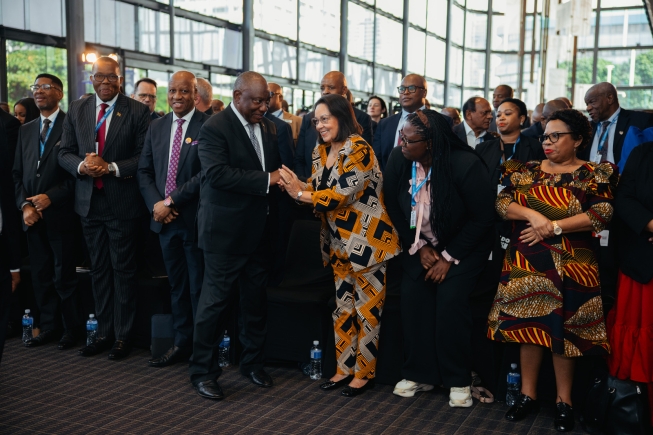
Africa’s Travel Indaba remains one of the continent’s largest tourism trade platforms, bringing together tourism boards, airlines, tour operators, buyers and policy-makers.
Last year, the event attracted around 10,000 delegates and more than 1,300 exhibitors, with economic benefits felt across host communities.
This year’s edition, themed “Unlimited Africa: Growing Africa’s Tourism Economy,” features more than 1,200 exhibitors and about 1,000 buyers from Africa and key international markets.
Ms De Lille announced that the Indaba would undergo a revamp from 2027 and called on private-sector partners, sponsors and creatives across Africa to submit proposals to help shape the event’s future.
Pan-African outlook
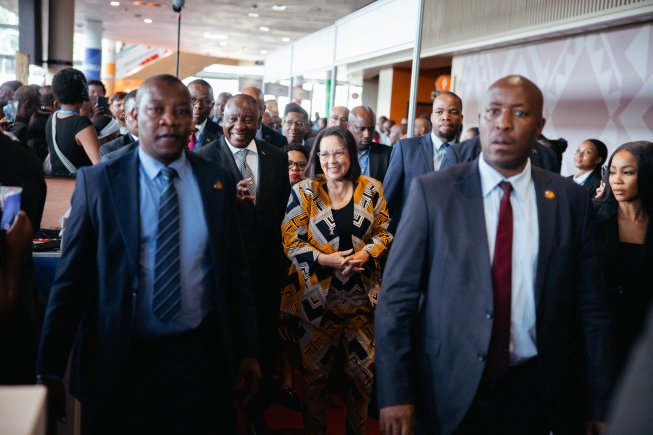
Linking tourism to broader continental goals, President Ramaphosa said the sector supported the objectives of the African Union’s Agenda 2063 and the African Continental Free Trade Area, both aimed at improving mobility, trade and shared prosperity.
“Africa is not waiting,” he told delegates. “Africa is leading.”
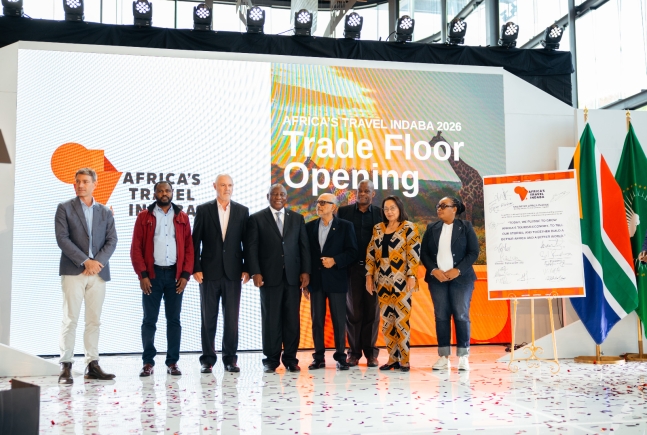
As trading floors opened and negotiations began in Durban, the message from Africa’s premier tourism marketplace was clear: tourism is increasingly central to Africa’s economic strategy and global positioning.