
Ghana’s maternal mortality rate remains alarmingly high at 301 deaths per 100,000 live births, with stark regional disparities exposing deep inequities across the country, according to a report on the "State of Marternal Mortality in Ghana."
The report, put together by the SDGs Advisory Unit, Office of the President, National Development Planning Commission (NDPC) and the United Nations Population Fund (UNFPA) stated that the Upper East Region recorded the highest maternal mortality ratio at 465 deaths per 100,000 live births, followed by the Volta Region (393), North East (341), Upper West (335) and Ahafo (329).
In contrast, Greater Accra has the lowest rate at 191, which is still below Ghana’s national average but remains short of the global target of 197.
The wide gap between regions such as Upper East and Greater Accra highlighted where urgent, targeted interventions are needed, particularly in northern and rural areas, the report stated.
Lifetime risk
Presenting the report, Principal Planning Analyst in the Development Policy Division, NDPC, Nii-Odoi Odotei said although Ghana has reduced the lifetime risk of maternal death from 13.4 per cent in 2010 to 9.9 per cent in 2021, nearly one in 10 women still faces the risk of dying from pregnancy-related causes.
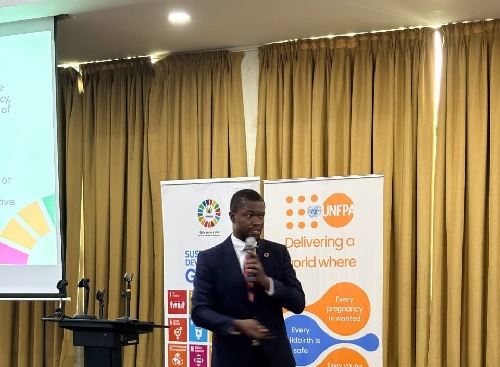
The presentation attributed high maternal deaths to a mix of direct medical causes — such as haemorrhage, hypertension, sepsis and unsafe abortion, and systemic failures including shortages of blood, oxygen and emergency drugs, weak referral systems, poor road networks, financial barriers and delays in receiving quality care.
"So women who have low educational attendance are three times at higher risk of experiencing maternal deaths. Fewer than, those who go to the ANC, the anti-natal clinics, less than four times, have twice the risk of experiencing maternal death. Women also use herbal medicines during pregnancy, occupational hazards, especially for rural women, and then cultural reliance on traditional birth attendance," he said.
He said to address these disparities, a proposed presidential initiative aims to accelerate maternal mortality reduction through strong political leadership, institutional accountability and sustainable domestic financing, with a focus on emergency obstetric care, regional learning and district-level solutions.
Event
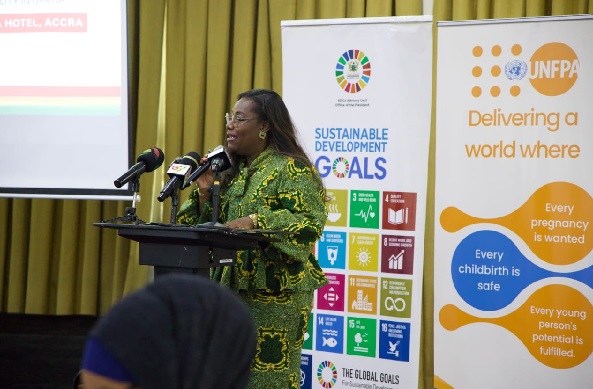
This was revealed at a High-Level Dialogue on Maternal Mortality Reduction in Ghana held in Accra on Tuesday, December 23.
The event, jointly organised by the SDGs Advisory Unit at the Office of the President, the National Development Planning Commission (NDPC) and the United Nations Population Fund (UNFPA), formed part of a presidential initiative aimed at accelerating the reduction of maternal mortality in the country.
Held under the theme “No Woman Should Lose Her Life to Give Life,” the dialogue was moderated by the Deputy Minister in charge of Government Communication, Shamima Muslim.
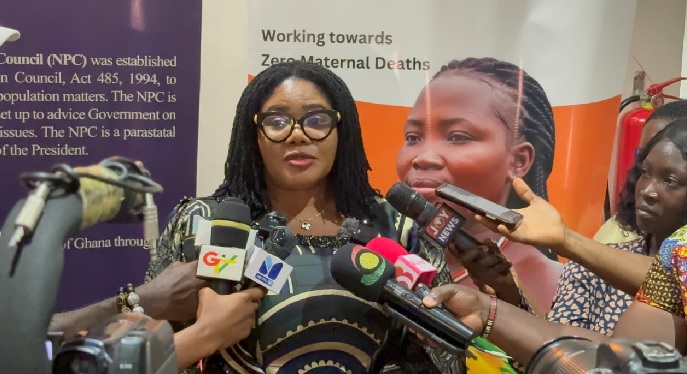
It brought together participants from the Presidency, the Ministry of Gender, Children and Social Protection, the Ghana Health Service, the Ghana Registered Midwives Association, United Nations agencies, and traditional authorities.
In attendance were the Deputy Chief of Staff in Charge of Finance and Administration, Nana Oye Bampoe Addo, Minister of Gender, Children and Social Protection, Dr Agnes Naa Momo Lartey, Senior Presidential Advisor on the SDGs, Dr Nii Moi Thompson, Executive Director of African Women Leadres Network, Dr Charity Binka, Civil Society Advocate, Dr Esther Offei Aboagye and Queenmother of Nungua Amanfro, Naa Korklu Morbornalor III.
Decisive action
Nana Oye Bampoe Addo,who Chaired the the Roundtable on Accelerated Reduction in Maternal Mortality in Ghana, described maternal deaths as a national crisis that demands urgent, high-impact action.
She noted that nearly 900 maternal deaths recorded this year show that progress has stalled and that incremental improvements are no longer enough.
"Despite the efforts made over the years, the reality before us is sobering. Many women in Ghana still lose their lives while performing one of the most natural and sacred acts of humanity, giving life. The data is clear, and the human stories behind the data are even more compelling."
"What is required now are decisive, high-impact actions that confront the root causes with honesty and urgency," she said.

She commended President John Dramani Mahama for elevating maternal mortality to a national priority requiring coordinated, cross-sectoral action beyond the health sector, including transport, financing, procurement and community accountability.
Highlighting government interventions, she cited the uncapping of the National Health Insurance Scheme, the Mahama Cares initiative, and nationwide free health screenings led by First Lady Lordina Dramani Mahama, which have improved early detection of high-risk pregnancies.

She praised UNFPA, the National Development Planning Commission and the SDGs Advisory Unit for convening the dialogue, stressing that the lives of women across Ghana depend on concrete actions taken after the meeting.
Gender equality crisis
The Minister of Gender, Children and Social Protection, Dr Agnes Naa Momo Lartey, described Ghana’s high maternal mortality rate as a national development crisis, a human rights issue and a major gender equality concern, calling for urgent, coordinated action across all sectors.

Dr Lartey stressed that maternal mortality is driven not only by medical causes but by deep-rooted structural inequalities, poverty, weak emergency transport and referral systems, harmful cultural practices and limited decision-making power for women, especially in rural communities.
She warned that each maternal death devastates families, deepens poverty and undermines national development.
She called for scaling up proven district-level successes, improving emergency transport, blood availability, supply chains and psychosocial support, and strengthening maternal death surveillance and accountability.
"When women survive childbirth, families thrive, communities prosper, and nations grow. Let us act now so that in Ghana, giving life never cost a woman her own. Let us act together so that motherhood is saved, dignified, and celebrated. Saving women's lives is not charity. It is justice," she said.

