
“Business must not depend on politics” — Minority calls for major reset at Kwahu Business Forum
Ghana’s Minority in Parliament has warned that political patronage is weakening the country’s private sector, urging a shift towards a more neutral and structured framework for supporting indigenous businesses.
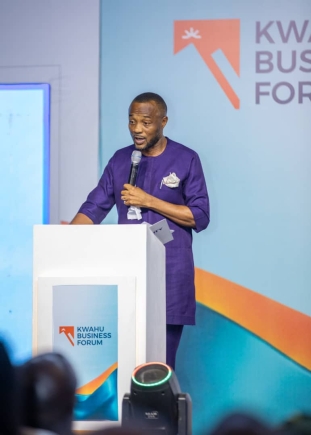
Delivering remarks on behalf of the Minority Leader, Osahen Alexander Kwamena Afenyo-Markin, the Second Deputy Minority Whip, Jerry Ahmed Shaib, said the survival and growth of Ghanaian enterprises must not depend on political alignment.
Addressing participants at the 2026 Kwahu Business Forum, Mr Shaib stressed that the country risked undermining entrepreneurship if access to opportunities continued to be influenced by partisanship.
“The success of a business should never depend on which political regime is in power,” he emphasized.
He cautioned that the increasing politicisation of economic opportunities was pushing local firms to the fringes while foreign competitors gained ground, describing entrepreneurship as central to national development.
Mr Shaib said engagements with key business groups, including the Ghana Union of Traders' Associations, the Association of Ghana Industries and the Ghana Employers' Association, had revealed deep-rooted structural constraints confronting enterprises.
He described the feedback as “sobering,” pointing to high lending rates, stringent collateral requirements, short credit tenures and rising energy costs that are forcing manufacturers to operate below capacity.
In addition, he noted concerns about the tax regime, which businesses say places a heavy burden on industry without sufficiently improving competitiveness.
The Minority also raised issues with the government’s artificial intelligence-based port duty assessment system, known as the Publican Trade Solution, arguing that it has resulted in inflated and inconsistent duty calculations due to the absence of independent validation and an effective appeals process.
Mr Shaib further highlighted what he termed a persistent “consultation deficit” in policymaking, where businesses are often presented with decisions rather than engaged in shaping them.
To address these challenges, he outlined a series of proposals the Minority intends to pursue in Parliament, including structured pre-legislative consultations with industry, comprehensive tax impact assessments, and a review of utility tariffs to ensure predictability.
He also called for reforms in SME financing, particularly longer loan tenures and more flexible collateral requirements, alongside increased investment in technical and vocational education aligned with industry needs.
“Our commitment is not to speak, but to be held accountable,” Mr Shaib said.
He urged entrepreneurs to take bold investment decisions and encouraged financial institutions to work more closely with policymakers to build a resilient business ecosystem.
“Let this forum be more than a conversation,” he said, adding, "let it be the beginning of sustained, structured support for Ghanaian businesses.”
