
A Timely Reckoning: Enforcing the Ayawaso West Wuogon Report and Reviving Accountability in Ghana
Six years after the violent events of the Ayawaso West Wuogon by-election in January 2019, the Interior Minister's directive on enforcing the Short Commission Report signals a crucial moment.
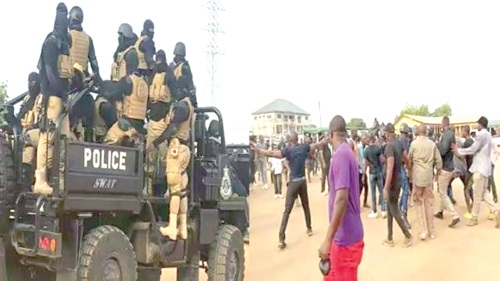
The Commission, led by Justice Emile Short, was tasked with investigating the violence that erupted during the by-election. Armed men associated with the National Security apparatus assaulted voters and opposition supporters.
Short’s recommendations
The Commission's findings, submitted in March 2019, detailed a major breakdown in Ghana's internal security systems.
Among its recommendations was the restructuring of the Ministry of National Security.
The aim was to clarify operational lines and create a permanent command centre for coordinating rapid-response units.
The Commission also called for prohibiting masked or hooded men in civilian law enforcement. It emphasised the need for accountability in the issuance and use of weapons by security operatives.
All personnel involved in operations should undergo training in human rights and professional policing standards.
Importantly, the Commission advocated for criminal prosecutions against individuals identified in the report, such as Mr Ernest Akomea, known as “Double,” for possessing firearms unlawfully.
Recent directives
Despite these clear recommendations, the government's White Paper selectively accepted parts of the report. It chose not to prosecute certain offenders, arguing that their actions occurred under provocation.
This partial implementation effectively sidelined the report and implied that impunity could overshadow accountability.
In this context, the Interior Minister's recent directive to enforce the Commission’s findings is a welcome and necessary development.
It renews hope that justice, though delayed, can still be pursued for the sake of national integrity.
This directive is vital for several reasons.
Firstly, it acts as a corrective measure against impunity.
The Ayawaso West Wuogon incident was a national embarrassment, undermining public trust in security agencies.
The prolonged absence of accountability for this violence communicated a troubling message—that those with political or institutional backing could act without consequence.
By enforcing the Commission’s recommendations, the government reaffirms that no individual is above the law.
Secondly, full implementation safeguards taxpayers’ funds.
Commissions of Inquiry are costly undertakings funded by public money. Ignoring their findings wastes this investment.
Enforcing the Commission’s recommendations ensures that such inquiries fulfil their purpose: to learn lessons, enforce accountability and reform institutions to prevent future occurrences.
Moreover, this move sets an essential precedent for governance.
When one government revives and enforces a commission’s report ignored by a previous administration, it shows that justice can be delayed but not discarded.
It sends a clear message to current officeholders; failing to implement recommendations may not guarantee impunity in the future.
A responsible government should act proactively, not just to avoid political embarrassment but to uphold democratic principles.
Enforcement
The decision to enforce accountability also echoes lessons learned from historical trials, such as Nuremberg, after World War II.
Individuals cannot claim immunity by stating they were "just following orders."
Every operative and official must bear personal responsibility for their actions, especially when those actions violate laws or human rights.
This directive comes at a moment when Ghana's democracy contends with political polarisation and recurring electoral tensions.
Implementing the Short Commission’s recommendations presents an opportunity to rebuild confidence in the rule of law and in the impartiality of state institutions.
It can restore public faith that justice is not selective and that state power must operate within legal parameters.
Furthermore, it demonstrates that accountability mechanisms, while often slow, can function within Ghana’s democratic framework when political will exists.
The broader question now remains: should this renewed commitment to accountability be confined only to the Ayawaso West Wuogon incident?
Ghana has experienced several commissions of inquiry—into political violence, corruption and governance failures—whose findings have often been disregarded.
Is it not time to revive these reports and their recommendations to enhance governance in Ghana?
Consider the circumstances surrounding other significant inquiries.
For instance, past commissions have addressed issues such as illegal mining, political killings, and abuses during and after elections.
Each of these reports represents an attempt to shine a light on troubling behaviours within the nation’s governance. However, many have been shelved or met with inaction.
This trend can contribute to a culture of impunity, where individuals do not fear repercussions for unlawful behaviour.
Rebuilding trust
Encouragingly, the new directive offers a pivot away from this trend.
Successful enforcement of the Short Commission’s recommendations could serve as a model for future action regarding other reports.
Citizens deserve the assurance that their government is committed to accountability and justice.
They must know that their voices matter and that inquiries into wrongdoing will produce tangible outcomes.
Expanding this commitment may also help alleviate tensions that arise during election periods.
Rebuilding trust between citizens and state institutions can lead to a more cohesive society.
When people believe that the systems in place genuinely seek justice, they are likely to engage more positively in political processes and civic life.
Additionally, the ongoing discussions around accountability present an opportunity to foster dialogue across political divides.
Ghana’s path toward healing and strengthening its democratic institutions lies in reinforcing accountability and the rule of law.
Enforcing the Short Commission’s recommendations is a promising first step.
It lays the groundwork for a renewed commitment to justice, not only for the Ayawaso West Wuogon incident but for all citizens seeking equity and fairness in an evolving democracy.
The writer is a political scientist.
