
Let’s revise electoral calendar — Dr Foli
A senior lecturer at the Department of Political Science of the University of Ghana, Legon, Dr Rosina Foli, has reiterated the need to revise the country’s electoral calendar for the conduct of elections.
Proposing early November as a possible election period, she said it would give the transition team enough time to plan for handovers.
Dr Foli said an early conduct of the polls “helps to settle inconclusive elections, e.g., 2008/2009 elections runoff and the final deciding elections held on January 2 at Tain.”
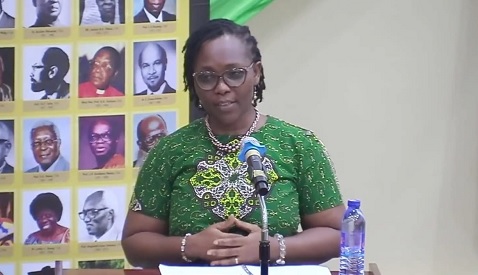
She was delivering a lecture on the topic “Pathways to Peaceful Political Transitions: Deepening Trust, Practice and Bipartisanship” as part of the Founder’s Week celebration of the Ghana Academy of Arts and Sciences last Thursday.
Context
Dr Foli’s call for a revision of the electoral calendar comes on the heels of a similar proposal by Justice Paul Baffoe-Bonnie during his vetting as Chief Justice.
He suggested moving Ghana’s general elections to early November to allow for, at least, 57 days for any election hearings before the swearing-in of a new President, averring that doing so would strengthen democratic stability and public confidence in the judiciary’s electoral role.
A former Majority Leader and Minister of Parliamentary Affairs, Osei Kyei-Mensah-Bonsu, has recently called for a constitutional amendment to change Ghana’s general election date from December 7 to an earlier month.
That, he said, would provide sufficient time for a smoother, more orderly transfer of power between administrations.
Mr Kyei-Mensah-Bonsu said the current electoral timetable left little room for comprehensive transitional arrangements.
When elections are held on December 7, with a possible run-off on December 28, he said it provided only a few days before the January 7 inauguration.
That, he said, often resulted in what he described as a “democratic sprint” rather than a carefully managed transition.
Planning
Dr Foli also proposed that at least six months before general elections, administrators and political leaders should not make decisions with far-reaching consequences for the incoming government.
In line with that, she suggested that transition processes, especially at the administrative level, begin six months before the elections and that the ‘period of sensitivity’ be introduced, as observed in the United Kingdom.
She also stressed the need for service institutions to consistently demonstrate impartiality to check what she termed “midnight actions.”
Dr Foli said the involvement of non-state actors was crucial in shaping trust and bipartisanship in the transition process.
She also emphasised the need to educate citizens on democratic norms, institutional roles and constructive political engagement.
That, she said, would help reduce blind partisanship and emphasise issue-based politics, pointing out that “fair reporting by the media also builds public trust.”
Public Trust
Dr Foli noted that legal reforms must be complemented by efforts to transform political culture.
She said problematic areas, such as election-related violence and the growing trend of party supporters attacking government offices, needed to be addressed.
She said it was important to create avenues for openly discussing citizens' challenges with elections and transitions.
Dr Foli said it would be helpful to create a bipartisan oversight committee for transition monitoring and evaluation, probably through an institutionalised Inter-Party Advisory Committee.
